
Last updated November 15, 2026
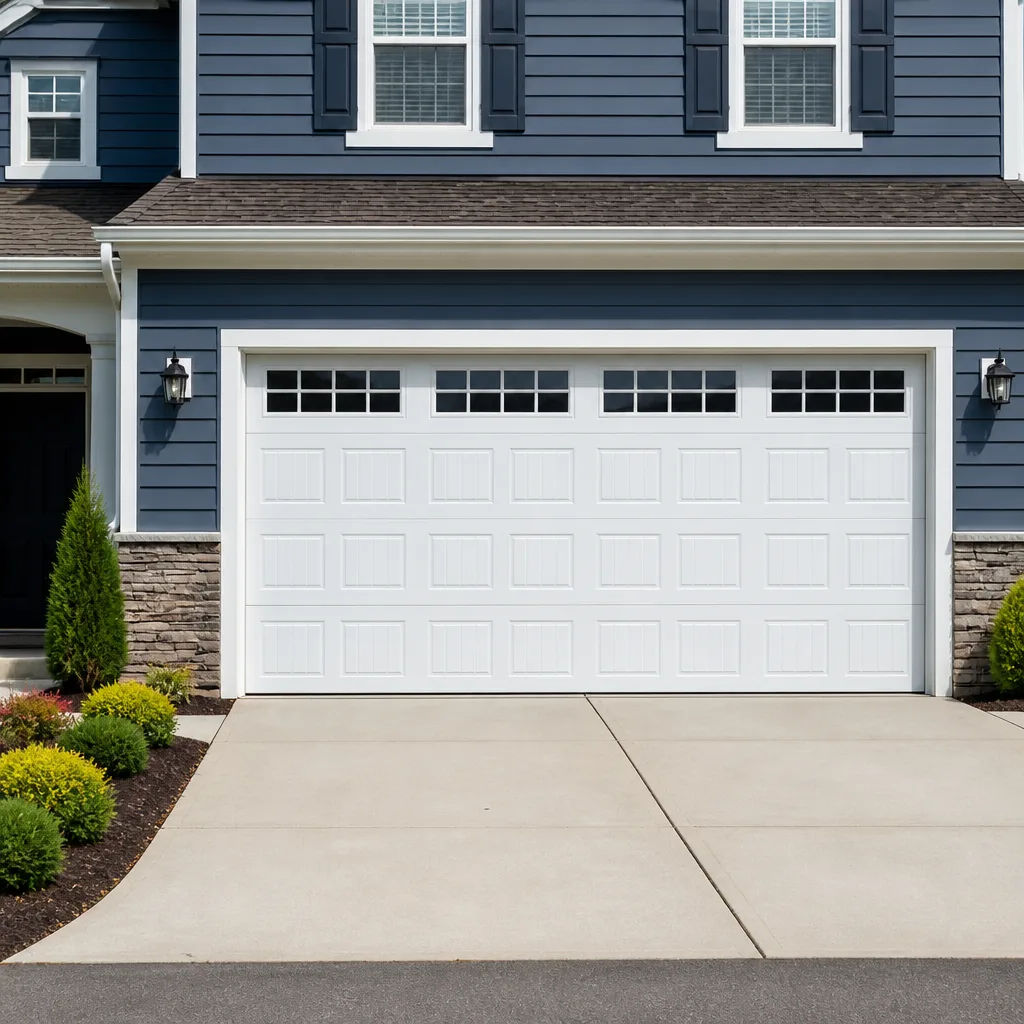 Raised-panel steel
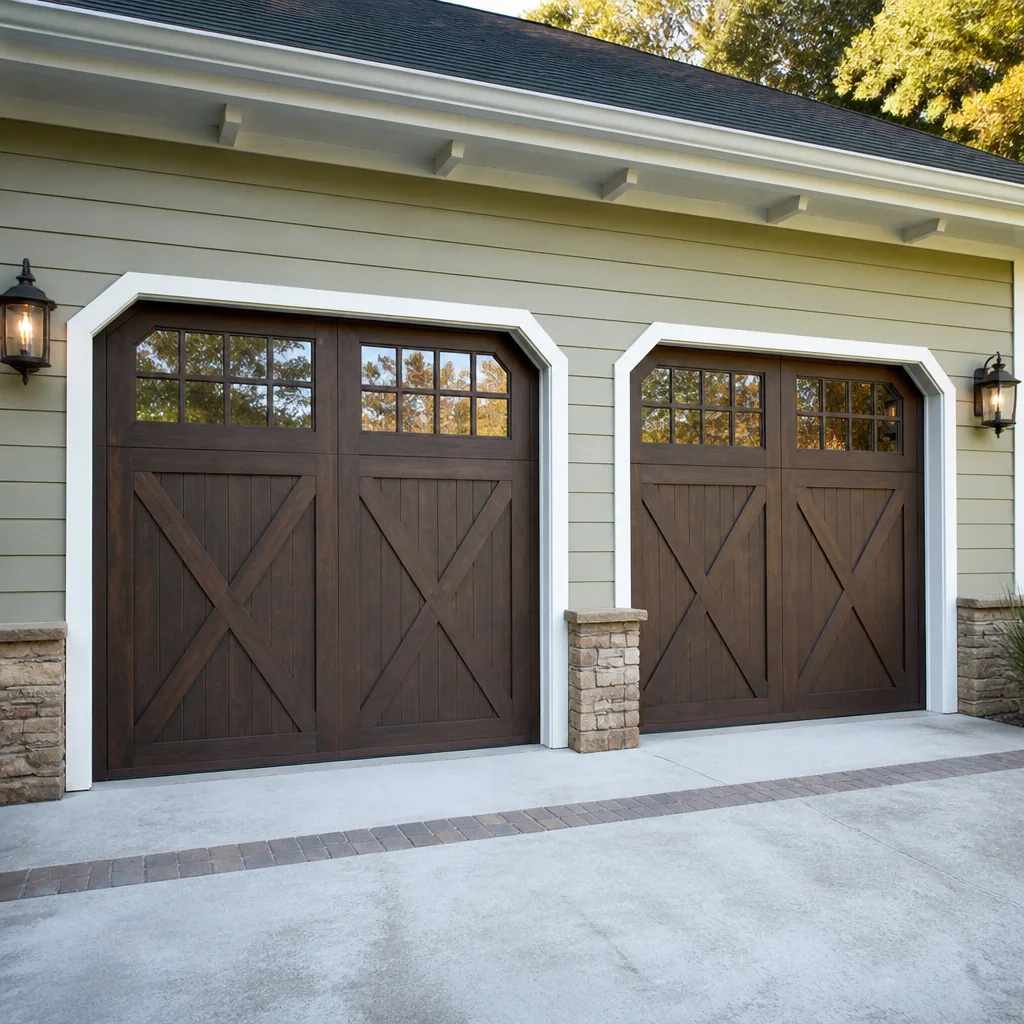 Carriage house
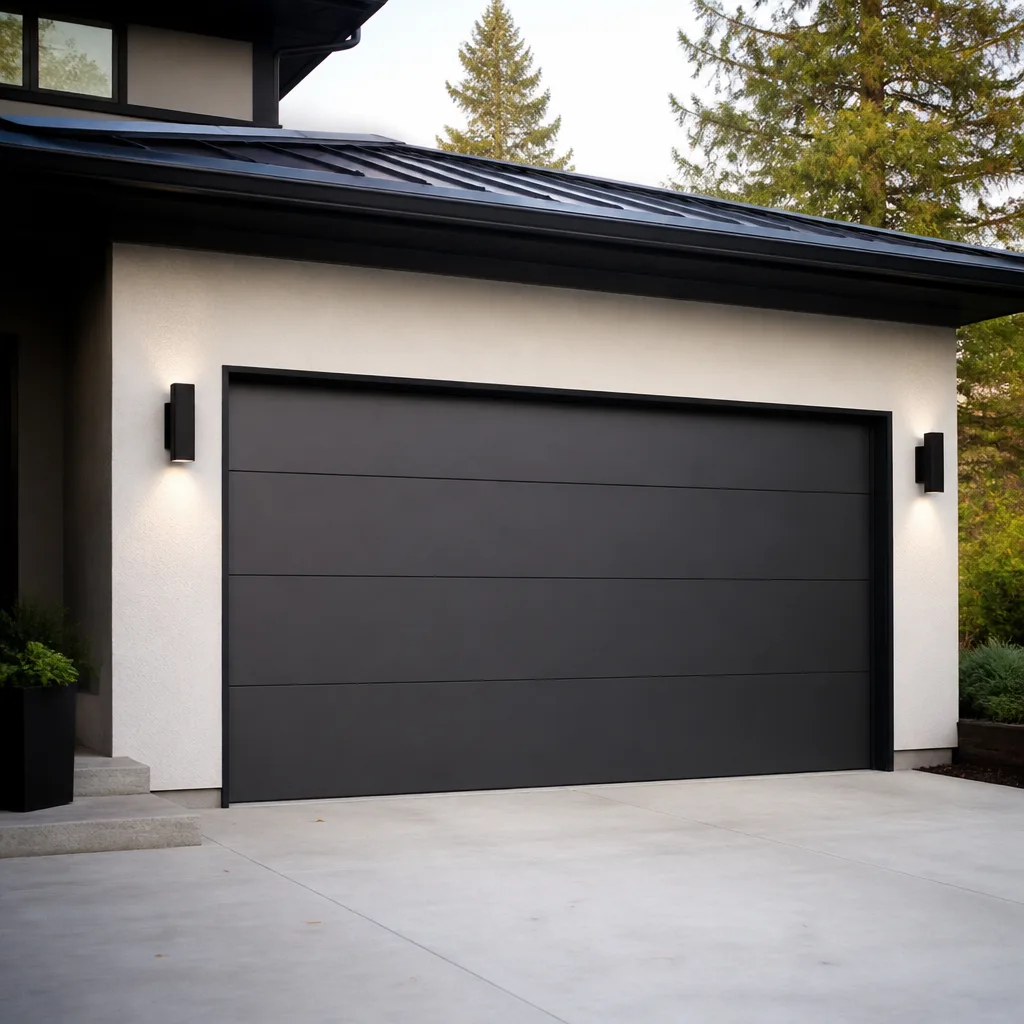 Modern flush
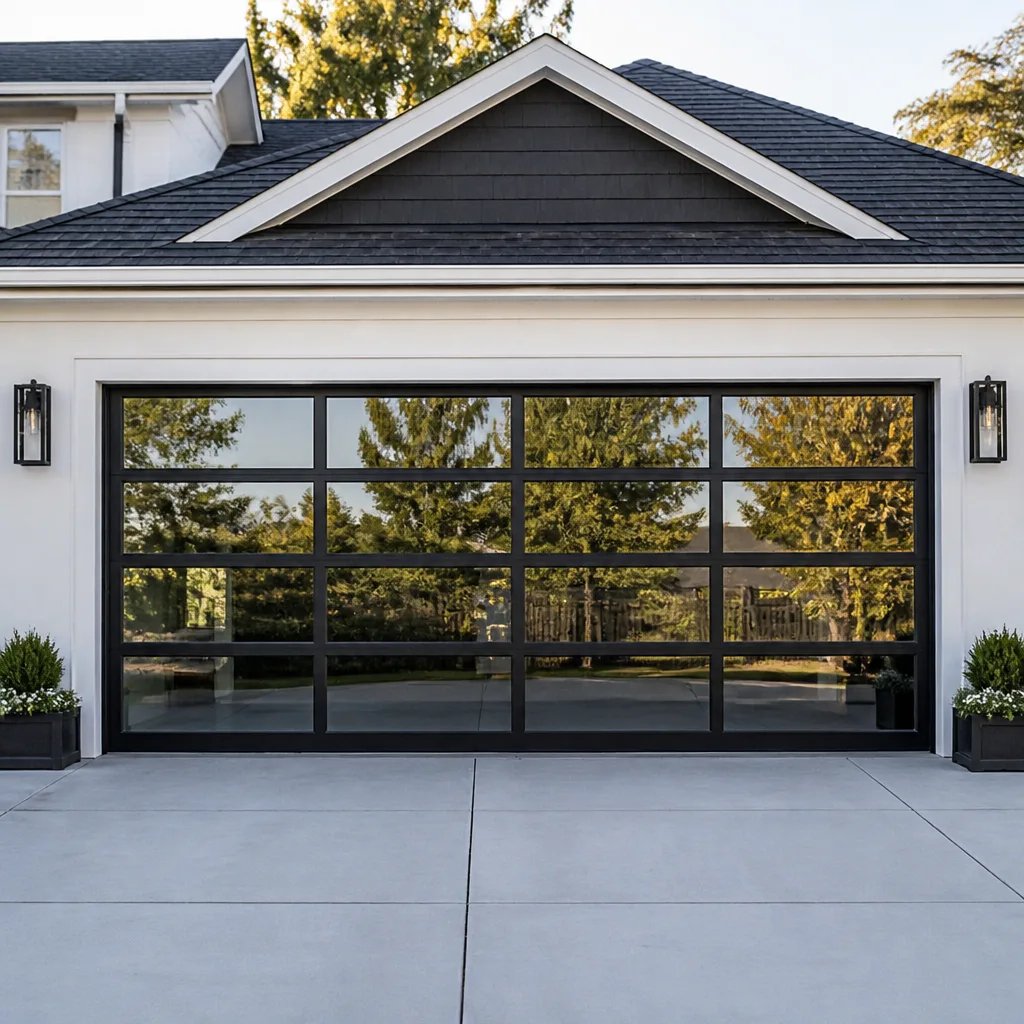 Full-view glass
 LiftMaster openers
 Chamberlain openers
Full 25-point door and opener safety check with every visit - springs, cables, rollers, tracks, and your LiftMaster or Chamberlain opener included
You get a price before we start. It does not change when the pro arrives.
Get your free estimateThe Complete Guide to Garage Doors in Lansing
Most garage door buying advice is written for a climate that isn’t yours. It talks about R-value in the abstract, shows glossy carriage-house doors on new construction, and assumes the floor is level and the frame is square. Lansing is not that market. The region averages around 51 inches of snow a year and can see more than 80 freeze-thaw cycles in a single winter, and that changes which doors hold up and which ones quit. Add clay-heavy soil that shifts under slabs and a housing stock that spans mid-century ranches to brand-new builds, and the right door becomes a local question, not a catalog one. This guide walks through construction, insulation, soil movement, housing eras, permits, and repair-versus-replace so you can make the call with your eyes open.
Quick Answer
The best garage door for a Lansing home is a polyurethane-insulated steel door sized to your opening and matched to your home’s era, paired with an opener that suits Michigan’s temperature swings, and installed only after the frame and floor are checked. In this climate, insulation type matters more than the R-number on the tag, and repair is usually the right call unless the panels or the structure are genuinely failing. What follows explains each of those judgment calls in plain terms.
Styles & brands we work with
- Raised-panel steel
- Carriage house
- Modern flush
- Full-view glass
- LiftMaster openers
- Chamberlain openers
Table of Contents
- Why Lansing’s Climate Changes the Door Decision
- Clay Soil, Settling, and What It Does to Your Door
- Polyurethane vs. Polystyrene: Insulation That Survives Freeze-Thaw
- Single-Brand Showrooms vs. the Full Market
- Matching Door Style to Lansing’s Housing Eras
- Permits and Code: What Triggers a Permit in Ingham County
- Repair or Replace? How to Decide
- Openers: Legacy, Smart, and What Fits Your Door
Why Lansing’s Climate Changes the Door Decision
Lansing’s winters are the single biggest factor in how a garage door performs, and they’re harsher than the marketing photos suggest. With roughly 51 inches of snow a year and freeze-thaw cycles that can top 80 in a season, your door expands, contracts, and gets wet-then-frozen repeatedly between November and March. That’s before you count the salt and grit tracked in from the road. A door that looks sturdy in a warm showroom can delaminate, warp, or bind in a Lansing winter if it wasn’t built for the swing.
Here’s what the conditions actually do to a door system:
- Thermal cycling stresses the panels. Steel skins and the insulation core expand at different rates. Cheap construction separates over a few winters; better construction flexes and recovers.
- Moisture freezes in the gaps. Water that gets into panel seams or behind the bottom seal turns to ice and pries things apart.
- Cold stiffens the hardware. Rollers, hinges, and springs behave differently below freezing, and a marginal opener can’t compensate.
- Snow load and plow spray hit the bottom section hardest. The lowest panel takes the abuse, which is why bottom seals and bottom sections fail first.
None of this means you need an exotic door. It means you should choose construction and hardware that tolerate the swing, and inspect the bottom section, seals, and rollers before each winter rather than after something breaks. If your door is already struggling in the cold, that’s a sign worth reading early.
Clay Soil, Settling, and What It Does to Your Door
Lansing sits on heavy clay, and clay does what clay does: it swells when wet and shrinks when dry. Over the years, that movement can settle a garage slab unevenly, which throws off the relationship between the floor, the bottom seal, and the door frame. The door itself may be perfectly fine while the slab underneath it has dropped a fraction of an inch on one side. You feel the result long before you understand it.
Common symptoms of slab settling and frame misalignment:
- Bottom seal gaps. Light or snow blows in under one corner because the slab dropped and the seal no longer meets it evenly.
- Binding on one side. The door rubs or hesitates partway up because the opening is no longer perfectly square.
- Uneven closing. One side of the door touches the floor before the other, or the safety reverse trips on nothing.
- Track misalignment. The vertical tracks drift out of plumb as the frame shifts, and the rollers start to scrape.
What you do about it depends on the cause. Sometimes a bottom seal replacement and a track adjustment solve the problem. Sometimes the frame needs shimming or the tracks need realignment. And sometimes the honest answer is that the slab has moved enough that a seal alone won’t keep the weather out, and a smarter seal or threshold change is the practical fix. The key point: don’t let a well-meaning installer sell you a new door when the door isn’t the problem. If a technician diagnoses a settling issue, that’s a real diagnosis, not a sales pitch. Our garage door repair work in the Lansing area frequently starts with a level and a straightedge, not a catalog.
Polyurethane vs. Polystyrene: Insulation That Survives Freeze-Thaw
Most insulation conversations in the garage door world get stuck on R-value, and that’s a mistake in a Michigan climate. R-value tells you how well the door resists heat flow under lab conditions. It doesn’t tell you whether the insulation will still be bonded to the steel after a hundred freeze-thaw cycles. In Lansing, that second question is the one that decides if your door is still insulated in five years.
Polystyrene insulation is common and less expensive. It’s often a foam board sandwiched inside the panels. Polyurethane is denser and is typically injected or bonded into the panel in a way that holds up better through thermal cycling. The difference in performance:
- Bonding. Polyurethane tends to stay bonded to the steel skin as it expands and contracts; polystyrene can loosen and rattle over time.
- Moisture resistance. Dense polyurethane cores resist absorbing water at seams better than open foam edges.
- Structural stiffness. A bonded polyurethane core adds rigidity to the panel, which helps in wind and snow load.
- Longevity in the swing. The door that’s still insulated and quiet after a decade of Michigan winters is usually the one with a solid, well-bonded core.
Does that mean polystyrene is always wrong for Lansing? No. An attached, unheated garage where you mostly park a car doesn’t need the same insulation performance as a heated workshop or a room above the garage. Match the insulation to how you actually use the space, and don’t pay for a number you’ll never feel. If you’re unsure which construction makes sense for your garage, that’s a good conversation to have before you buy.
Single-Brand Showrooms vs. the Full Market
When you walk into a single-brand dealer, you see the doors that brand makes. That’s not a knock on those doors; many are excellent. The issue is selection bias. A brand-locked showroom can’t show you a construction, gauge, or hardware setup that brand doesn’t offer, and it has a natural incentive to steer you toward a full replacement rather than a repair, because replacement is the sale it’s set up to make. That’s where a brand-agnostic shop earns its keep.
Here’s the practical difference:
- Diagnosis first. We identify what’s actually failing – a spring, a roller, a cable, the opener logic board, the bottom seal – before talking about any product.
- Repair when possible. If a Genie opener needs a gear and pinion, that’s a repair. If a Clopay panel is dented but the structure is sound, sometimes it’s a panel swap. Replacement is the answer only when it’s the real answer.
- The whole market, not one brand. We work on what you already have and can talk you through options across multiple manufacturers instead of the one a salesperson is trained on.
- One call covers it. Door, opener, springs, or a new installation – it’s the same conversation, not a handoff between two contractors who each blame the other.
We’re factory-familiar with the major brands you’ll actually find in Lansing garages, including Amarr, Wayne Dalton, Clopay, Genie, LiftMaster, Chamberlain, Craftsman, and Raynor, and our technicians have up to 13 years of experience across those systems. That range matters most when your situation doesn’t fit a tidy package: a Wayne Dalton door with a Chamberlain opener and a bottom seal that’s been fighting a settled slab for years.
When you want to explore how a brand-neutral shop compares with a single-brand dealer, our Crossroads Garage Door Repair team is a good place to start the diagnosis.
Matching Door Style to Lansing’s Housing Eras
Curb-appeal mismatches are the quiet regret of garage door replacement. The wrong style doesn’t look “off” in an obvious way – it just makes the house feel like the door was chosen for a different decade. Lansing’s housing stock spans several eras, and the door style that fits a 1970s ranch in Delhi Township is genuinely a different answer than the one that fits a newer build out toward Okemos. Here’s a working map:
- Ranch homes (1960s-1970s): Raised-panel doors in a low-key profile usually read as correct. Flush or very modern panel styles can look grafted on. Match the low horizontal lines of the house.
- Mid-century styles: Cleaner panel profiles and single-color paint tend to work better than ornate carriage-house looks. The house wants simplicity.
- Newer builds (late 1990s onward): Carriage-house and raised-panel doors often fit, especially with windows and hardware. This is where a carriage-house door earns the look.
- Updated older homes: If the exterior has been modernized, a flush door can work – but it should match the rest of the project, not just the door.
The easy rule: drive your street and look at what the houses around you have. If every nearby ranch has raised panels and a low profile, a carriage-house door will stand out in a way you’ll notice every time you pull into the driveway. Style choices are a five-minute conversation if you already know your home’s era. The wrong choice is one you live with for a long time.
Permits and Code: What Triggers a Permit in Ingham County
Replacing a garage door and swapping an opener are two different permitting questions, and homeowners often assume they’re the same. In general terms, a like-for-like replacement of a door or opener is frequently treated differently than a change in size, structure, or the opening itself. But Ingham County and the local municipality are the authority, not a general guide, and requirements can differ from one jurisdiction to the next.
Here’s the honest breakdown:
- Door replacement (same size, same opening): Often handled as a straight replacement, but confirm with your local building department before work starts.
- Structural or size changes: Resizing the opening or altering the header or frame usually triggers a permit and can require engineering.
- Opener-only swap: Typically no permit, unless the opener work involves new electrical wiring or a new circuit.
- Electrical changes: Any new wiring or a new dedicated circuit for a smart opener should be checked with the building department, and any electrical work should be done by a qualified electrician.
We’re not a code authority, and we don’t invent timelines. The right move is simple: call your city’s building department and describe exactly what you’re planning. Ask whether the job needs a permit and whether an inspection is required afterward. That five-minute call prevents the bigger headache.
Repair or Replace? How to Decide
This is the decision people get pushed into the wrong way, and it’s worth slowing down on. The default in the industry too often is replacement, because replacement is a bigger sale. In our experience, most garage door problems are repair problems first, and the door has plenty of life left if the structure and panels are sound.
Run through these questions before you let anyone push you toward a new door:
- Is the structure sound? Check the panels for deep rust, cracks, or separation. If the steel and the frame are healthy, repair is usually viable.
- Is the problem mechanical? Springs, cables, rollers, hinges, and openers are all replaceable parts. A snapped spring is a repair, not a door replacement.
- Is the door binding or noisy? That’s often track alignment or roller wear, not a failed door.
- Is the opener the real issue? A door that won’t open can be a logic board, a safety sensor, or a stripped gear. Diagnose before replacing.
- Has the door outlived its sealed insulation? This is one of the few cases where replacement genuinely wins, especially in a heated garage.
One more note: springs and cables are under serious tension and store mechanical energy even when they look fine. Don’t try to adjust, release, or replace them yourself – a wound torsion spring can cause severe injury. That’s a job for a trained technician, full stop. If you’re not sure whether your door is a repair case, our Lansing team can take a look and tell you straight.
Openers: Legacy, Smart, and What Fits Your Door
The opener is where a lot of Lansing homeowners are upgrading, partly because connected-home features have gotten cheap and partly because a legacy opener finally quits in the middle of a cold snap. But opers and doors have to work together, and the wrong opener for your door weight and insulation can shorten the life of both.
What matters when choosing an opener:
- Lift capacity. Heavier insulated doors need an opener rated for the load. Ignore the marketing and match the spec.
- Belt vs. chain. Belt drives run quieter and are worth the difference in a garage under a bedroom; chain drives are simpler and tough.
- Smart features. Wi-Fi and app control are now common across the major brands, but the compatibility of the app and the wall control matters more than the badge.
- Safety sensors. Modern openers require functioning safety sensors at the door. These are non-negotiable and worth testing every change of season.
We repair openers across both legacy and smart models, and we install new ones when that’s the honest answer. Whether it’s a Chamberlain with a failing logic board or a Genie that’s lost its programmed limits, our garage door opener repair work starts with a diagnostic. If you’re planning a smart opener upgrade, the install should account for your door’s actual weight and the wiring available. We answer 24/7, and fast dispatch is available from 7am to 7pm.
Common Mistakes to Avoid
- Choosing the door from a showroom, not the driveway. A carriage-house door can look great under showroom lights and wrong on a low-profile 1970s ranch. Match the door to the house, not the catalog.
- Ignoring the slab and frame. If the floor has settled, a new door will fight the same gaps the old one did. Deal with the alignment before the replacement.
- Letting a single phone call set your brand options. A dealer who sells one brand can only show you one brand. Get a diagnosis from someone who isn’t locked in.
- Paying for insulation you won’t feel. An attached, unheated garage doesn’t need the same performance as a heated one. Match the door to how you use the space.
- Assuming a like-for-like swap never needs a permit. Check with your local building department; the rules vary by jurisdiction and the type of change.
- DIY on springs or cables. This is genuinely dangerous and one of the few garage jobs you shouldn’t take on. Leave it to a trained technician.
- Replacing when a part failed. A snapped spring or a dead opener board is not a door replacement, no matter what a pitch says. Ask what’s actually broken first.
See the difference
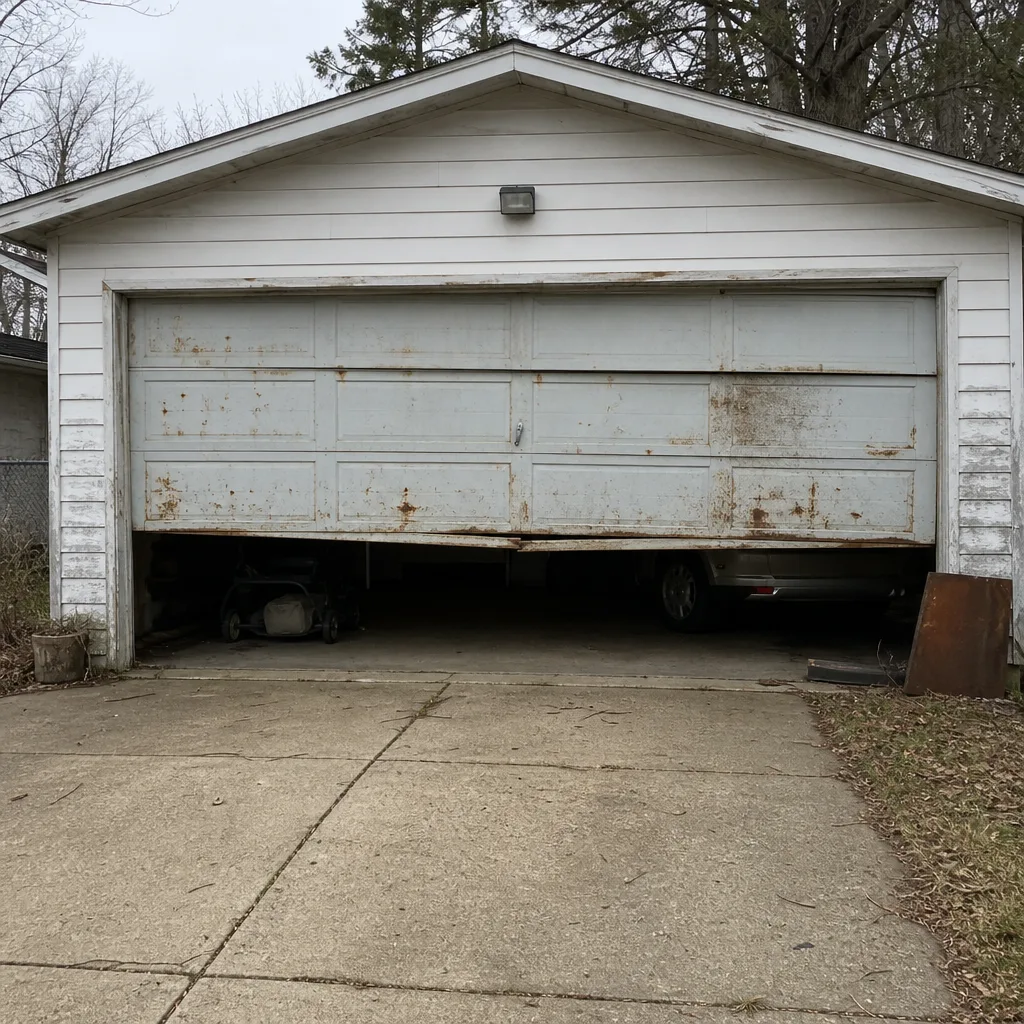 Before
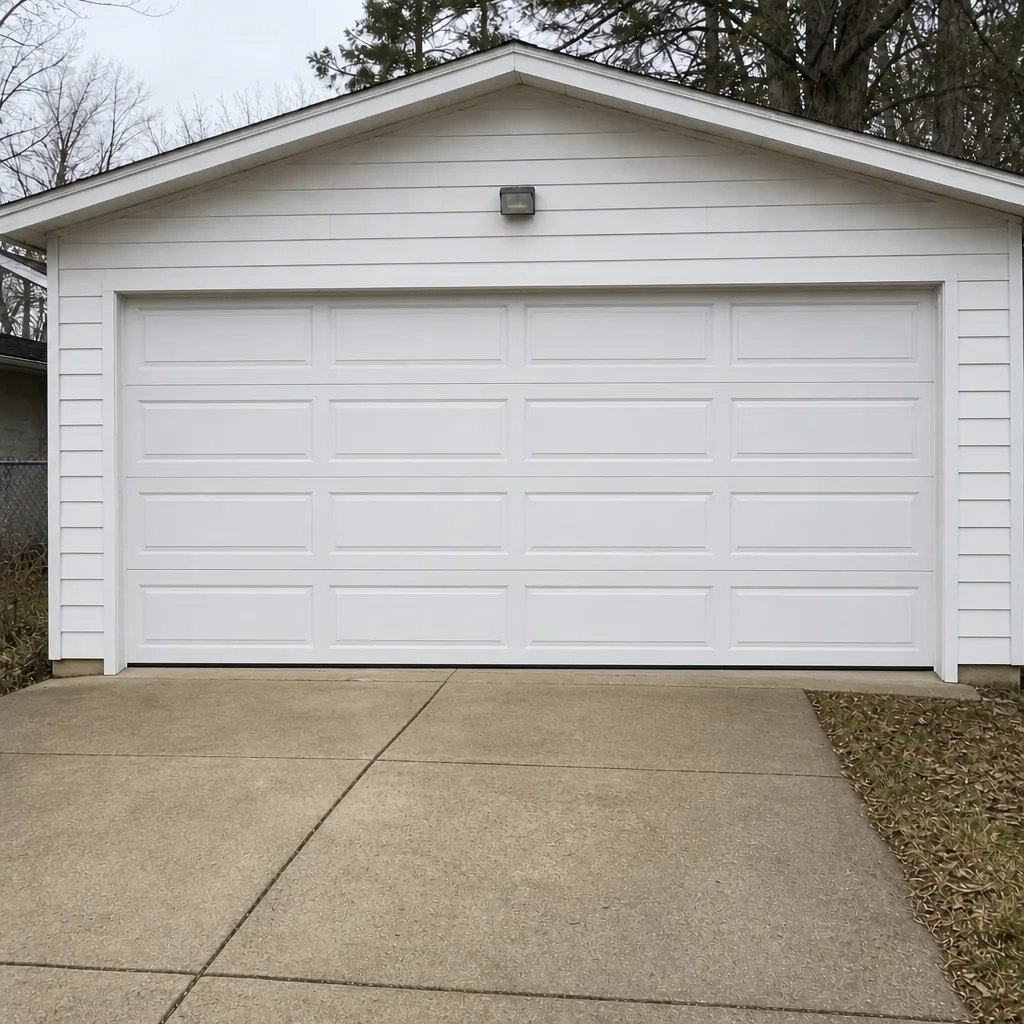 After
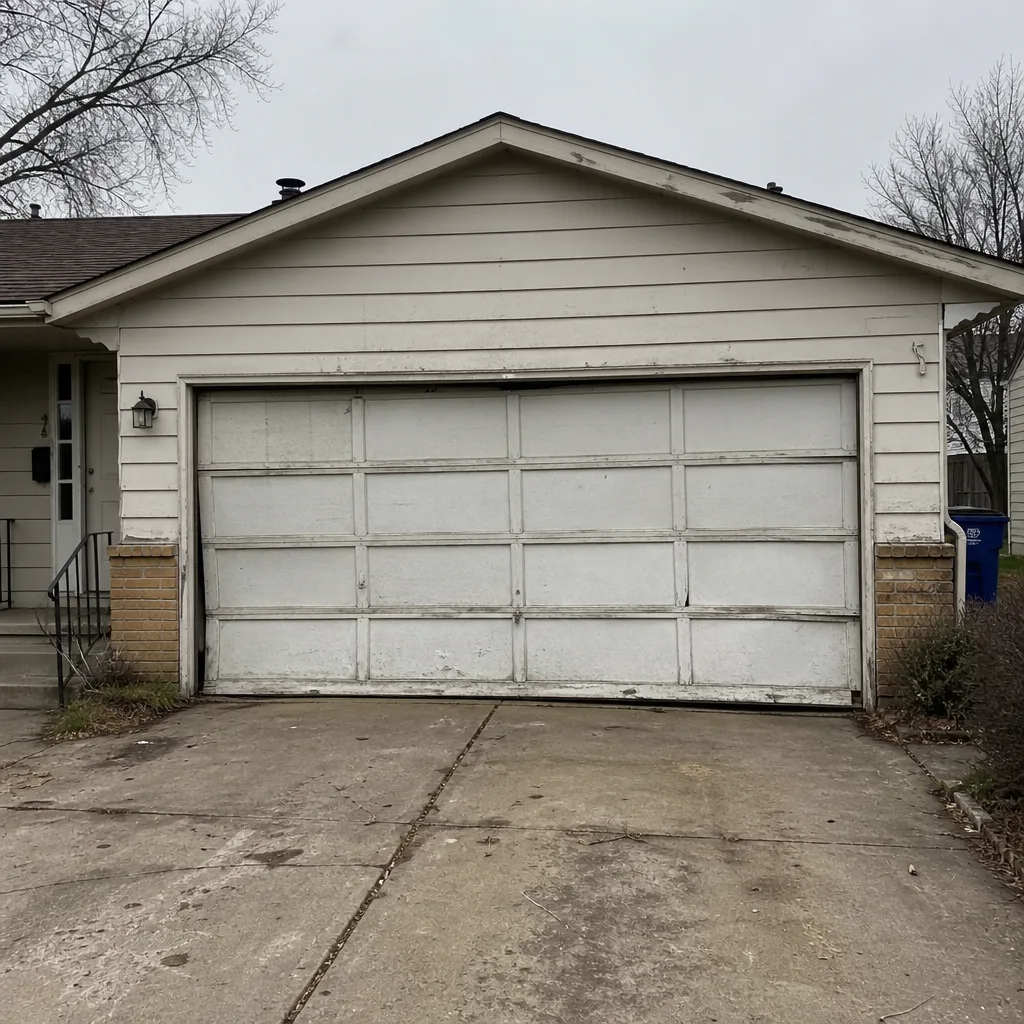 Before
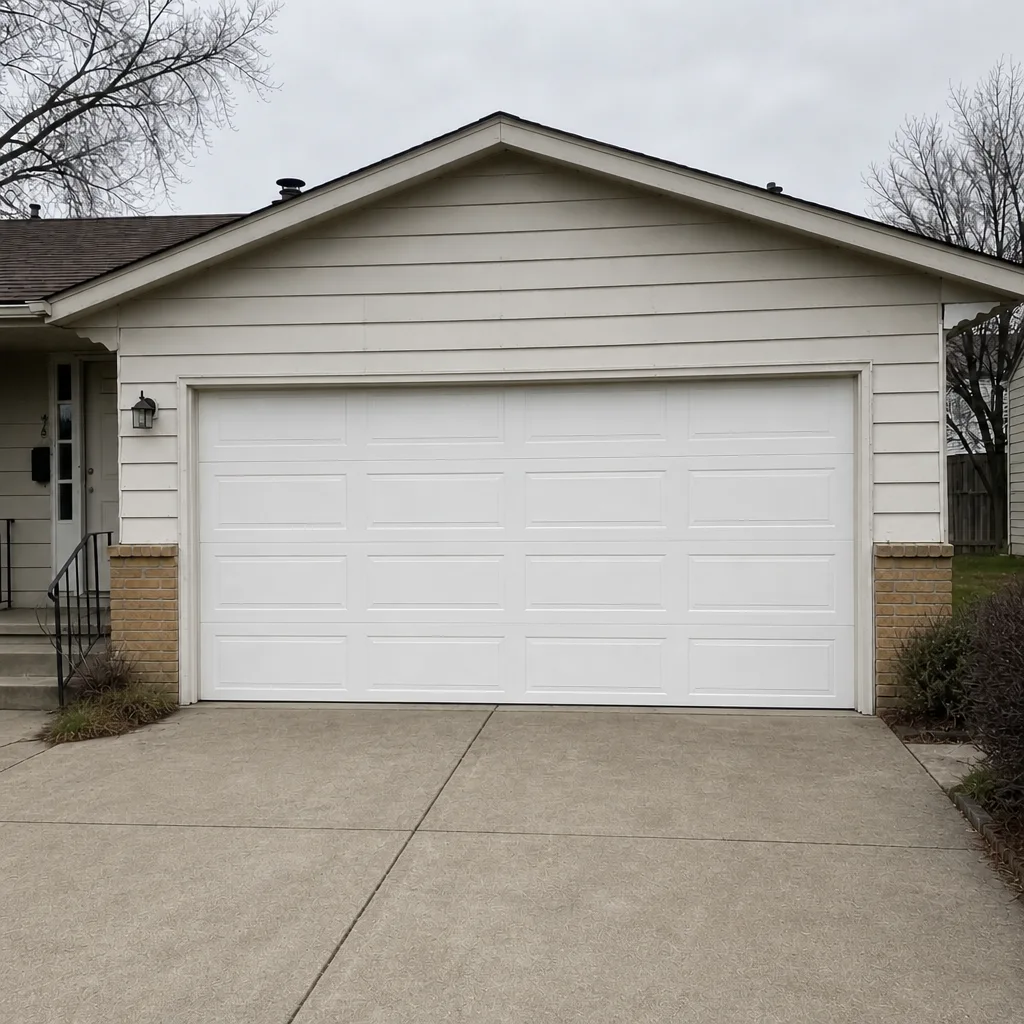 After
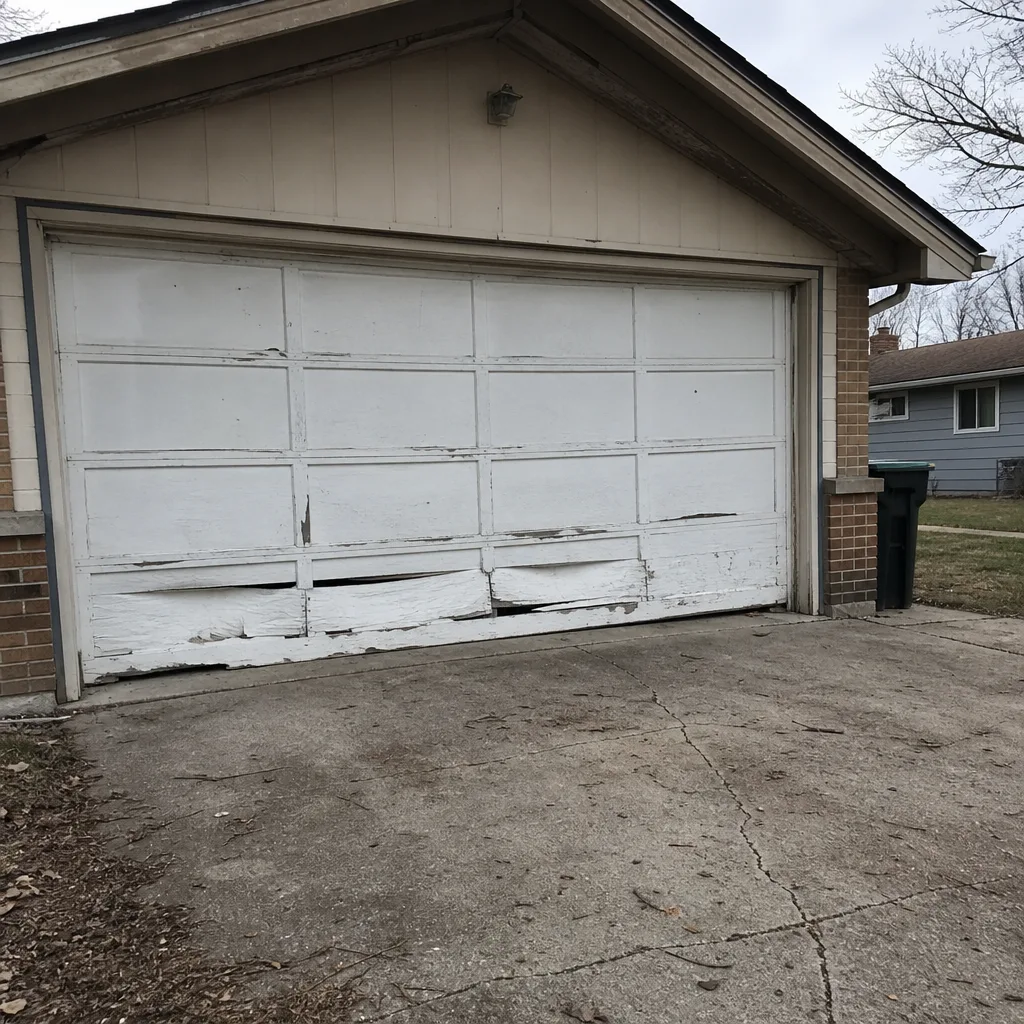 Before
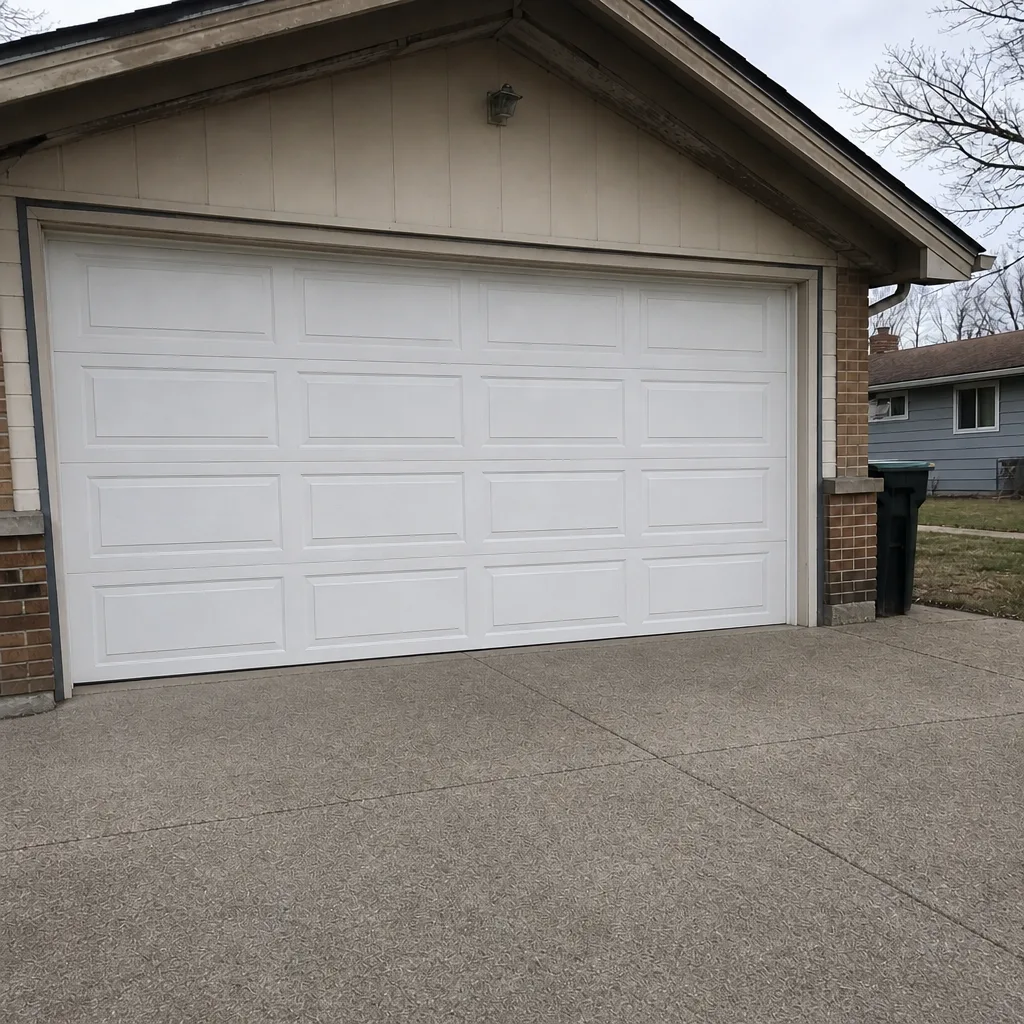 After
When to Call a Professional
Some problems are a quick diagnosis and a small repair. Others genuinely need a trained technician on site: a broken spring or frayed cable, a door that comes off its track or binds, an opener that refuses to program or reverse correctly, a safety sensor that trips on nothing, or a door that won’t close in cold weather and leaves your garage open to the snow. Slab settling and frame misalignment also belong in this category, since a proper fix involves leveling, adjustment, and sometimes track realignment. Springs and cables are the ones to flag hardest – the energy stored in a wound spring is enormous, and a mistake can cause serious injury. If your opener is the failing piece, diagnosing it properly saves money compared with replacing parts by guesswork. Crossroads Garage Door Repair offers free estimates in Lansing – call (833) 673-0891.
Frequently Asked Questions
A typical new garage door installation in Lansing is quoted per job after a free measure, because size, insulation, construction, and hardware vary too much to put one price on it. The range is wide: an uninsulated single door sits at the low end, an insulated double door with windows and hardware at the high end. Call (833) 673-0891 for an exact written estimate – the estimate is free, and the price is quoted and agreed before any work starts.
It depends on the change you’re making, so ask your local building department before work starts. A like-for-like replacement of a door or opener is often treated differently than a resize or a structural change, and jurisdictions can differ. If the opening structure, header, or wiring changes, expect a permit conversation. The building department is the authority, not a guide.
Repair is usually the right first answer if the panels and frame are sound, because springs, cables, rollers, hinges, openers, and seals are all replaceable parts. Replacement wins when the door is genuinely failing structurally or its sealed insulation is gone. The honest diagnostic order is: identify what’s broken, price the repair, and replace only when that’s the real answer. Call (833) 673-0891 for a free diagnosis.
Cold weather stiffens hardware and can freeze moisture in the bottom seal and panel gaps, making a marginal door bind. In Lansing, it’s also often a sign the slab has settled or the track is out of alignment, which shows up more clearly when the door is cold. A technician can tell the difference between weather stiffness and a real alignment problem. Call (833) 673-0891 and we’ll book a look.
Yes. We’re brand-agnostic and work on what you already have, including Genie, Clopay, Amarr, Wayne Dalton, LiftMaster, Chamberlain, Craftsman, and Raynor systems. One call covers whether the issue is the door, the opener, the springs, or the installation. Call (833) 673-0891 – we answer 24/7, with fast dispatch from 7am to 7pm, Sunday through Friday.
A standard single or double door installation is typically a scheduled job, usually planned for a single visit once the door is measured and ordered. Installation isn’t same-day work: it’s measured, ordered, and scheduled. Call (833) 673-0891 for a free measure and a written price – we answer 24/7, with fast dispatch from 7am to 7pm.
The Bottom Line
Lansing’s climate, clay soil, and housing stock make garage door decisions more local than the catalogs suggest. Pick construction that survives freeze-thaw, check the slab and frame before buying, and match the style to the era of your house rather than the showroom lighting. Get a brand-neutral diagnosis before you commit to a replacement, and treat springs and cables as hands-off. If the answer turns out to be a new door, that’s fine – but it should be a decision, not a default. Crossroads Garage Door Repair offers free estimates in Lansing; call (833) 673-0891 to book one. We answer 24/7, with fast dispatch from 7am to 7pm, Sunday through Friday.
Written by the team at Crossroads Garage Door Repair.