
Last updated November 15, 2026
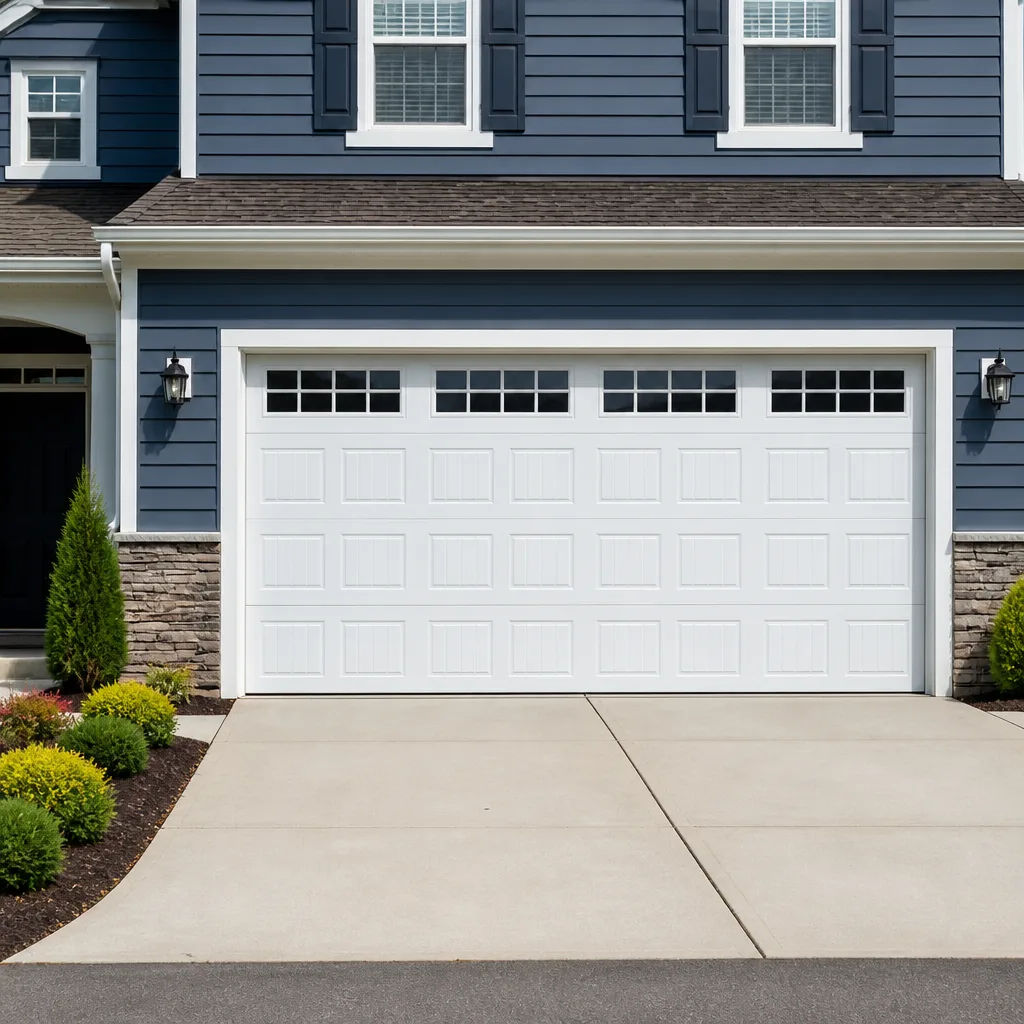 Raised-panel steel
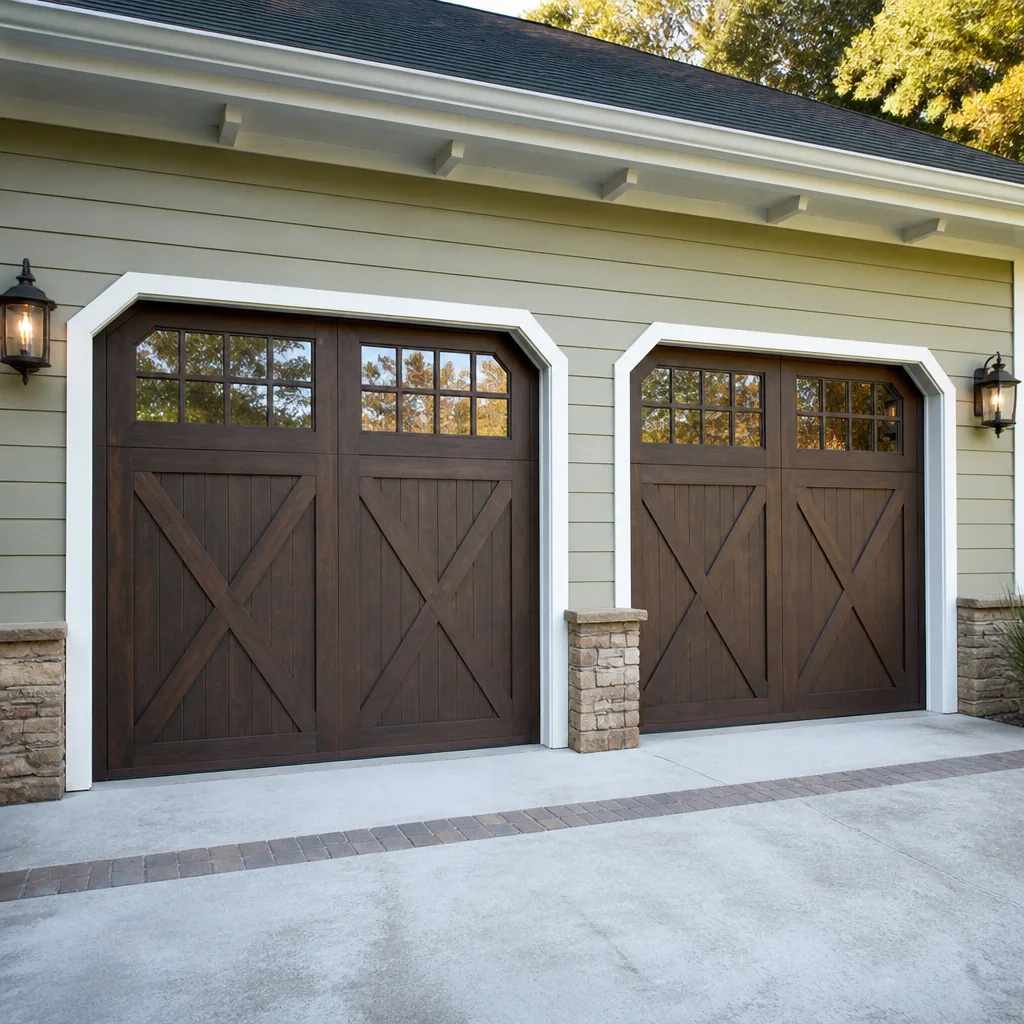 Carriage house
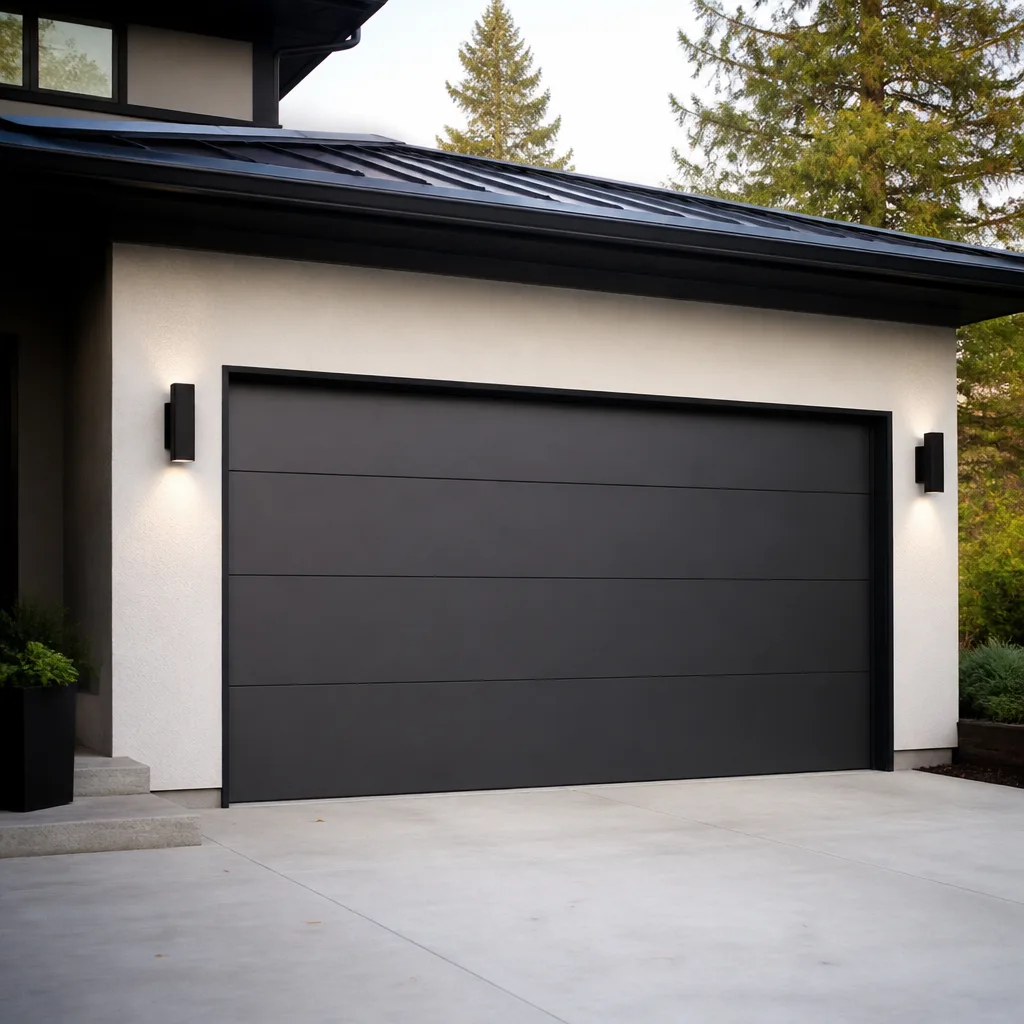 Modern flush
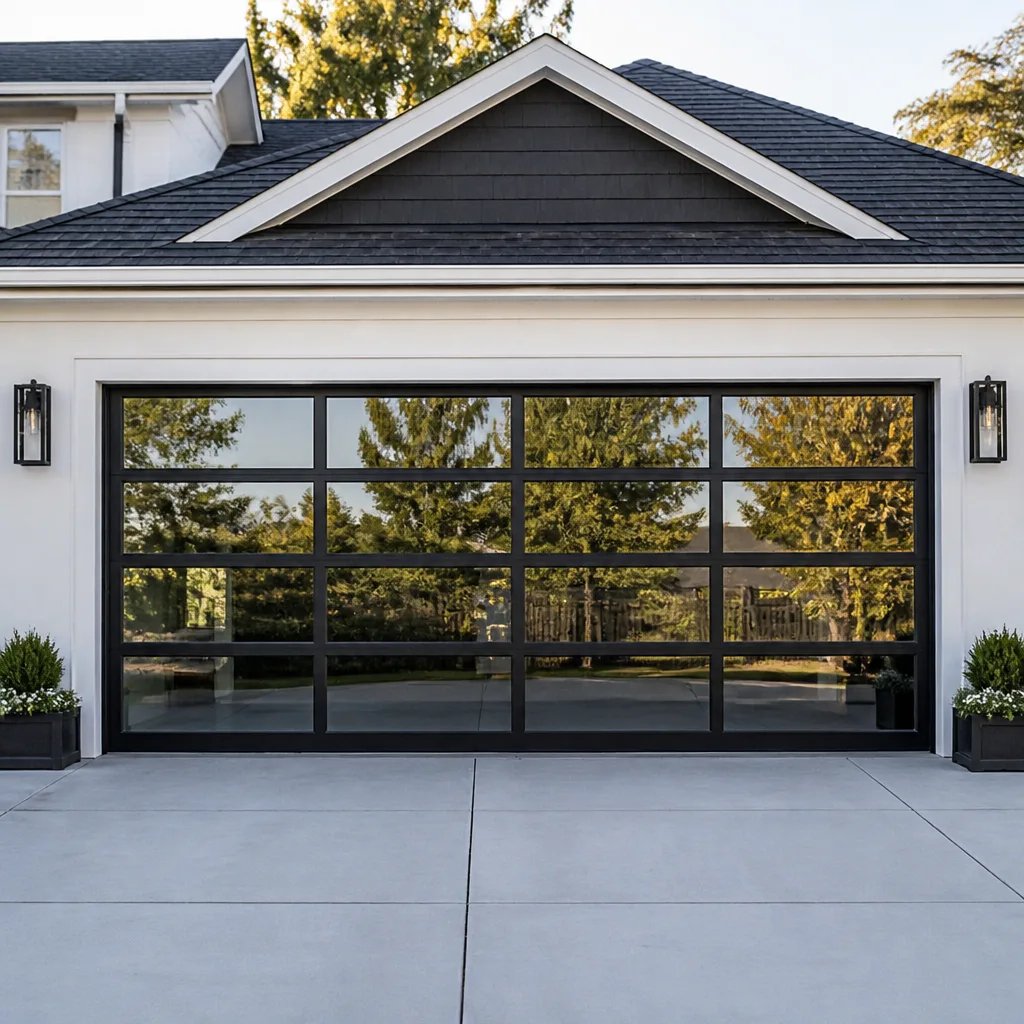 Full-view glass
 LiftMaster openers
 Chamberlain openers
Full 25-point door and opener safety check with every visit - springs, cables, rollers, tracks, and your LiftMaster or Chamberlain opener included
You get a price before we start. It does not change when the pro arrives.
Get your free estimateGarage Door Emergency Preparedness Guide for Lansing Homes
The red emergency cord hanging from your garage door opener is not a universal fix. Pulling it while the door is under spring tension can send the door crashing down or flying up depending on your spring setup, and most manuals bury that warning deep in the fine print. In Lansing, the failures we hear about most aren’t dramatic – they’re frozen bottom seals in January, a snapped cable that leaves the door stuck partway open in the cold, and openers that quit the moment the power drops. This guide walks through each scenario in plain terms: how to get in and out safely, which failures you can leave until morning and which can’t wait, and how to prep your door before a storm rolls in.
Quick Answer
Before you pull the release cord, check that the door is balanced: lift it by hand about a foot and let go. A well-balanced door stays put. If it drops or flies, the springs aren’t holding, and pulling the cord can be dangerous. For a power outage, pre-position your door closed and rely on the opener’s battery backup if it has one. For a frozen seal, free it with a gentle sequence rather than brute force. For a snapped cable, secure the door and call for same-day help. Crossroads Garage Door Repair handles these calls across Lansing, and we’d rather talk you through a safe step now than repair damage later.
Styles & brands we work with
- Raised-panel steel
- Carriage house
- Modern flush
- Full-view glass
- LiftMaster openers
- Chamberlain openers
Table of Contents
- How to Release Your Door Manually (The Safety Check First)
- Frozen Bottom Seal: The Winter Protocol That Doesn’t Wreck Anything
- Snapped Cable in January: Getting the Door Secured
- Power Outage Prep: What Battery Backup Actually Covers
- Emergency Triage: Safe to Leave Overnight or Call Today?
- Why Your Door’s Brand Matters in an Emergency
- Seasonal Prep Checklist for Michigan Winters
How to Release Your Door Manually (The Safety Check First)
The manual release lets you operate a garage door by hand when the opener won’t run or the power is out. But it only works safely if the door’s springs are doing their job. A garage door is one of the heaviest moving things in a house, and the springs are what make it feel light enough to lift. If a spring has broken and you release the carriage, nothing is counterbalancing the door’s weight. That’s the moment a door can drop on a hand, a shoulder, or a head.
So the safety check comes before the cord, not after. Here’s the sequence:
- Close the door first. A closed door has the least distance to fall and the least stored energy in the tracks.
- Look at the springs. If you can see a visible gap in a torsion spring above the door, or the extension springs on either side look stretched or hanging, treat the springs as broken and don’t release the door.
- Test balance by hand. With the door closed, lift about a foot and let go gently. It should hold roughly where you release it. If it slams back down or shoots up, stop.
- Pull the release cord (usually a red handle on a rope) with a firm, straight pull toward the back of the garage. Don’t yank it at an angle.
- Lift and lower slowly with a firm grip, keeping hands away from the hinge points and the gap between panels.
If the balance test fails, leave the door where it is and call. In our experience, the calls from Lansing that turn into real injuries are almost always the ones where someone pulled the cord before checking. Our technicians have up to 13 years of experience, and they’ll tell you the same: the cord is not the step you skip to. For anything you can’t safely release, our garage door repair team can take a look.
Frozen Bottom Seal: The Winter Protocol That Doesn’t Wreck Anything
When the bottom rubber seal freezes to the concrete apron, the opener will fight it. The motor strains, the door shudders, and on a LiftMaster or Craftsman unit the travel limits can slip from the repeated strain. The temptation is to keep hitting the button until it breaks loose. Don’t. That’s how a frozen seal turns into a stripped gear or a burned-out motor, and it’s how a $20 rubber strip becomes a repair bill.
The sequence that keeps the seal and the opener intact:
- Stop cycling the door. Every extra press adds heat and wear to the opener without freeing the seal.
- Release the door manually (after the balance check above) so the opener is out of the fight.
- Break the ice bond gently. Warm water along the bottom edge, or a plastic scraper worked under the rubber – never a metal tool that can tear the seal.
- Lift the door by hand until it clears the frozen line, then reconnect the carriage and test the opener on a cleared track.
- Once free, treat the seal. A silicone-based lubricant on the rubber edge reduces refreezing. Don’t use petroleum-based products that degrade the rubber.
We see this most on north-facing garages and on driveways that hold meltwater overnight – common across Lansing’s older neighborhoods where the apron slopes toward the door. A simple habit: after a snow or ice event, clear the apron and lift the door once to confirm it isn’t stuck before you trust the opener again. If the seal is torn or the opener has already been strained, that’s a repair, not a cleaning job.
Snapped Cable in January: Getting the Door Secured
When a lift cable snaps, the door often hangs crooked or stops partway. The cable is under tremendous tension, and a snapped end can whip. Do not touch the cable. Do not try to reattach it. Do not run the opener to “see if it moves.” A door with a broken cable is being held by one side of the system, and running the opener can bend the tracks or drop a panel.
What to do while you wait for a technician:
- Keep hands clear of the cable and the drums at the top corners of the door.
- Prop the door if it’s partially open. Two people with a sturdy brace under the frame, or a clamp on the track to prevent the door from sliding down.
- Secure the space for the night. If the door won’t close, a sliding bolt or a bar through the track can hold it down. For a truly open door, consider whether anything valuable is reachable and move it inside.
- Call for same-day service. A cable is not a leave-it-overnight problem. Call (833) 673-0891 – we answer 24/7. Fast dispatch from 7am to 7pm, Sunday through Friday.
In Lansing, a snapped cable in January is often linked to a frozen seal that was forced open or a spring that had been running hot for weeks. If your door has been noisy or slow, that’s the early warning. For a nearer look at what we cover, our Lansing page spells out the full scope.
Power Outage Prep: What Battery Backup Actually Covers
If you know a storm is coming, the smart move is to close the door before the power drops. A closed door is safer in wind, easier to release manually, and puts less strain on the opener when the power returns. If your opener has a battery backup, confirm it’s actually holding charge – most newer LiftMaster and Chamberlain units have a backup that carries the door through a handful of cycles, not a full day of use. The backup covers opening and closing the door a limited number of times. It doesn’t cover a door that won’t close because the seal is frozen or the track is bent.
Before a predicted outage:
- Close the door, not leave it open. The door in the down position is the safest default.
- Test the battery backup by unplugging the opener briefly and confirming the door still cycles.
- Know where the release cord is and confirm it’s reachable without a ladder or a chair.
- Clear the apron and the track line of snow and ice, so the door can move if the power returns mid-storm.
If the power is out and the door is stuck open, you can release it and lift it by hand after the balance check. If it won’t budge, the release carriage may be stuck, and that’s a call. When power returns, cycle the door once with nothing in the way and listen. Grinding, a slowed lift, or a door that stops short is the opener telling you it took damage during the outage. Our garage door opener repair team handles both mechanical and smart opener issues, so a Wi-Fi unit that lost its programming after an outage is squarely in our lane.
Emergency Triage: Safe to Leave Overnight or Call Today?
The hardest question in a garage door emergency is whether it’s actually an emergency. Here’s the logic we give callers, and it holds whether you’re in Lansing or anywhere else in the state.
Safe to leave overnight:
- A decorative panel is dented but the door still opens and closes.
- The opener is noisy but the door travels normally.
- A remote or keypad isn’t working but the wall switch does.
Call today:
- Any broken spring – never operate the door.
- A snapped or loose cable.
- A door that’s stuck partially open and can’t be secured.
- A door that’s visibly off its track or hanging crooked.
- Any opener that trips a breaker or smells hot.
Security is the second filter. A door that won’t close is a security problem, not just a convenience problem. If the garage connects to the house, an unsecured garage door is an open door into the home. That’s a today call, not a tomorrow call. The good news is most failures in Lansing are repairable the same day if you catch them early. Where a repair isn’t the right call, we’ll tell you that too. We’d rather fix what you have than sell a replacement you don’t need.
Why Your Door’s Brand Matters in an Emergency
Most homeowners don’t know what brand their door is, and often don’t need to. But in an emergency, the brand changes the timeline. A Wayne Dalton door with a proprietary torsion system needs parts a general handyman won’t carry. A Raynor install from an older build may have hardware that’s no longer standard. A smart opener that’s lost its programming after a power event behaves differently depending on whether it’s a LiftMaster, a Chamberlain, or a Genie.
That’s where a brand-agnostic approach earns its keep. We work on what you already have – across Wayne Dalton, Raynor, Craftsman, LiftMaster, Clopay, Amarr, Genie, and Chamberlain. When a call comes in, we can tell from the description whether the issue is the door, the opener, the springs, or the installation, and we route it to a technician familiar with that system. One call covers the door and the opener. No handoffs, no second company showing up to tell you the first one got it wrong.
If you don’t know the brand, that’s fine. Look for a sticker on the inside of the door panel or on the opener housing. If it’s not legible, we can usually identify it from the hinge style, the spring setup, or the opener’s control panel. The Crossroads Garage Door Repair team handles this diagnostic step as part of a standard visit.
Seasonal Prep Checklist for Michigan Winters
A little prep in the fall saves most of the emergency calls we see in January. Lansing winters swing hard – a 40-degree day can melt the apron and refreeze it overnight, and that freeze-thaw is what seizes seals and stresses augers. Here’s a checklist you can run through in an afternoon:
- Test the balance with the door closed. If it won’t hold, schedule spring service before the cold sets in.
- Lubricate the moving parts – hinges, rollers, and the spring itself, with a proper garage door lubricant (not WD-40).
- Inspect the bottom seal for cracks or tears. A seal that’s already failing will freeze to the concrete faster.
- Clear the apron and the tracks of leaves and debris before the first snow.
- Check the opener’s safety reverse – a board placed in the door’s path should trigger a reversal.
- Test any battery backup by unplugging briefly.
- Check the outdoor keypad battery before the cold shortens its life.
If any of those fail, that’s the moment to book a service call rather than wait for the failure to become an emergency. A garage door repair visit in the fall is easier to schedule than a January emergency, and it’s cheaper than a repair after the opener has been strained by a frozen seal for a week.
Common Mistakes to Avoid
- Pulling the release cord without checking spring balance. This is the mistake that causes most serious garage door injuries. Test first, then release.
- Forcing a frozen seal with the opener. Cycling the opener against a frozen door burns out motors and strips gears. Free the seal by hand first.
- Trying to fix a snapped cable yourself. Cables are under lethal tension. This is a trained-professional job, every time.
- Running the opener on a door that’s off-track. That turns a bent track into a bent panel and a bent panel into a full replacement.
- Ignoring a noisy door through the fall. Grinding, squealing, or a slowed lift is the door telling you it’s failing. In Lansing, that warning is easier to act on in October than in a January freeze.
- Assuming battery backup covers everything. It covers a few opener cycles, not a frozen seal or a broken spring.
- Using a metal tool on the bottom seal. It tears the rubber and leaves a permanent gap that lets in cold air and water.
See the difference
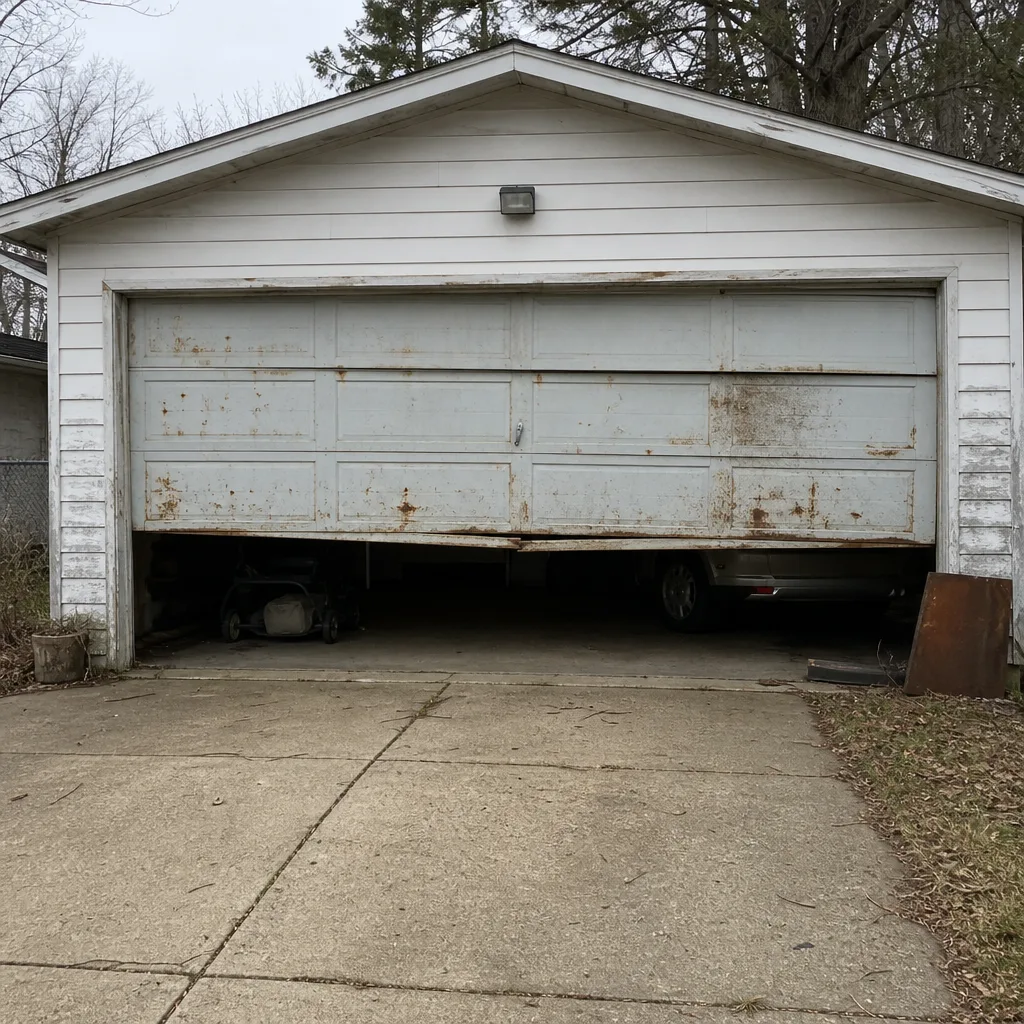 Before
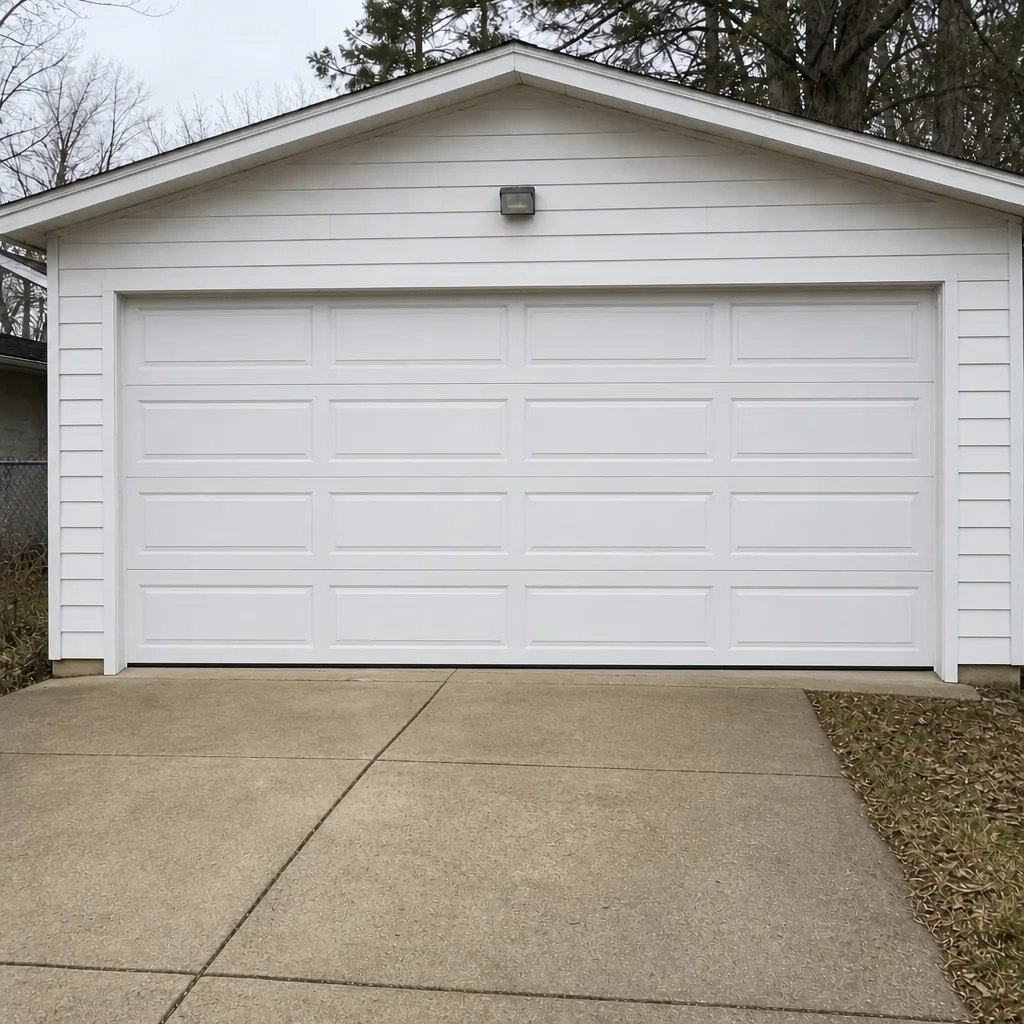 After
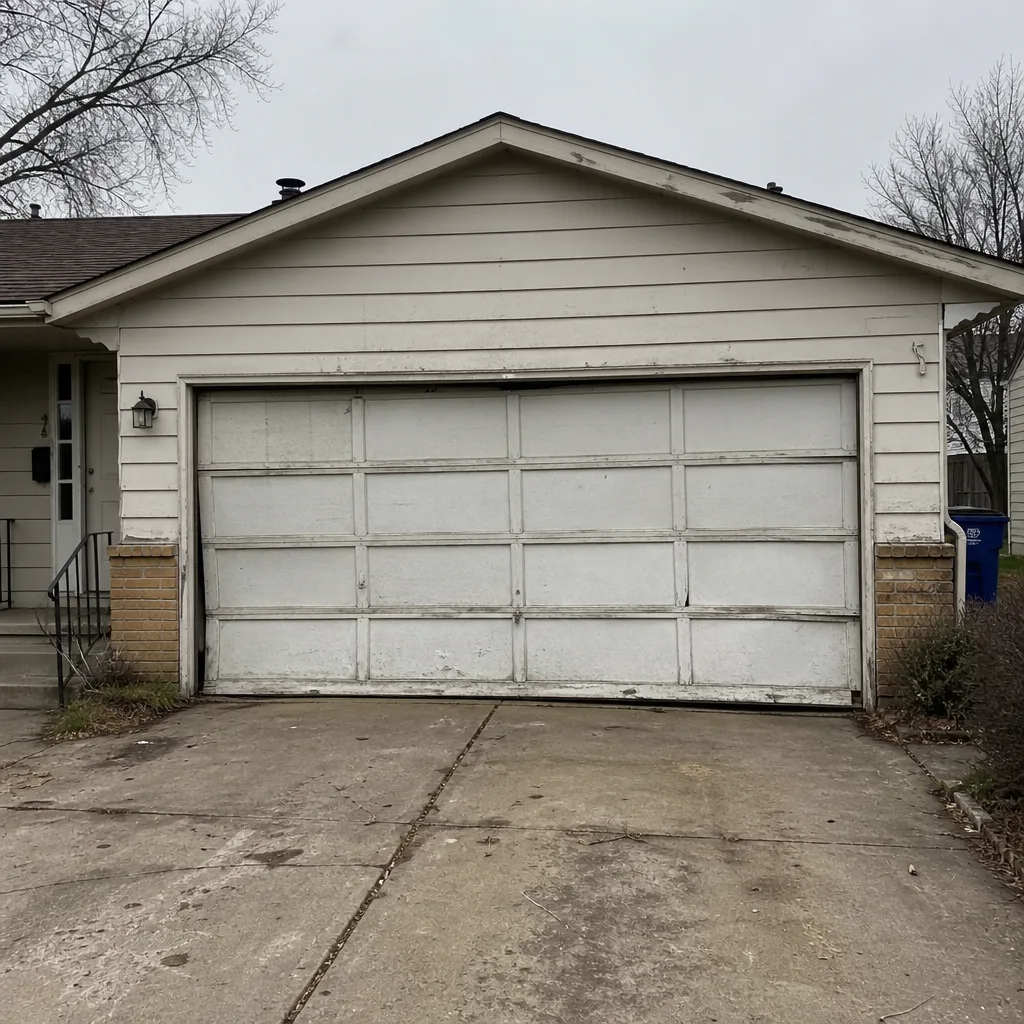 Before
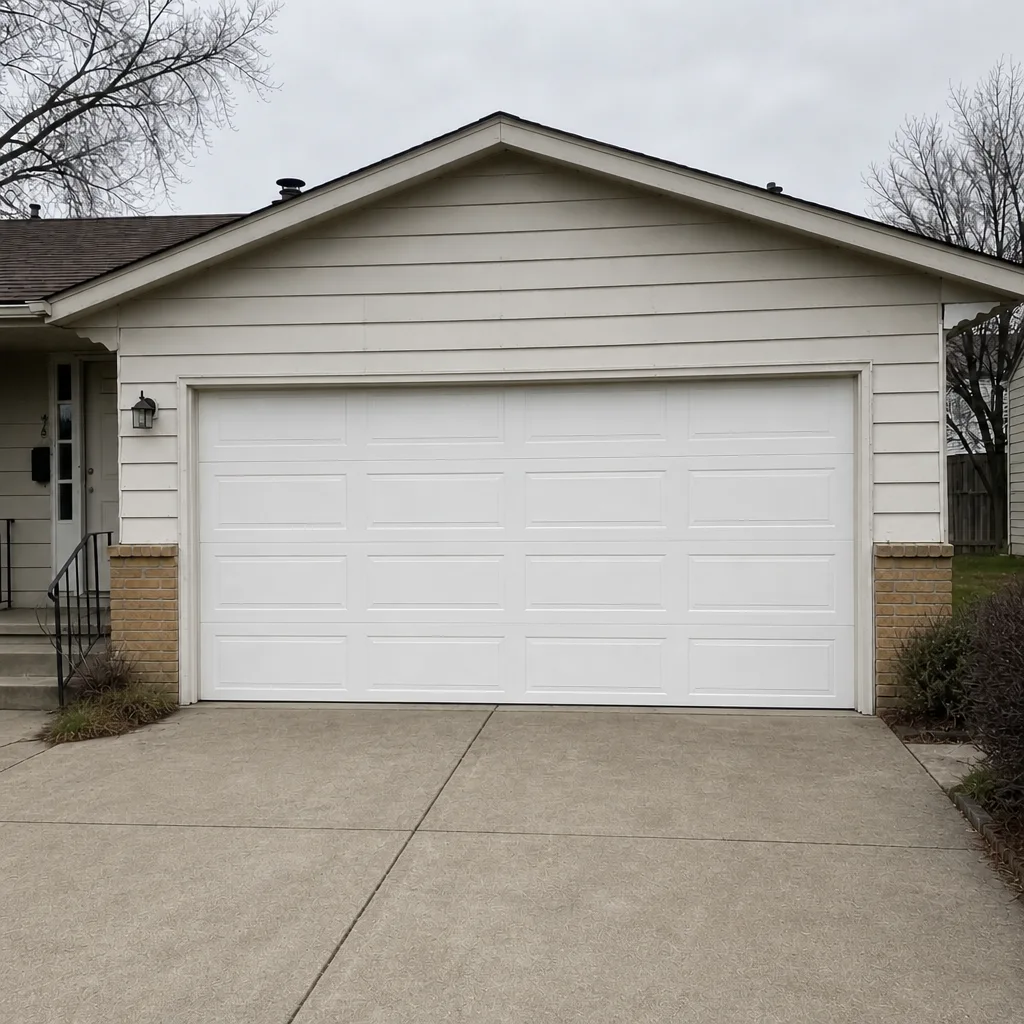 After
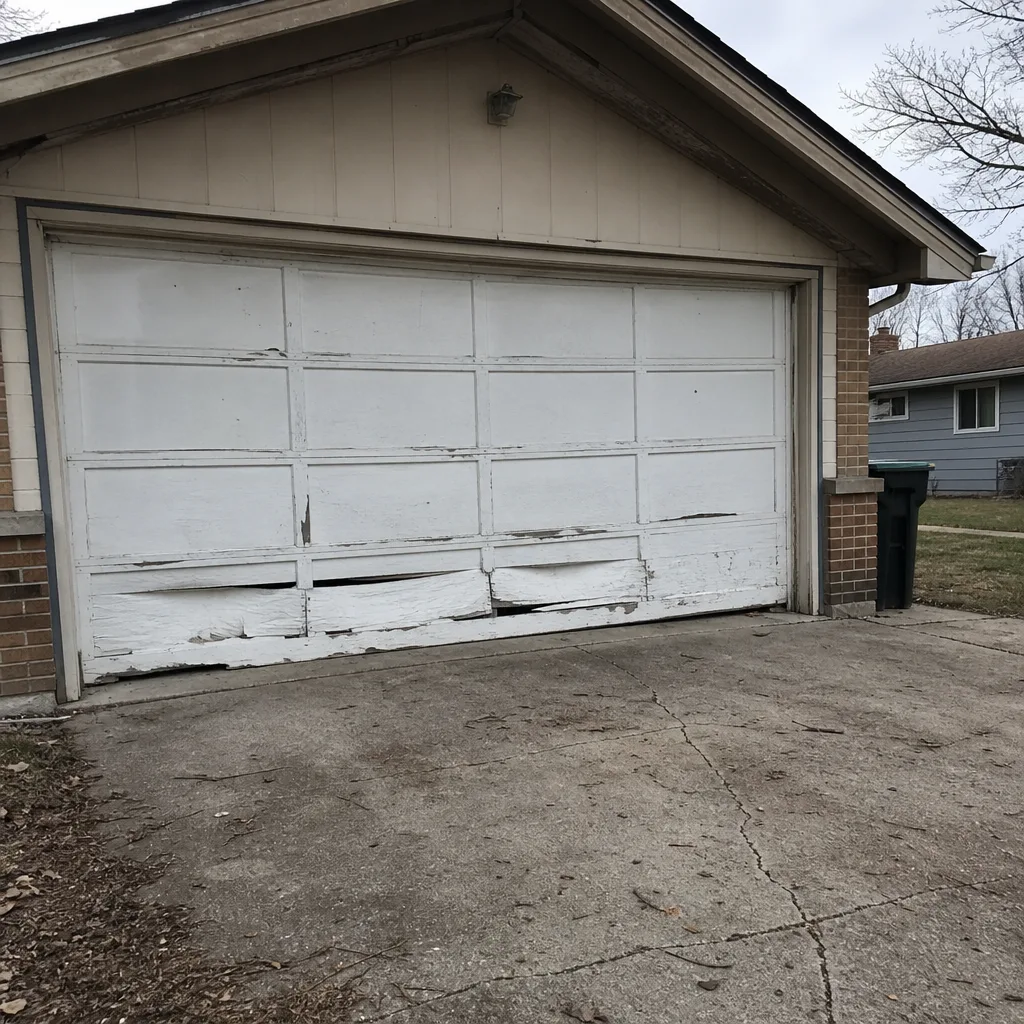 Before
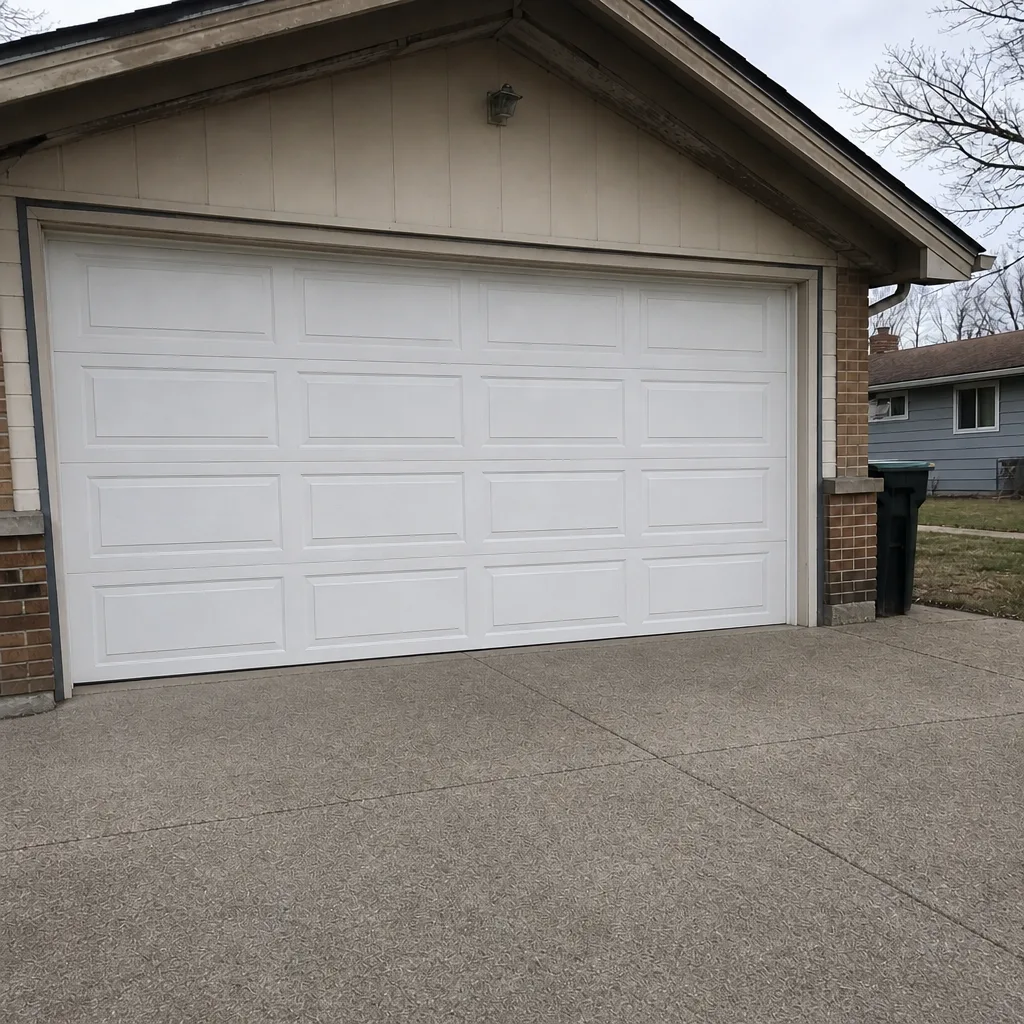 After
When to Call a Professional
Call a professional any time a spring is broken, a cable has snapped, the door is hanging off its track, or the door won’t close and you can’t secure it. Those are the situations where a DIY approach risks injury or bigger damage. Also call if your opener trips a breaker, smells hot, or won’t reverse on the safety test. For a door that’s stuck overnight, the right move is to secure it and call – not to fight it in the dark. Crossroads Garage Door Repair offers free estimates in Lansing – call (833) 673-0891. We answer 24/7. Fast dispatch from 7am to 7pm, Sunday through Friday, and we’re closed Saturday.
Frequently Asked Questions
Release the door manually with the red cord after checking that the door is balanced by hand. If it holds when you lift it about a foot and let go, pull the cord straight toward you and lift the door by hand. If it drops or flies, the springs aren’t holding and you should call for help instead. For a same-day look, call (833) 673-0891 – estimates are free.
No. Only release the cord with the door fully closed. An open door under spring tension can crash down when the carriage disengages, which is the most common cause of garage door injuries. Close it first, test the balance, then release.
Typical prices for common repairs in the Lansing area range from about $150 for a simple adjustment to $400 or more for spring or cable work, though the exact number depends on your door and the parts needed. We quote and agree on the price before any work starts, and the written estimate is the final price. Call (833) 673-0891 for an exact quote – estimates are free.
It won’t. A battery backup is designed to carry the door through a limited number of open and close cycles, not a full day of use. It also can’t compensate for a frozen seal or a broken spring. Keep the door closed during an outage and use the backup sparingly.
Only if you can secure it. A partially open door is a security risk and, if it can slide further, a physical one. Brace it or clamp the track to stop it moving, then call for same-day service. If you can’t secure it, treat it as urgent – call (833) 673-0891, we answer 24/7.
Yes. Our technicians are state-licensed and insured, and they have up to 13 years of experience working on doors and openers across every major brand. If your door was installed by a builder with a brand you don’t recognize, we can still identify and service it.
The Bottom Line
Most garage door emergencies in Lansing come down to a handful of scenarios, and each has a safe response. Check spring balance before you ever pull the release cord. Free a frozen seal by hand, never by cycling the opener. Treat a snapped cable or a broken spring as a same-day call, and a stuck partially open door as a security issue you secure before you sleep. Know your battery backup’s limits and prep the door before a storm. Every repair we quote is agreed in writing before we start, and the price you’re quoted is the price. Call (833) 673-0891 for a free estimate. We answer 24/7. Fast dispatch from 7am to 7pm, Sunday through Friday.
Written by the team at Crossroads Garage Door Repair.