
Last updated November 15, 2026
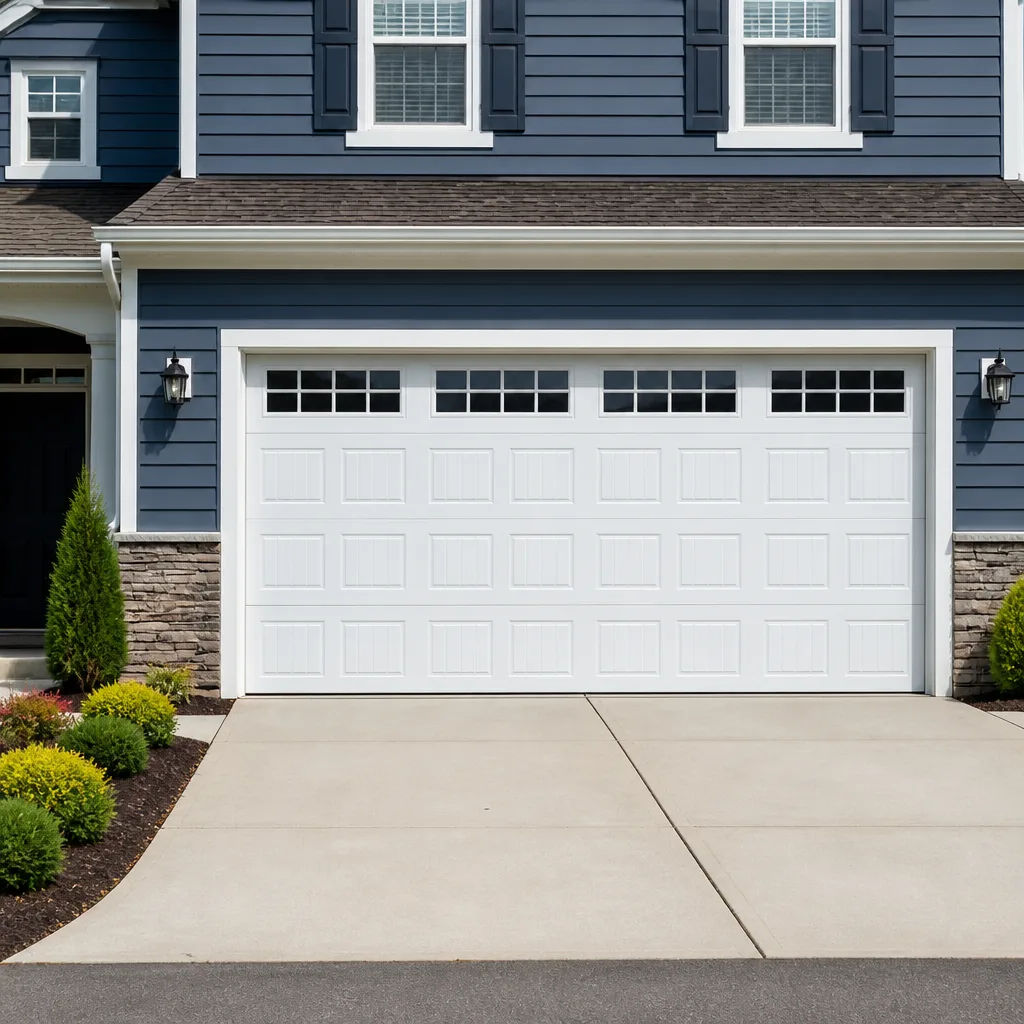 Raised-panel steel
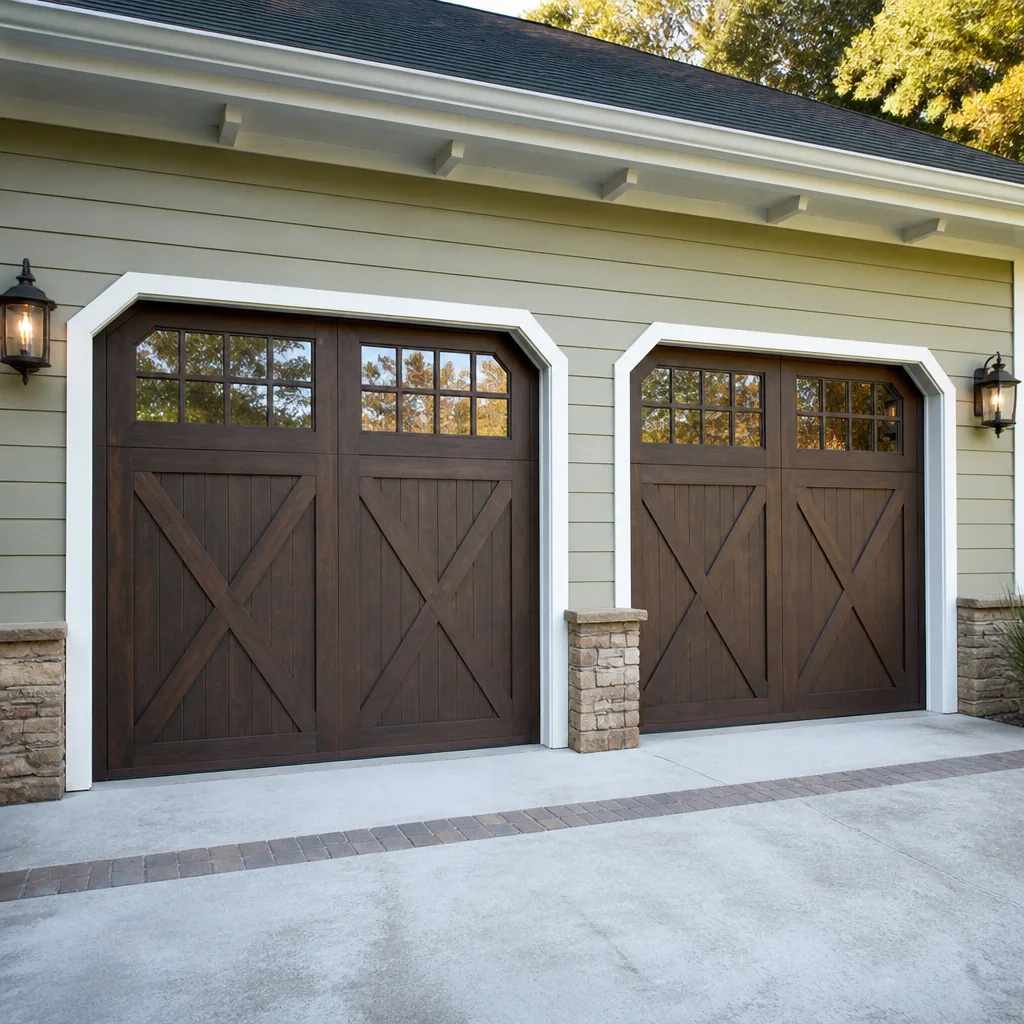 Carriage house
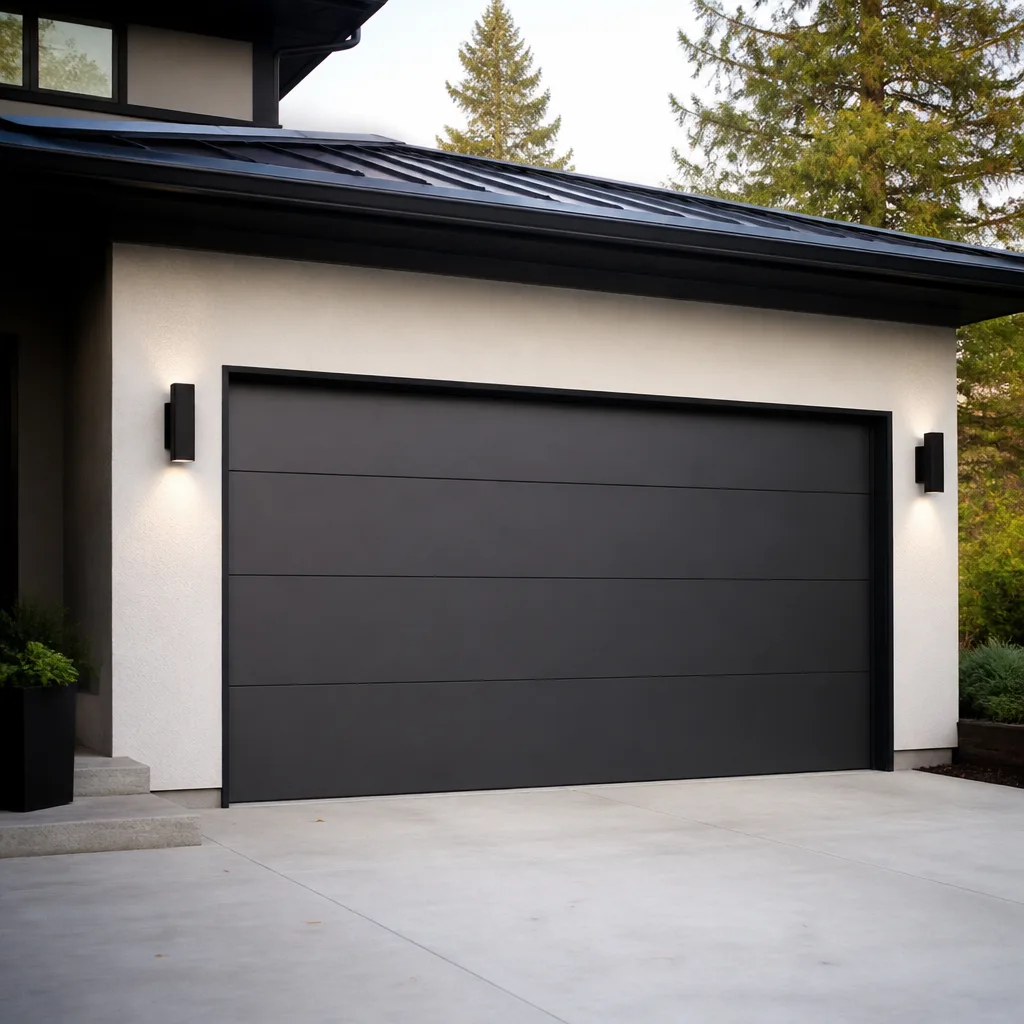 Modern flush
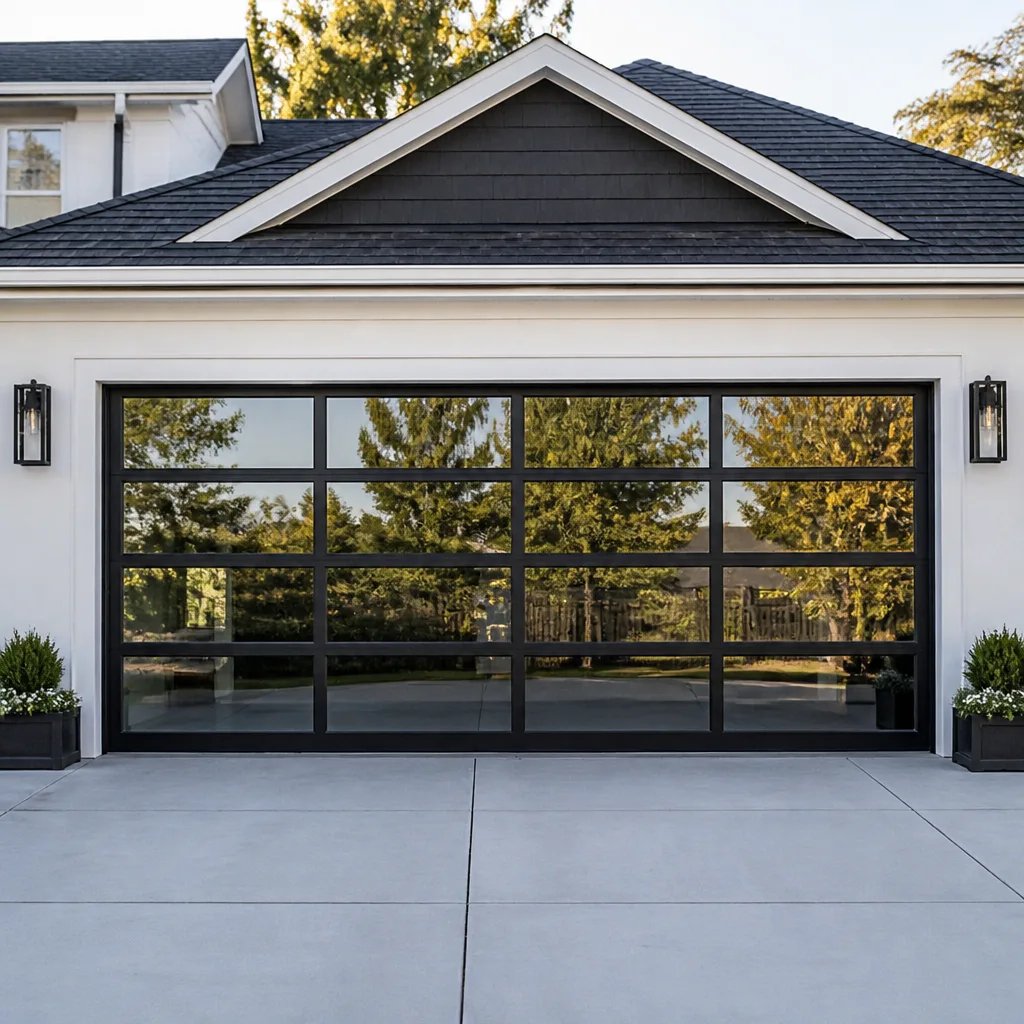 Full-view glass
 LiftMaster openers
 Chamberlain openers
Full 25-point door and opener safety check with every visit - springs, cables, rollers, tracks, and your LiftMaster or Chamberlain opener included
You get a price before we start. It does not change when the pro arrives.
Get your free estimateGarage Door Cost Breakdown: The Lansing Homeowner’s Reference for 2026
Two homeowners in Lansing can each get a quote for a “new garage door” and see numbers that differ by hundreds of dollars. Both quotes are technically accurate. One includes a 25,000-cycle spring; the other includes a 10,000-cycle spring. Head to head on the invoice, the cheaper quote wins. Head to head over ten years of Michigan winters, the math flips completely, because the low-cycle spring will be replaced before the high-cycle door has settled into its first decade of service. That gap is the whole reason this guide exists. Price ranges are easy to find. What’s hard to find is a breakdown that tells you what you’re actually buying at each number, how Lansing labor and Michigan’s climate zone shift that number, and how to read a quote so you can tell a fair price from a thin one dressed up as a bargain.
Quick Answer
A single-car garage door replacement in Lansing typically costs $850 to $1,600 installed, a double-car door runs $1,400 to $2,800 installed, opener-only replacement is typically $350 to $700, a single torsion spring replacement runs $180 to $340 for one spring (a matched pair is usually replaced together, so a pair costs about twice that), and cable repair typically costs $150 to $300. All of these are typical estimates, and the written estimate sets the final price. The spread inside each range comes down to door gauge, insulation, spring cycle rating, and whether the quote includes haul-away and hardware.
Styles & brands we work with
- Raised-panel steel
- Carriage house
- Modern flush
- Full-view glass
- LiftMaster openers
- Chamberlain openers
Table of Contents
- Line-Item Costs for the Most Common Lansing Jobs
- What Spring Cycle Rating Actually Means in Years of Use
- Insulation Premium vs. Energy Savings in Michigan’s Climate Zone 5
- Hidden Add-Ons That Inflate Final Invoices
- How to Read a Garage Door Quote Line by Line
- Why Brand Doesn’t Determine Price the Way You Think
- Building a Realistic Garage Door Budget for 2026
- Common Mistakes to Avoid
Line-Item Costs for the Most Common Lansing Jobs
Here’s the number you can actually use. These ranges cover typical 2026 Lansing-area labor rates and standard materials for each job type, and they assume the door is a standard residential size with no unusual structural work. The goal is a number that reflects the real job, not one so wide it covers every possible scenario and helps nobody.
Typical Estimated Cost by Job Type
- Single-car door replacement (installed): $850 to $1,600. Includes removal of the old door, new panels, tracks, hardware, torsion spring, and haul-away.
- Double-car door replacement (installed): $1,400 to $2,800. Same inclusions; the higher end covers heavier-gauge steel or insulated panels.
- Opener-only swap: $350 to $700. Includes removal of the old unit, new opener, rail assembly, and safety sensor re-alignment. Smart/Wi-Fi models sit near the top of that range.
- Single torsion spring replacement: $180 to $340 for one spring. A matched pair is usually replaced together, so a pair runs about twice that.
- Cable repair: $150 to $300. This covers one snapped lift cable, drum inspection, and re-tensioning.
- Track adjustment or roller replacement: $100 to $200 depending on how far the track is out of plumb.
What pushes a job toward the top of a range? Gauge of steel, insulation, and spring cycle rating, mostly. A heavier 25-gauge door costs more than a standard 27-gauge door; an insulated door costs more than an uninsulated one; a 25,000-cycle spring costs more than a 10,000-cycle spring. The labor is largely the same on all three. The difference lives entirely in the materials. That distinction matters when you’re comparing two quotes for the “same” door and wondering why the numbers don’t line up.
For work that’s a repair rather than a replacement, our garage door repair team handles the diagnosis and the fix. If the door is fine but the motor or rail is the problem, that’s a separate job type entirely. Our garage door opener repair team deals with the opener as its own system, which is often the right call, since a good door with a failing opener doesn’t need a new door.
What Spring Cycle Rating Actually Means in Years of Use
Springs are rated in cycles, and one cycle is one open plus one close. A 10,000-cycle spring is engineered to last roughly 10,000 cycles before it loses tension and needs replacing. A 25,000-cycle spring is engineered to last 25,000. At typical residential use, that’s about four door movements per day, which is 1,460 cycles a year. Do the arithmetic: a 10,000-cycle spring gets you roughly six to seven years of service. A 25,000-cycle spring gets you roughly seventeen years. That difference is the single most consequential fact on the invoice and the one most often left unstated.
Standard vs. High-Cycle Springs
- 10,000-cycle spring: standard grade; typical cost $180 to $340 for one spring installed. Fine for a door used a few times a day.
- 15,000-cycle spring: mid-grade; roughly 20 to 30 percent more than standard, and worth it if the door sees heavier daily use.
- 25,000-cycle spring: high-cycle grade; roughly 40 to 60 percent more than standard, and the one to specify if you’re planning to stay in the house long-term.
Cost only makes sense against expected service life. Paying a bit more for a 25,000-cycle spring today beats paying for two standard replacements over the same span, not because the high-cycle spring is magic but because replacing a spring twice is two full jobs at today’s labor rates. The same logic applies whether the spring comes on a door carrying a Raynor nameplate or any other brand. Springs are the wear item; the door is the frame around them.
Why Michigan Winters Add Cycles
Lansing sits in a climate where the door goes up and down more than a homeowner down south might realize. Cold mornings, snow shoveling, snowblowers coming out, groceries coming in from the trunk, kids going out to the bus: every one of those is a cycle. Cold also makes grease stiffen and metal less forgiving, which puts real stress on the spring when it cycles. In our experience, springs in Michigan hit their rated cycle count sooner than a climate-adjusted schedule would suggest, which is one reason it’s worth knowing the cycle rating on your spring, not just the size.
Insulation Premium vs. Energy Savings in Michigan’s Climate Zone 5
An insulated garage door costs more than an uninsulated one, typically by about $200 to $500 for a double-car door. Whether that premium pays back depends on something more specific than “does insulation help” – it depends on whether the garage sits under a heated room. In Lansing’s climate zone 5, winters are cold enough that an uninsulated garage door makes the wall between the garage and the house work harder than it should. That wall is where the money actually leaks out.
Attached vs. Detached Garages
- Attached garage under a heated bedroom: insulation here pays back; the floor above stays warmer, and the furnace isn’t fighting a continuous cold sink.
- Attached garage beside the living space: insulation pays back in reduced drafts and steadier room temperature, even without living space above.
- Detached garage with no heat: insulation keeps the interior more stable and quiets the door, but there’s no shared wall to protect, so the energy math is thinner.
Two other details genuinely move the needle in this climate. One is the type of insulation inside the door: polyurethane foam (usually injected between the panels) insulates better than polystyrene board for the same stated door thickness. The other is thermal breaks, which stop the cold from conducting straight through the steel skins. The reason this matters in Michigan is condensation: cold door, warm garage, and every metal surface starts to sweat, which is how hinges and bottom seals rust from the inside out. A properly insulated door with thermal breaks cuts that condensation dramatically.
We’re careful about the payback language here because the honest answer is “it depends on your walls and your windows.” An insulated door reduces the load; it doesn’t single-handedly pay for itself in a fixed number of years. What it does do reliably is make the door quieter and stop condensation, and those two things either matter to you or they don’t. Ask the person quoting the job which type of insulation is inside the door, and if they can’t tell you, that’s a gap in the quote you can push on before signing.
Because the door panels and the opener are one system, this is where a full-service call matters. Crossroads can quote a new insulated door and, in the same visit, assess whether your current opener can handle the extra weight. A new door on a tired opener is a mismatch. We see it often enough that we treat it as a standard check during any Lansing replacement quote.
Hidden Add-Ons That Inflate Final Invoices
The quote is where the price is set, but the invoice is where budgets go sideways. Some line items on a garage door invoice are standard inclusions that should already be in the price, and some are legitimate extras that genuinely reflect additional work. Knowing which is which is how you avoid a surprise at the end of the job.
Standard Inclusions (Should Be in the Quote)
- Haul-away of the old door and panels. A replacement job that doesn’t remove the old door isn’t finished. Removal and disposal are part of a replacement quote.
- Track adjustment on the new installation. Tracks are installed with the new door; a post-install track adjustment that’s caused by the install itself shouldn’t be a separate charge.
- Programming a new opener to the door’s remote. If the opener swap is being done, setting up the remotes is part of the job.
- Safety sensor re-alignment on a new opener. New opener installs ship with new sensors; those have to be aligned before the job is complete.
Legitimate Extras (Reasonable to See as Line Items)
- Structural reframing around the header or jambs. If the opening isn’t plumb or the header is rotted, framing is real carpentry, not door work, and it’s fair to charge for it.
- Upgraded spring cycle rating. If you ask for a 25,000-cycle spring instead of standard, the upcharge is fair.
- Keypad or Wi-Fi module add-ons. Programming the opener’s remotes is standard; installing a separate keypad or a Wi-Fi gateway that isn’t part of the new opener is a distinct piece of work.
- New weather seal or bottom seal. The bottom seal is a wear item and often needs replacing with the door; some quotes include it, some don’t. Ask.
Our rule here is simple: the price is quoted and agreed before any work starts, and if the tech finds something underneath the skin (like a rotted header), that conversation happens before any additional work, not after the invoice is drawn. If a quote comes back far below the ranges above, the missing money is usually in one of three places: a lower-cycle spring, an uninsulated door labeled as insulated, or haul-away left off so it can be added later.
How to Read a Garage Door Quote Line by Line
A garage door quote is only as useful as the specifics in it. “New garage door, installed” tells you nothing you can compare. Do this instead, line by line:
- Check the gauge of the steel. A residential door is typically 24-gauge, 25-gauge, or 27-gauge. Lower numbers mean thicker steel. A 24-gauge door will hold up better than a 27-gauge door at the same price, and if the quote doesn’t state the gauge, ask for it in writing.
- Verify the insulation type, not just the R-value. “Insulated” can mean polystyrene or it can mean polyurethane foam. Polyurethane is the better insulator. Ask which one is in the door, and confirm it’s listed on the quote.
- Confirm the spring cycle rating. Standard (10,000), mid (15,000), or high (25,000). This is not a minor detail; it’s the single biggest driver of long-term cost on a door you plan to keep.
- Look for the removal and haul-away line. If it’s missing, the quote isn’t complete.
- Count the hardware. Rollers, hinges, and the bottom seal should be listed as new unless the quote specifically says they’re being reused.
- Check the opener spec, if there is one. The opener’s model, horsepower, and whether it includes a battery backup should all be stated. A smart/Wi-Fi model is a different item from a legacy one, and the price difference is legitimate.
- Confirm the warranty on the door and the spring separately. Doors and springs carry different warranties; a good quote names the term on each.
If a quote reads only “brand name and color,” ask for the gauge, insulation, and spring rating before you sign. A written estimate that doesn’t specify those three items isn’t really a price; it’s a placeholder. That’s the difference between a quote you can compare across three contractors and a quote you have to take on faith.
Why Brand Doesn’t Determine Price the Way You Think
The brand on your door rarely controls the price of the repair. Labor is labor. A snapped spring on a Raynor door is the same job as a snapped spring on any other door of the same size and configuration. What the brand does control is parts availability and the specific hardware. That’s why the right question isn’t “who installs brand X” but “does the person quoting this know how brand X was assembled.”
What Brand Actually Affects
- Panel matching on repairs. A replacement panel has to match the profile and color on the existing door. Brand matters here because the profile shapes vary.
- Opener compatibility. A LiftMaster opener and a Chamberlain opener have their own remote and sensor compatibility; a Genie unit has its own. Wiring an aftermarket module onto an old unit is where mismatches happen.
- Legacy vs. smart openers. Older mechanical openers from the major brands were built to a spec that’s very different from today’s smart/Wi-Fi units. The diagnostic approach differs, even though the call is the same.
We work on what you already have. Whether it’s a LiftMaster opener or a Chamberlain unit or a door with a Genie opener attached, the diagnostic approach is the same: find the actual problem, then fix the actual problem. That’s why we’re deliberate about repair-first quoting. A technician who knows the door needs a $200 cable repair shouldn’t be talking you into a $1,400 replacement, and the way to protect against that is to ask for the diagnosis in plain language before approving the work.
Full-system capability matters here too. When the door, the opener, and the springs are all in play, a single call covers all three, and there’s no finger-pointing between one contractor who says the problem is the opener and another who says it’s the door. Our technicians have up to 13 years of experience across the equipment we see in Lansing homes, and that range covers everything from a 1990s Craftsman opener to a brand-new smart unit.
Building a Realistic Garage Door Budget for 2026
Budgeting for a garage door is really budgeting for a timeline of projects, not one purchase. The door comes first, then the opener, then the springs. Here’s how we’d suggest thinking about the spend across a household that’s been in the same Lansing house for a decade:
- Year 1: Repairs and assessment. If the door is functioning, spend the year establishing the condition. Check spring rating, cable condition, and opener age. Budget the repair ranges above; a spring replacement is the most common line.
- Year 2-3: Opener replacement. Openers age faster than doors, and a smart unit is often the easiest upgrade. Budget the $350 to $700 range. This is where the biggest usability gain is.
- Year 4-5: Door replacement (if needed). An aging door with dents, rust, and a tired look warrants the replacement range. Any panel that’s structurally compromised moves the repair vs. replace decision quickly toward replace.
- The thread through all of it: spring quality. If a replacement happens, spec a 25,000-cycle spring from the start. That one decision prevents a second spring job inside the life of the door.
What you don’t want to do is spread these jobs out without a plan, because that’s how you end up replacing a spring on a door you’re going to replace in eighteen months anyway. A free measure and a written price on the eventual replacement lets you sequence the spend, and a repair-first approach means you’re not paying for a door before you need one. When you’re ready to lock in numbers, our team at Crossroads Garage Door Repair writes estimates we stand behind, and we’ll tell you plainly if a repair is still the right call.
Common Mistakes to Avoid
- Accepting a quote without a spring cycle rating. If the paperwork doesn’t say 10,000, 15,000, or 25,000 cycles, you don’t know what you bought. Ask, in writing, before you approve.
- Comparing door prices across quotes without checking gauge. A 27-gauge door and a 24-gauge door aren’t the same product even if the color and style match. A cheaper quote on paper is often a thinner door in practice.
- Upgrading to an insulated door for a detached, unheated garage without questioning the payback. Insulation is worth it when there’s a shared wall or a heated space above. On a pure tool-shed garage, the value is quieter operation, not energy savings.
- Signing off on haul-away as a separate charge. Removal and disposal are part of a replacement job. If it appears as a surprise line item late, push back.
- Letting the opener age out while replacing the door. A new door on a tired opener is a mismatch that shows up within a few months. Have both assessed together.
- Skipping the sensor alignment on an opener swap. A new opener install that leaves the safety sensors mis-aligned is technically not finished. The sensors are a safety feature; they need to be part of the handover.
- Taking a same-day quote on a door that’s still being measured. Replacement is a measured and scheduled job, not a today job. Same-day quotes on a door replacement are usually a red flag; the door can’t be installed before it’s measured.
See the difference
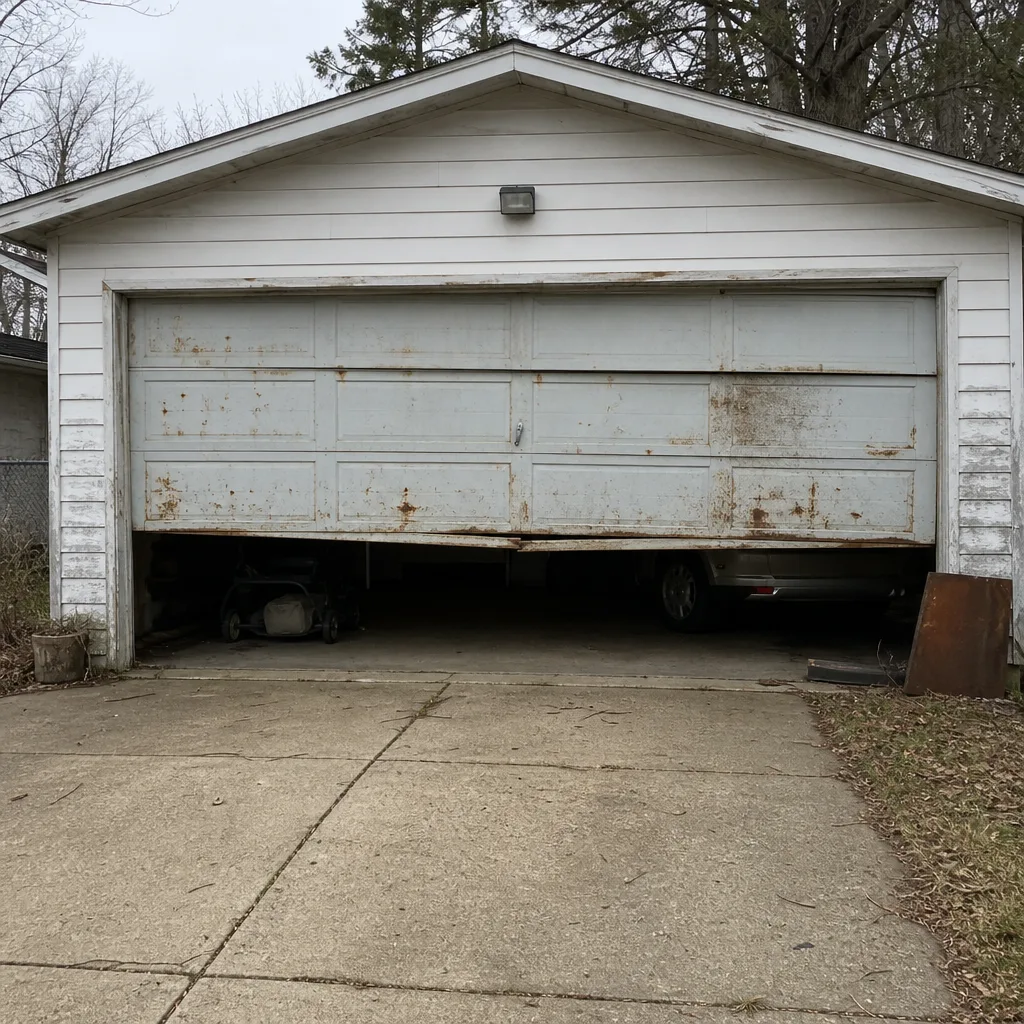 Before
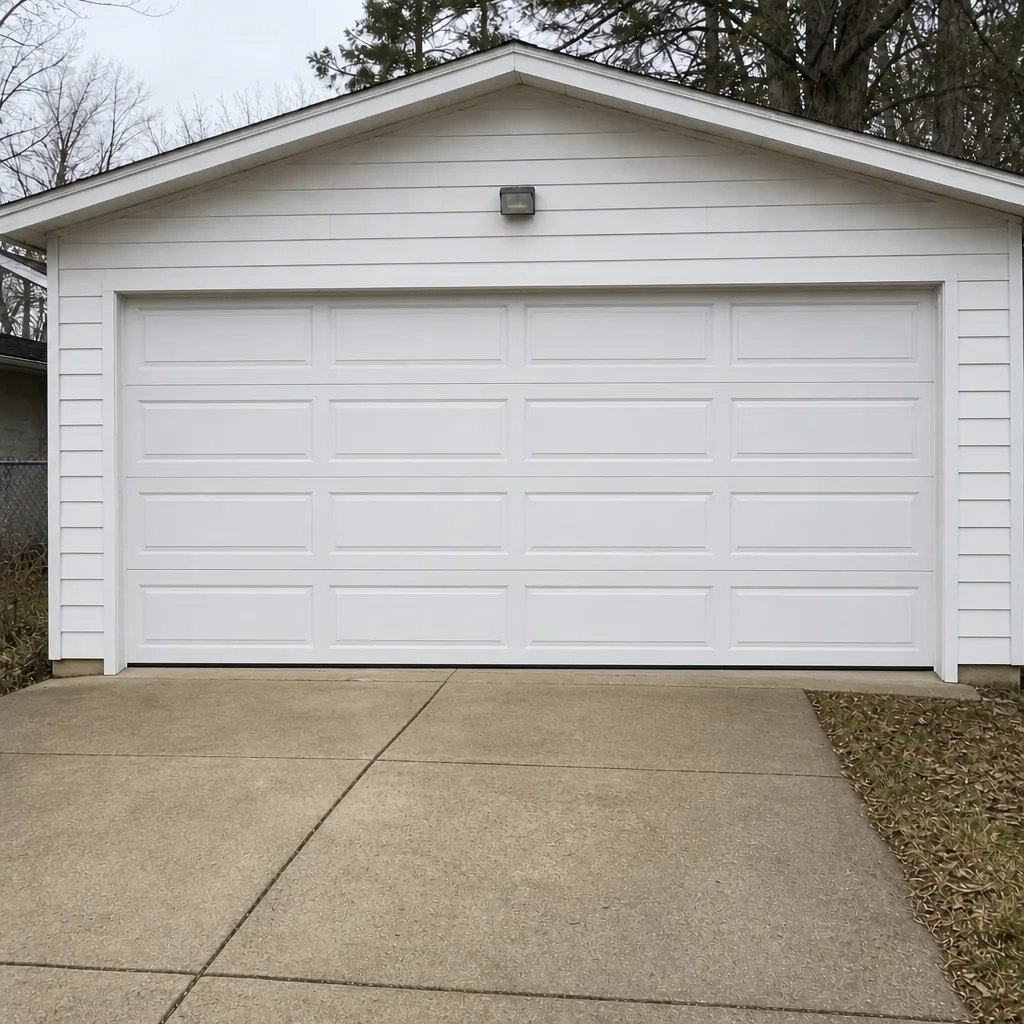 After
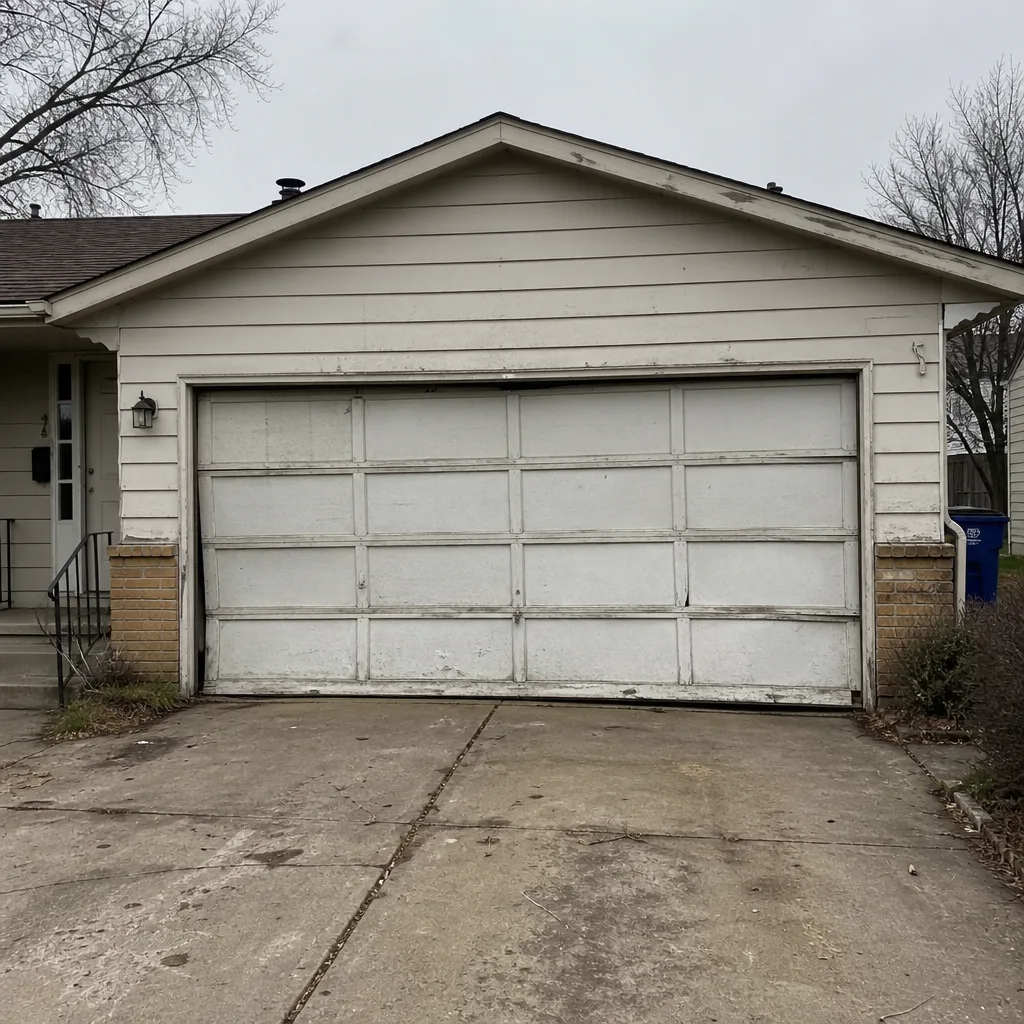 Before
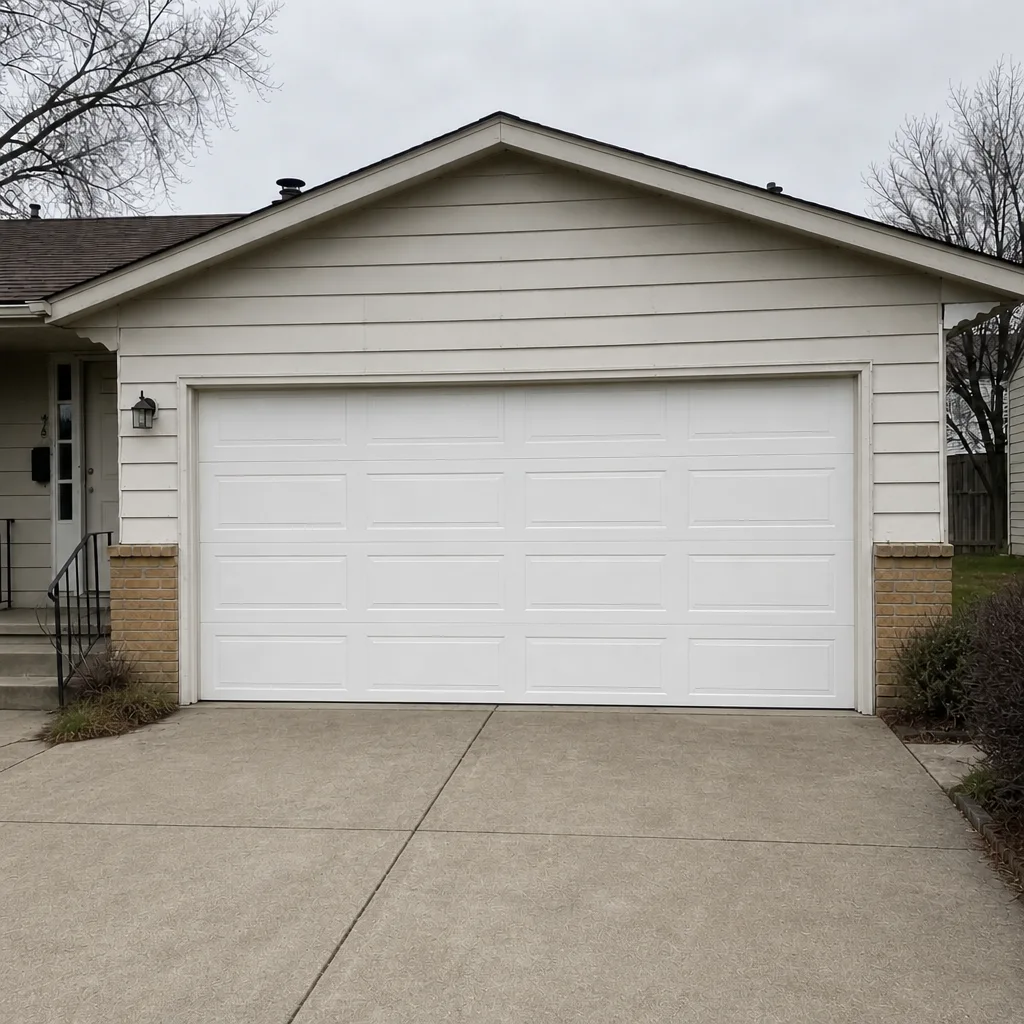 After
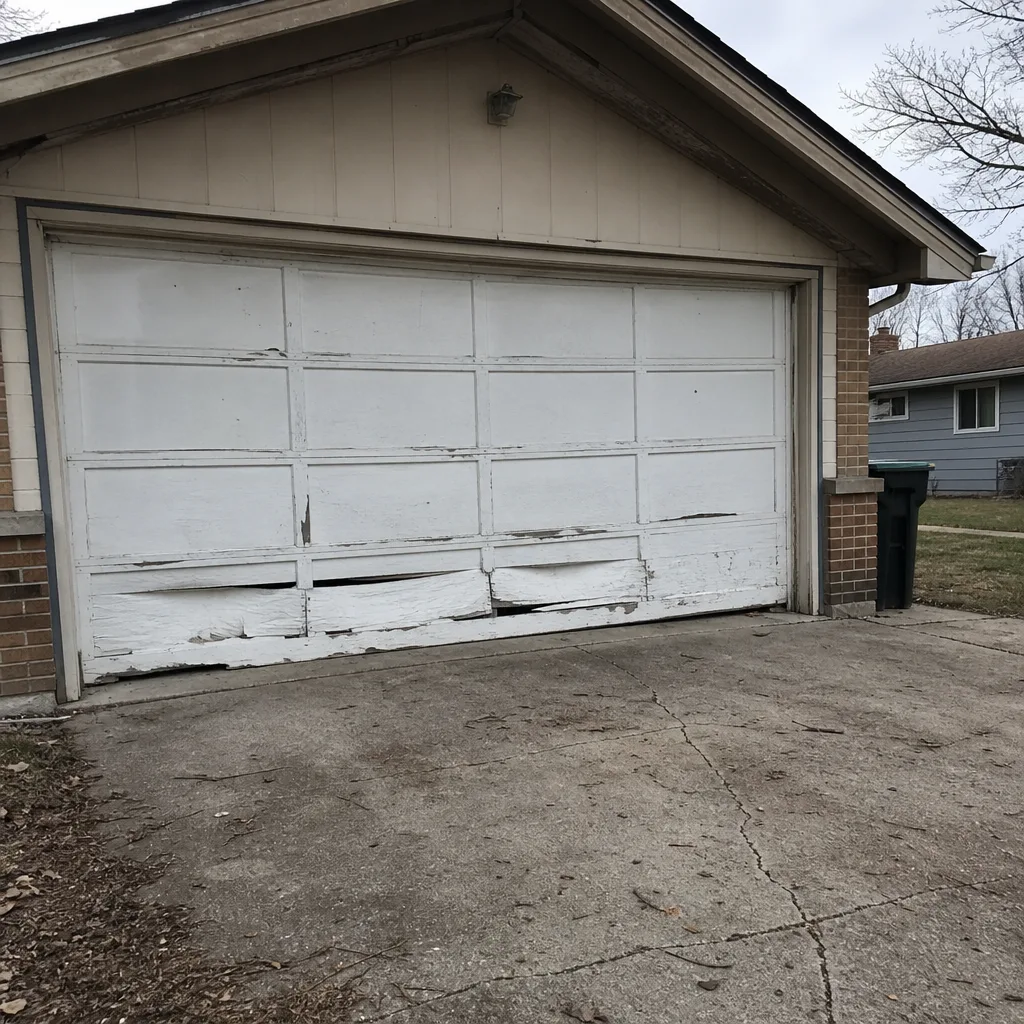 Before
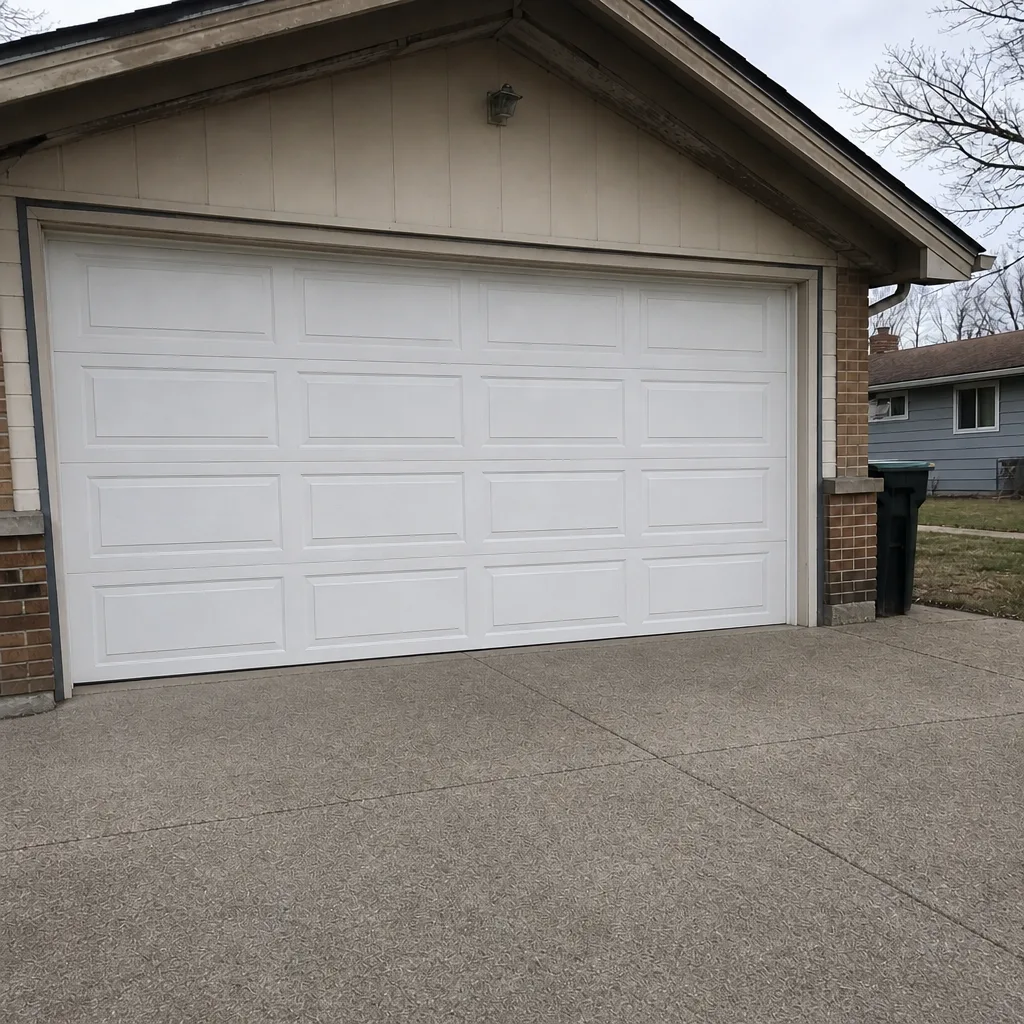 After
When to Call a Professional
Some garage door jobs are genuinely DIY-friendly; most aren’t. Call a professional if any of these sound familiar: a spring has snapped and the door is stuck, a cable has let go, the door has come off its track or is hanging at an angle, the opener runs but the door doesn’t move, or the door reverses on the way down. High-tension torsion springs and lift cables are dangerous to handle without training; the stored energy in a wound spring is enough to cause serious injury, and we don’t recommend attempting a spring or cable repair yourself. Call us for that. A technician with the right winding bars and the right knowledge gets the job done in a fraction of the time. For an opener that’s run its course, a replacement is scheduled rather than same-day, so plan accordingly. Crossroads Garage Door Repair offers free estimates in Lansing. Call (833) 673-0891. We answer 24/7. Fast dispatch from 7am to 7pm, Sunday through Friday.
Frequently Asked Questions
A single-car door replacement in Lansing typically costs $850 to $1,600 installed, and a double-car door runs $1,400 to $2,800 installed. The range reflects door gauge, insulation, and spring cycle rating more than anything else. The written estimate sets the final price, and the estimate is free. Call (833) 673-0891 for an exact quote.
Single torsion spring replacement in Lansing typically costs $180 to $340 for one spring, and a matched pair is usually replaced together, so a pair runs about twice that. The price is quoted and agreed before any work starts. Call (833) 673-0891 for an exact quote on your door; estimates are free.
Not without your approval. The price is quoted and agreed before any work starts, and if something unexpected comes up (a rotted header, a bad jamb), you’ll hear about it before any additional work begins. The written estimate is the price.
Yes, the technicians we connect you with are licensed and insured. You’ll get a professional on a job that involves high-tension springs and lift cables, which is exactly the kind of work that calls for training. For an exact quote on a Lansing job, call (833) 673-0891; estimates are free.
For repair and emergency calls, yes, same-day service is available across Lansing, and dispatch runs from 7am to 7pm, Sunday through Friday. We answer the phone 24/7. Replacement and new-door installs are measured, ordered, and scheduled rather than same-day. Call (833) 673-0891 for the fastest response.
A 10,000-cycle spring is rated for roughly 10,000 door cycles (one open plus one close) and lasts about six to seven years at typical residential use; a 25,000-cycle spring lasts roughly seventeen years. The high-cycle spring costs more upfront, typically 40 to 60 percent more than standard, but avoids a second spring job inside the life of the door. In Lansing, that difference is worth understanding before you sign. Call (833) 673-0891 for a quote on your door.
The Bottom Line
A garage door price in Lansing is only useful if you know what’s inside it: gauge, insulation, and spring cycle rating. The ranges in this guide ($850 to $1,600 for a single door, $1,400 to $2,800 for a double, $350 to $700 for an opener, $180 to $340 per spring, $150 to $300 for cable work) are realistic 2026 estimates for the Lansing market. Use them to sanity-check a quote. A price significantly below them usually has something important left out, and a price significantly above them usually needs a reason. The written estimate sets the final price, and you should be able to read every line of it before you sign. That’s the standard we hold ourselves to on every job we quote.
Ready to put real numbers against a real door? Call Crossroads Garage Door Repair at (833) 673-0891 for a free estimate. We answer 24/7. Fast dispatch from 7am to 7pm, Sunday through Friday. We can also help with a same-day garage door repair if something’s broken right now, so call us and we’ll sort out what your door actually needs.
Written by the team at Crossroads Garage Door Repair.