
Last updated November 15, 2026
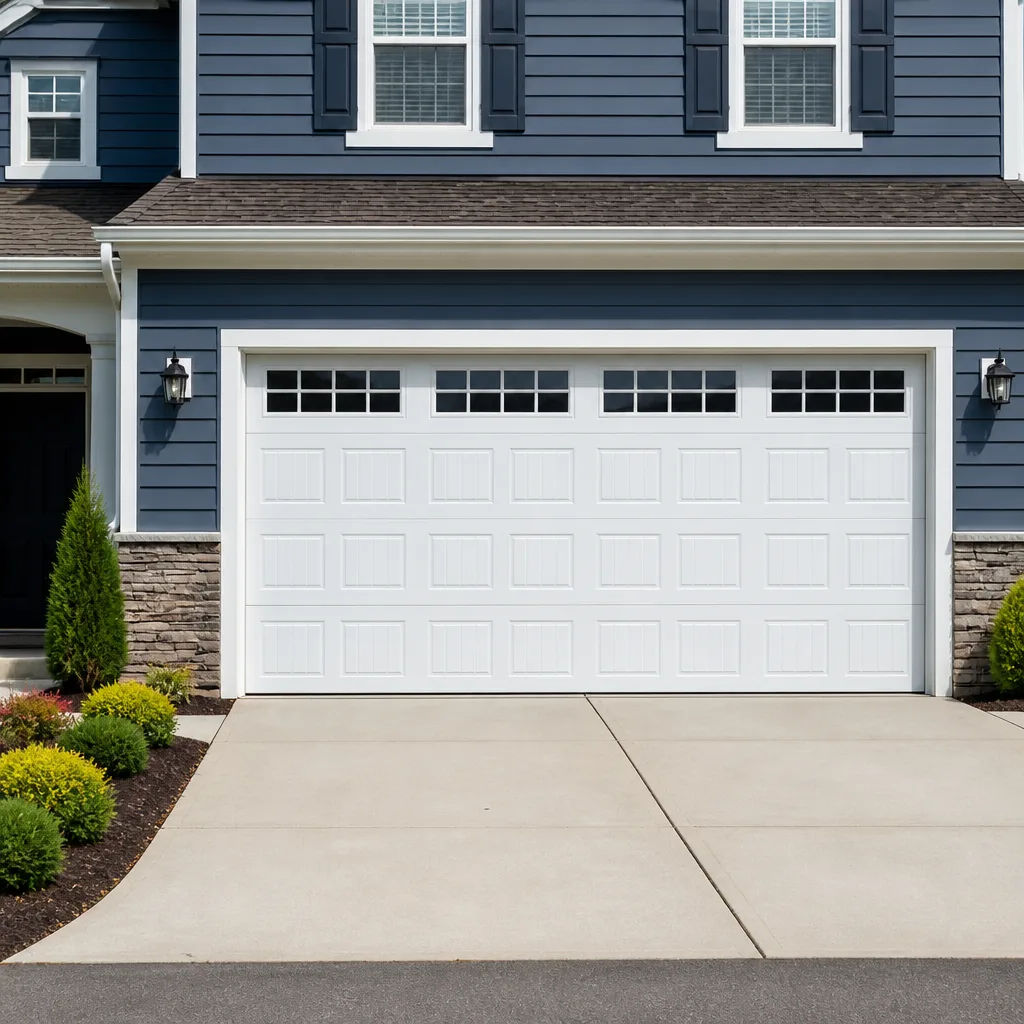 Raised-panel steel
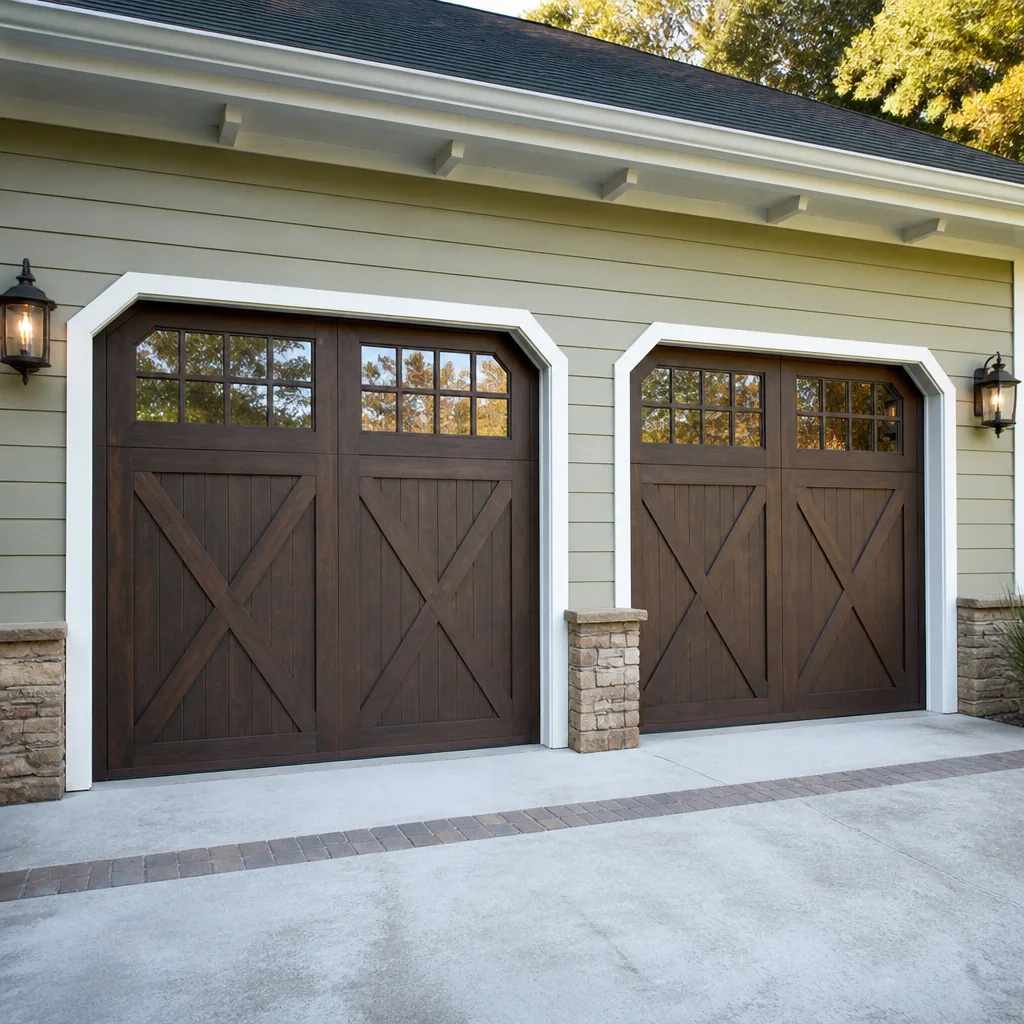 Carriage house
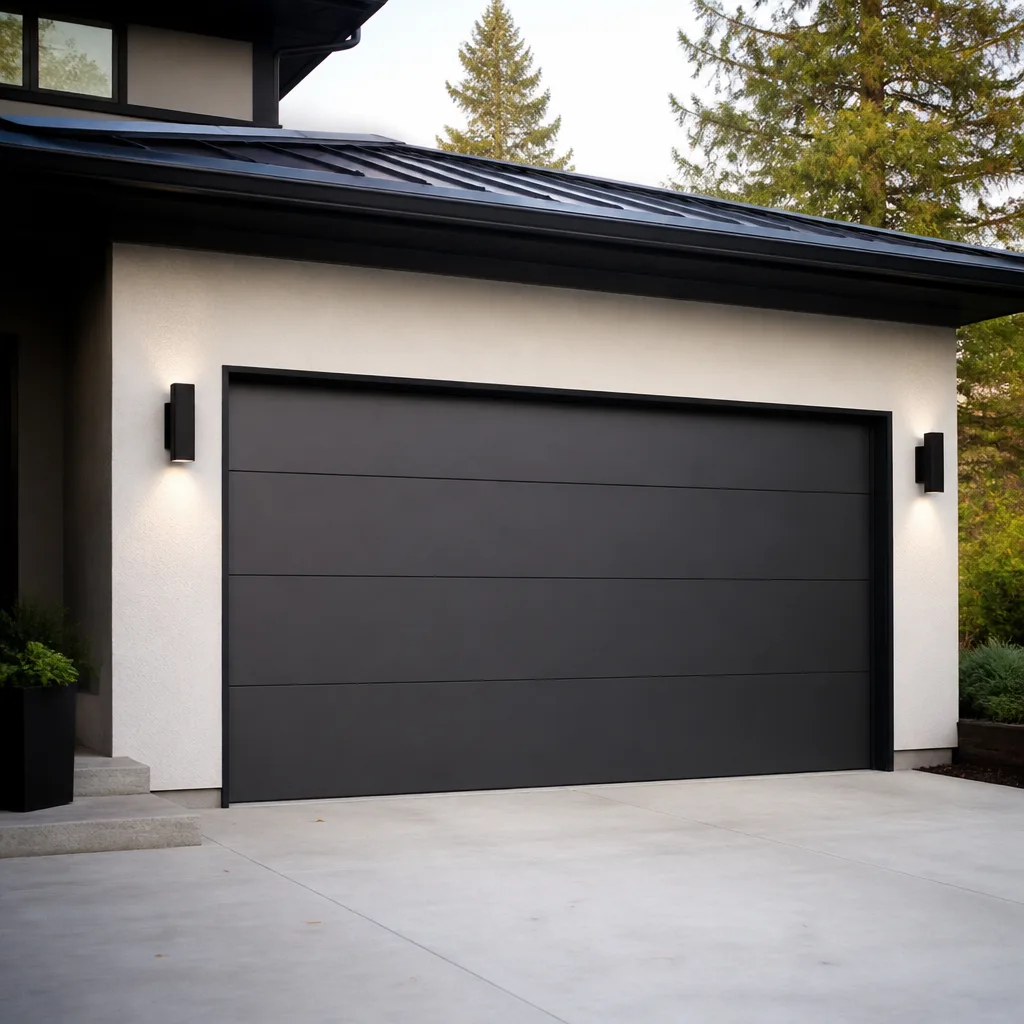 Modern flush
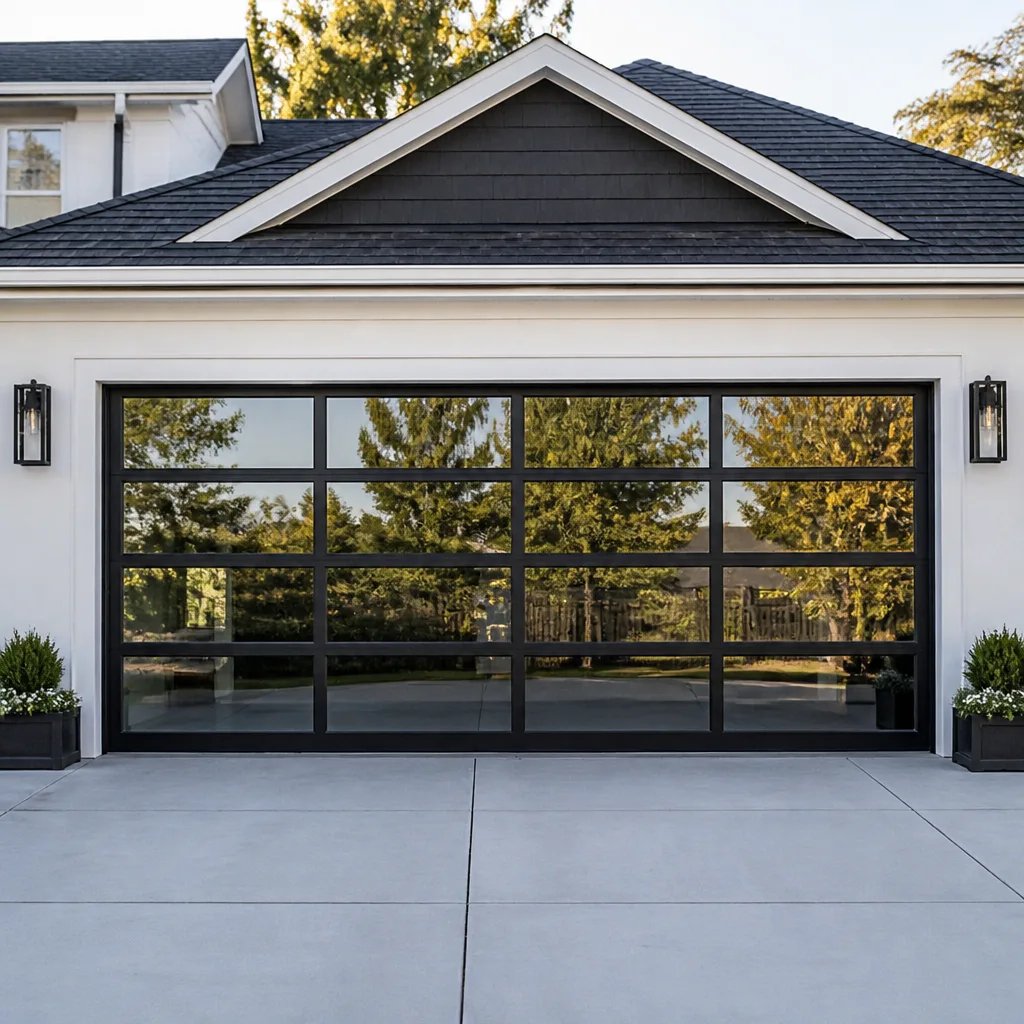 Full-view glass
 LiftMaster openers
 Chamberlain openers
Full 25-point door and opener safety check with every visit - springs, cables, rollers, tracks, and your LiftMaster or Chamberlain opener included
You get a price before we start. It does not change when the pro arrives.
Get your free estimateChoosing the Right Garage Door Brand: A Buyer’s Guide for Lansing
The most-installed garage door brand in a Lansing subdivision is often the one that cut the best deal with the builder, not the one with the best hardware for Michigan winters. That’s the first thing to understand before you shop. Brand recognition and regional climate suitability are two different things, and the gap between them shows up years later when a bottom seal goes stiff in January or a hinge starts to rust. This guide evaluates the major brands available in Lansing against the criteria that actually matter here: cold-weather hardware, panel construction for freeze-thaw stress, and whether the parts on your door can be sourced when the original dealer isn’t the one who answers your call.
Quick Answer
For most Lansing homeowners, a mid-tier steel door from Clopay, Amarr, Wayne Dalton, or CHI is the right choice, and the specific brand matters less than the hardware package: spring rating, hinge and roller quality, bottom seal material, and a properly sized opener. Brand names describe panel construction and insulation type; the parts that actually fail are usually springs, cables, and openers, which are often made by other manufacturers entirely. Buy for panel quality and parts availability, not for the logo on the door.
Styles & brands we work with
- Raised-panel steel
- Carriage house
- Modern flush
- Full-view glass
- LiftMaster openers
- Chamberlain openers
Table of Contents
- What a Garage Door Brand Actually Tells You
- Comparing the Major Brands: Steel Gauge, Insulation, Hardware
- How to Judge a Brand’s Cold-Weather Performance in Michigan
- Parts Availability: The Question Nobody Asks at the Showroom
- Why the Door Brand Matters Less Than the Spring, Cable, and Opener
- The Honest Case for Mid-Tier Brands
- A Step-by-Step Way to Choose a Brand for Your Lansing Home
- Installation and Repair: Why the Installer’s Familiarity Matters
What a Garage Door Brand Actually Tells You
A garage door brand tells you who formed the steel panels and how they assembled the section. It does not tell you who made the springs, the hinges, the rollers, or the opener. Most residential doors in Lansing are built from galvanized steel skins over a polyurethane or polystyrene core, or on some models, no core at all. The brand name on the door is a manufacturing label, not a warranty on every component underneath.
That distinction matters when something breaks. When a torsion spring snaps on a Tuesday morning, the brand of the door panel has almost nothing to do with the replacement. What matters is the spring’s wire gauge, inside diameter, and length, all of which any trained technician can measure and match. The same is true of cables, drums, and bearings.
Where the brand does matter is in three places:
- Panel construction and gauge. A heavier steel skin resists dents and holds its shape through freeze-thaw cycles better than thin steel.
- Insulation type. Polyurethane cores are denser and insulate better than polystyrene; both beat an uninsulated pan door.
- Proprietary hardware. A few manufacturers use fasteners, hinges, or track profiles that aren’t interchangeable with generic parts, which affects both repair options and cost.
Understanding those three factors is what separates a smart purchase from a purchase based on what the builder put on the house. We’ve worked on doors across Lansing long enough to see how each construction type holds up through a decade of Michigan weather, and the pattern is consistent: panel quality is mostly about gauge and insulation, while long-term reliability is mostly about hardware grade and installation quality.
Comparing the Major Brands: Steel Gauge, Insulation, Hardware
Brand comparisons are usually written as marketing tiers, which tells you about price positioning and nothing about the physical door. Here’s what actually differs between the brands you’ll encounter on Lansing-area homes. We work with Clopay, Amarr, Wayne Dalton, LiftMaster, Chamberlain, Genie, Craftsman, and Raynor, among others, and the notes below reflect what we see in the field rather than what the brochures say.
How the brands stack up on the factors that matter
- Clopay: Broad range from basic steel to insulated polyurethane doors. Panel options are extensive, and hardware is largely standard, which makes repair straightforward. Their entry-level doors use thin steel; the mid and upper tiers are where the gauge improves.
- Amarr: Strong on steel-gauge consistency and standard hardware. Rollers and hinges are typically interchangeable with generic parts, which keeps repair work simple and predictable. A solid choice when parts availability matters.
- Wayne Dalton: Wide range including insulated and carriage-house styles. Some models use brand-specific fastener patterns and track hardware, so it’s worth knowing which series you have before ordering parts.
- CHI: Heavier steel and a reputation for durability in cold climates. Panel construction is solid, and the hardware is generally serviceable with common parts.
- DoorLink: A value-priced line that’s common on production homes. Panels and hardware are serviceable; expectations should match the price point.
The bullet list above is not a ranking. It’s a description of what each line emphasizes. A Clopay door in a mid-tier series can outperform a Wayne Dalton door in an entry-level series, and vice versa, because the deciding factors are gauge, insulation, and hardware grade, not the family name. When we look at a door during a repair estimate, we’re reading the steel thickness, the insulation core, and the hinge and roller condition, not the label.
What the marketing tier names don’t tell you
Manufacturers use names like “premium” or “value” to describe a series, but those names aren’t standard across brands. A “premium” door from one manufacturer might be built on the same gauge steel as a mid-tier door from another. Always ask for the actual specs: steel gauge, insulation R-value of the core, hinge material, roller type, and the spring cycle rating. If a salesperson can’t supply those numbers, you’re talking to a marketer rather than a technician.
How to Judge a Brand’s Cold-Weather Performance in Michigan
Michigan winters test garage doors in ways that warmer climates never do. Below-freezing stretches stress the seal material, the steel, and the hardware coating. A door that works fine in a temperate climate can stick, squeal, or seize in a Lansing February if the components weren’t chosen for cold.
Three specific things to evaluate when you’re judging a brand’s cold-weather performance:
- Bottom seal material. Standard vinyl seals harden and lose contact in cold weather, which lets snow, water, and rodents in. A cold-rated EPDM or flexible rubber seal holds up better. Ask which material comes standard and whether a cold-climate upgrade is available.
- Steel temper at low temperatures. Cheaper steel can become brittle in the cold, which matters most on impact. Heavier-gauge steel (measured in mils) resists cracking and denting better than thinner steel. Ask for the gauge, not the marketing description.
- Hardware coating quality. Hinges, rollers, and track brackets usually fail in cold weather first, and they fail from corrosion more than from stress. Galvanized or zinc-coated hardware lasts far longer than plain steel. On an unheated attached garage, condensation drives this problem throughout the winter.
Spring performance is also a cold-weather issue, and it’s often overlooked. Torsion springs are rated for a cycle count, not a time period, but cold weather does make steel less ductile. A lower-rated spring will fail sooner in a climate with deep temperature swings, which is why spring selection matters more in Lansing than the door brand itself.
When winter arrives, a failing bottom seal is one of the most common calls we get. A stiff, cracked seal drags on the floor and can cause the opener to strain or reverse. That’s easy to correct with a cold-rated seal. The related fix is often a bottom bracket check, since a dragging seal stresses the bracket and cable connection. For door-level repairs of that sort, we handle garage door repair on any brand, and diagnosing the seal, bracket, and cable together saves a second visit.
Parts Availability: The Question Nobody Asks at the Showroom
Here’s the question that separates real durability from temporary convenience: if your door needs a hinge, roller, or bracket six years from now, can any capable technician source the part, or does it have to come through the original dealer? That answer defines how much control you keep over your own garage door.
Most mainstream residential brands use standard hardware. A 2-inch roller is a 2-inch roller. Hinges are usually a common pattern, and torsion springs are specified by wire gauge, inside diameter, and length rather than by brand. For those doors, any trained technician can source the parts, and repair costs stay predictable. That covers the majority of what we see in the field.
A few brands and models use proprietary hardware. That isn’t automatically bad; sometimes it’s a durability or design advantage. But it does create service dependency. If the only place to get a specific part is through the brand’s dealer network, you may face longer waits, higher part prices, or a recommendation to replace the whole door because a $20 part isn’t available separately.
How to check parts availability before you buy
- Ask the salesperson which components are brand-proprietary. Hinges, rollers, brackets, and track connectors are the usual suspects.
- Ask whether the springs are a standard size that any technician can match, or a proprietary spec.
- Ask whether a broken hinge or roller can be replaced individually or only as a kit.
- Ask what happens if the dealer you bought from stops servicing your area.
None of those answers will come from a brand brochure. They come from a technician who works on multiple brands and has seen the part catalog. That’s the practical argument for a shop familiar with eight major brands rather than one. When your call is about an opener, we handle garage door opener repair across mechanical and smart models, which matters because opener parts and door parts come from different manufacturers and different supply chains.
Why the Door Brand Matters Less Than the Spring, Cable, and Opener
The parts that fail most often on a residential garage door are the torsion springs, the cables, the rollers, and the opener. Of those four, the door manufacturer only reliably supplies the rollers. Springs and cables are often specified by the installer, and openers are almost always made by a different company entirely. LiftMaster and Chamberlain (under the same parent company) and Genie make the majority of openers in the field, and none of them make the door.
That means the brand on your door panel and the brand on your opener are usually unrelated. It also means the most important spec on your entire system may be the torsion spring’s cycle rating, which an installer chooses, not a manufacturer. A 10,000-cycle spring and a 25,000-cycle spring can look identical and cost very differently; the difference shows up in how many years you get before the first replacement.
What actually fails, in rough order of frequency
- Torsion or extension springs. The most common failure, and the most dangerous to touch. Springs are under extreme tension and can cause serious injury if handled without proper tools and training. We don’t advise DIY work on springs, ever.
- Cables. They fray and snap, usually as a secondary failure after a spring lets go. A snapped cable can whip across the garage.
- Rollers and hinges. They wear out from use and corrosion. Standard parts, easy to replace.
- Openers. Motor, capacitor, logic board, safety sensor, or gear failure. Opener brands and models matter here far more than door brands do.
- Panels and bottom seals. Impact damage from a car, or a stiff seal. Panel brand matters for replacement lead time.
If the analysis above makes the door brand feel less important, that’s the point. The door panel is the visible part, but the system reliability rests on the hardware and the installer’s choices. That’s why our diagnostic approach starts with identifying the actual failing component rather than defaulting to replacement. The brand-neutral method matters more than brand loyalty.
For homeowners in neighborhoods like East Lansing, Holt, Okemos, and the older streets near downtown, we often find doors installed in different decades on the same block, each with different hardware ages. The right repair depends on what’s actually in the garage, not on which brand sold best in the subdivision. That’s the case for a shop that works across multiple brands and can match parts to what you already have.
The Honest Case for Mid-Tier Brands
Mid-tier is where most Lansing homeowners should end up, and the reason is usually hardware, not panels. The difference between a basic door and a mid-tier door is often spring rating and hardware grade, and sometimes insulation improvement. Panel quality between the two is frequently close. The gap is in what’s holding the panel up and what’s opening it.
Where the money goes as you step up
- Spring cycle rating. A higher cycle count means a longer interval before the first spring replacement. This is the single most consequential upgrade in the price gap on many doors.
- Hinge and roller grade. Nylon rollers instead of steel, heavier hinges, better bearings. These reduce noise and wear.
- Insulation core. A polyurethane core instead of polystyrene, or a thicker steel skin. This affects temperature control in the garage and street noise.
- Bottom seal material. A cold-rated seal versus a basic vinyl one. In Michigan, this is worth the upgrade.
- Panel gauge. Heavier steel resists denting and holds shape better, but the difference between the two doors is often smaller than the difference in spring and hardware quality.
The judgment call is this: if the price gap is mostly buying a better spring and better hardware, it’s usually worth it. If the gap is mostly cosmetic styling, it’s not. Ask the seller to break down what the extra money buys. A good technician will tell you honestly. A salesperson may not.
Insulation is the one place where stepping up has a clear comfort payoff in Lansing. An attached garage that shares a wall with the house affects the temperature of the rooms next to it, and a well-insulated door reduces that heat transfer. But insulation is a construction type, and you can often get a well-insulated door at a mid-tier price point rather than at the top of the range. The key is to buy the insulation spec, not the tier name.
A Step-by-Step Way to Choose a Brand for Your Lansing Home
If you’re replacing a door rather than repairing one, the decision tree is simpler than the marketing makes it look. Here’s the sequence that leads to a sound choice.
- Measure the opening and note the door style. Width, height, headroom, and whether the door is a standard single or double car door. This narrows the field quickly.
- Decide on insulation level. If the garage is attached and shares a wall with the house, insulation is worth the modest step-up. If it’s detached and unheated, prioritize durability over R-value.
- Ask for actual specs, not tier names. Steel gauge, insulation type, hinge material, roller type, and spring cycle rating. Write them down and compare across quotes.
- Check parts availability. Ask which parts are proprietary and whether the brand’s hardware can be sourced locally.
- Ask which brands the installer works on regularly. Familiarity with a brand means faster, cleaner installation and fewer callbacks.
- Confirm the opener brand and model separately. LiftMaster, Chamberlain, and Genie are the common choices; the door brand and the opener brand are separate decisions.
- Get a written estimate before any work begins. The quote should itemize the door, the hardware, the opener (if included), and installation.
Notice that step five and step seven carry more weight than the brand name itself. A well-installed mid-tier door from a brand the installer knows will outperform a poorly installed top-tier door, and the written estimate protects you either way. Installation problems show up months later as misaligned tracks, uneven panels, or an opener that strains from the first week. When you’re ready for that conversation, we handle Crossroads Garage Door Repair services covering repair, opener work, and full installation under one roof, which means you’re not handed off to a second contractor mid-project.
One more Lansing-specific factor: the freeze-thaw cycle. Water gets into seams and small openings, freezes, and expands. Doors with tighter panel gaps and better-sealed hardware hold up longer. That’s a construction detail, but you can’t see it in a showroom. Ask whether the door’s section joints include weather-sealing between panels. It’s a small detail with an outsized effect in Michigan.
Installation and Repair: Why the Installer’s Familiarity Matters
The best brand in the showroom can be installed badly. Track alignment, spring tension, opener force settings, and safety sensor placement all decide how a door behaves for the next decade. An installer who has worked on the brand dozens of times knows its quirks: which hinge patterns need a specific torque, where the panel gaps tend to sit, and which openers pair cleanly with which door weights.
This is the honest argument against single-brand dealers. A dealer who only sells one brand is a specialist in that brand, which can be fine. But when your existing door is a different brand, or your opener is a different brand again, the single-brand shop may either decline the work or recommend a full replacement rather than a repair. The brand-agnostic shop has another option: repair what’s there.
What a full-system diagnosis covers
- The door panels and the structural hardware (springs, cables, drums, hinges, rollers, track).
- The opener unit, drive mechanism, logic board, safety sensors, and remote programming.
- The interface between the two: force settings, travel limits, and balance.
Most service calls that turn into an unnecessary replacement start with a single-brand diagnosis. The technician finds a proprietary part they can’t source and recommends a new door. A diagnostic that treats the door and the opener as one system, with parts sourced from any brand, avoids that dead end. That’s the core of our approach and why we work with eight major brands rather than one. You get a repair recommendation, not a replacement pitch.
When a repair beats a replacement
A door with sound panels and a failing spring is a repair, not a replacement. A door with a bent track and intact panels is a repair. A door with rusted-through panels and a cracked spring may not be. The deciding factor is condition, not brand. For a routine diagnosis, we offer free estimates in Lansing, and we’ll tell you which category you’re in before recommending anything.
Common Mistakes to Avoid
- Buying the brand the builder chose without asking why. Builders often select the door that fits the budget, not the best cold-weather choice. Ask what specs the door has before you keep it or match it.
- Judging by marketing tier names. A “premium” tier from one manufacturer can match a mid-tier from another. Ask for gauge, insulation type, and spring cycle rating instead.
- Ignoring the opener decision. The opener brand is a separate choice from the door brand, and a mismatched or undersized opener causes strain and premature failure. LiftMaster, Chamberlain, and Genie are the common residential choices, and each has its own parts and programming logic.
- Skipping the parts availability question. Proprietary hardware creates service dependency. Ask before you buy, not after a hinge fails.
- Assuming a full replacement when a repair will do. A brand-agnostic diagnostic can catch this. A single-brand dealer may not have the option.
- Ignoring the bottom seal in a Michigan winter. A stiff seal drags, lets in cold and moisture, and stresses the opener. It’s a small, cheap part with a big effect.
- Not getting the price in writing before work starts. Any reputable shop will quote and agree the price before starting. If a technician starts wrenching before the number is on paper, that’s a red flag.
See the difference
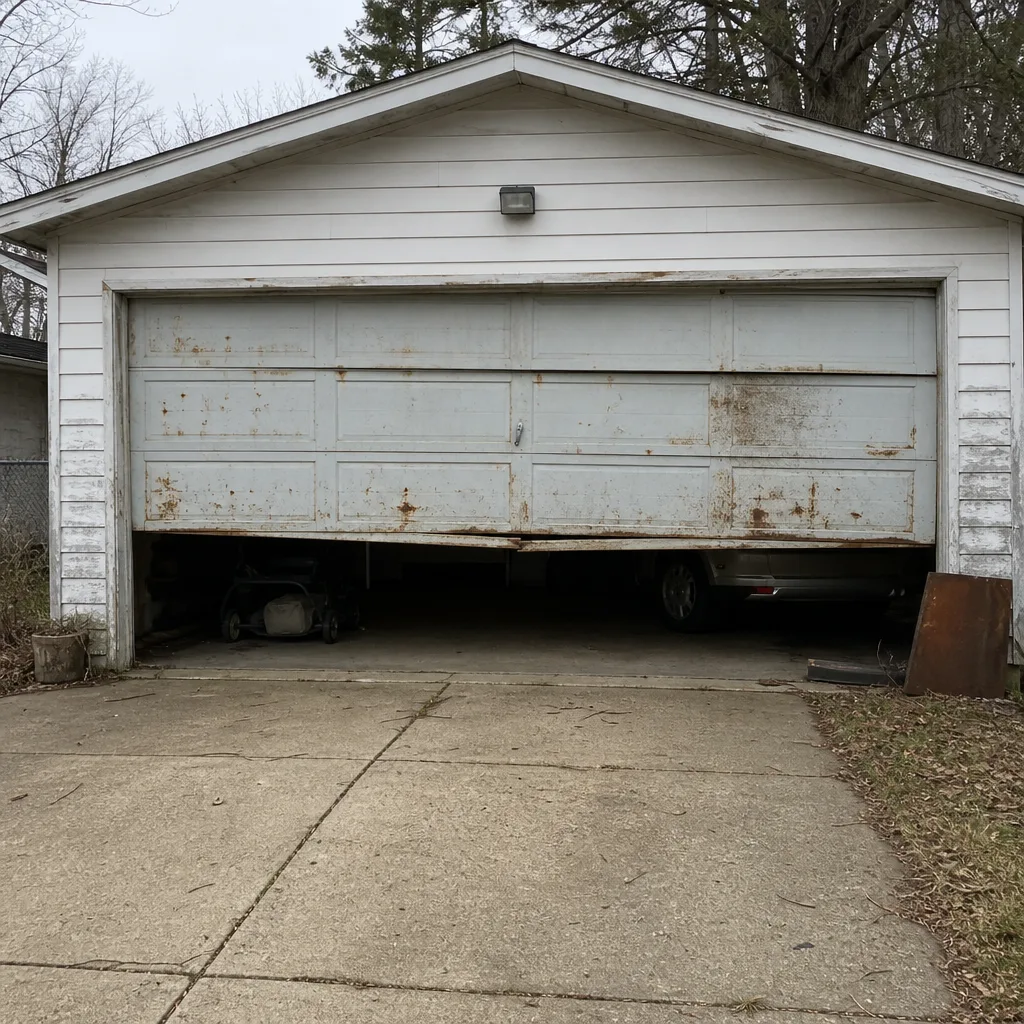 Before
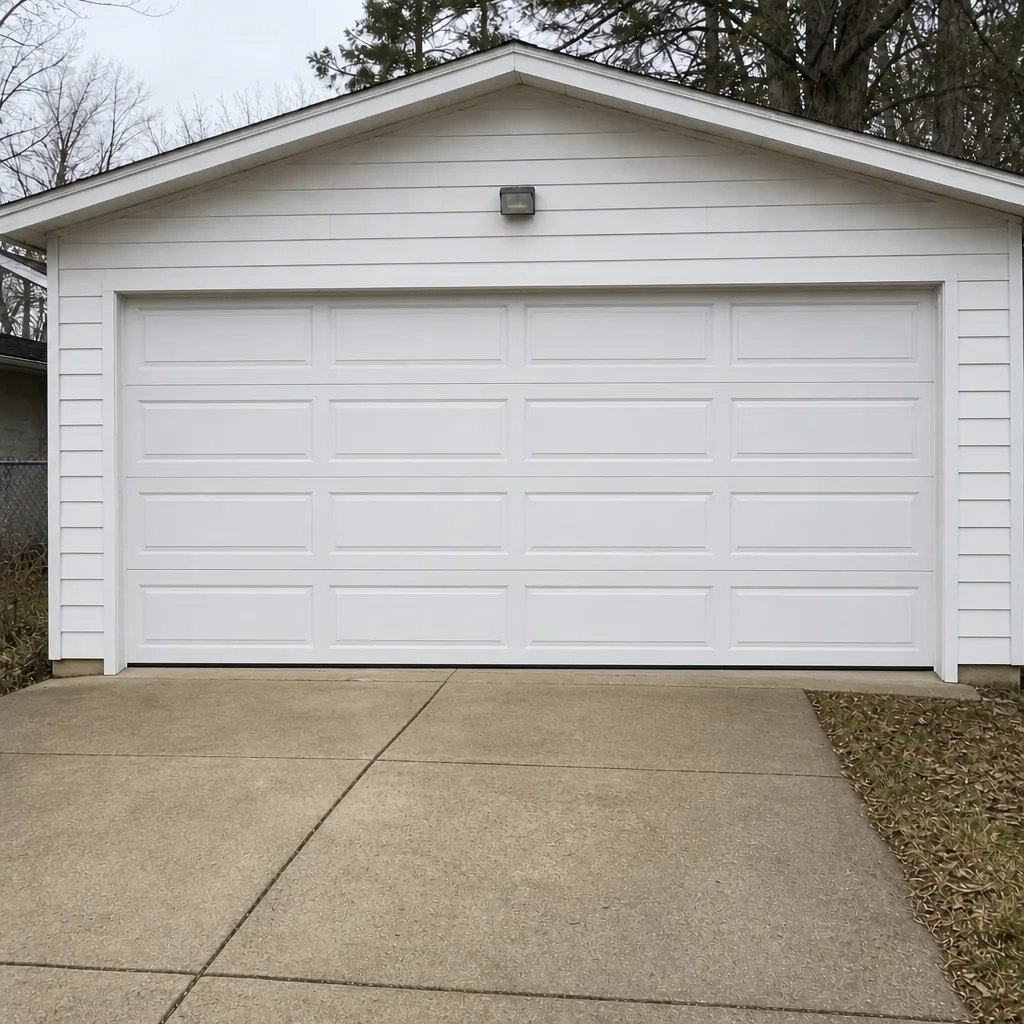 After
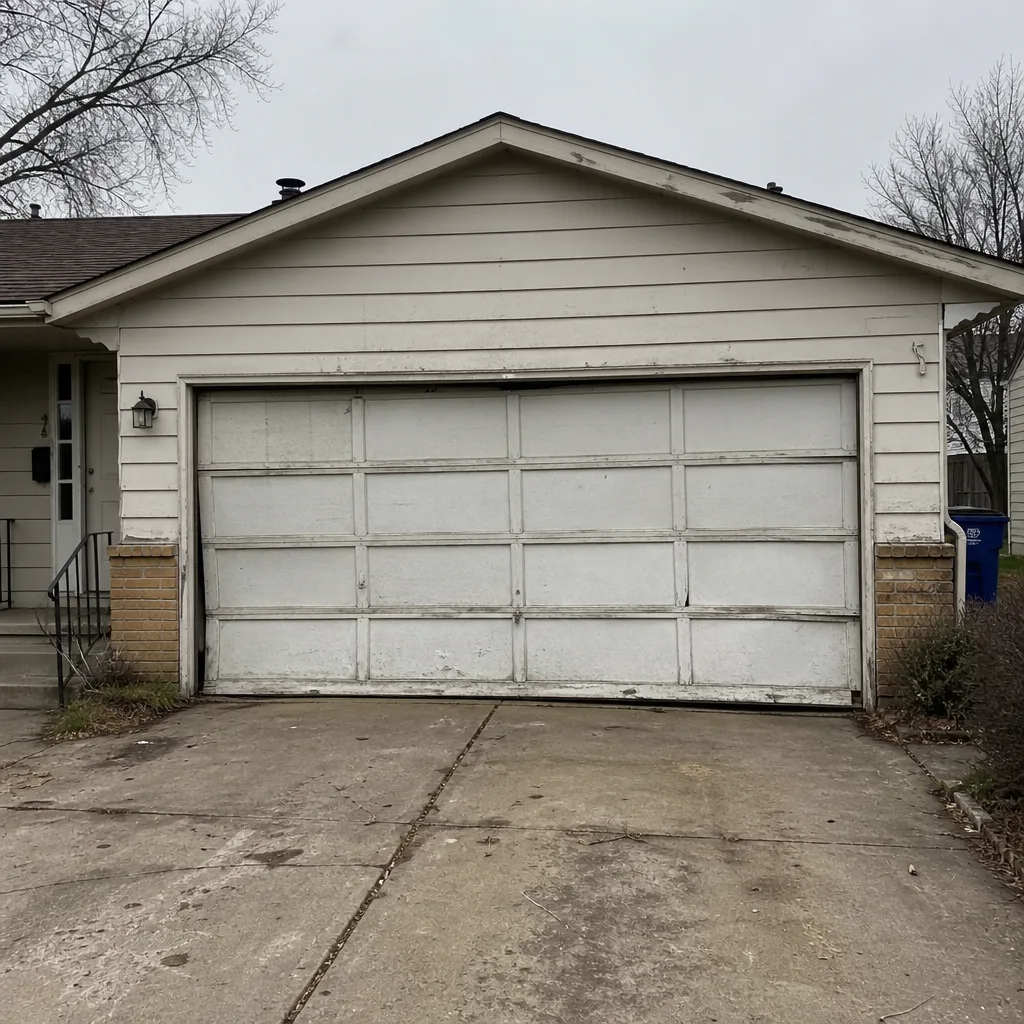 Before
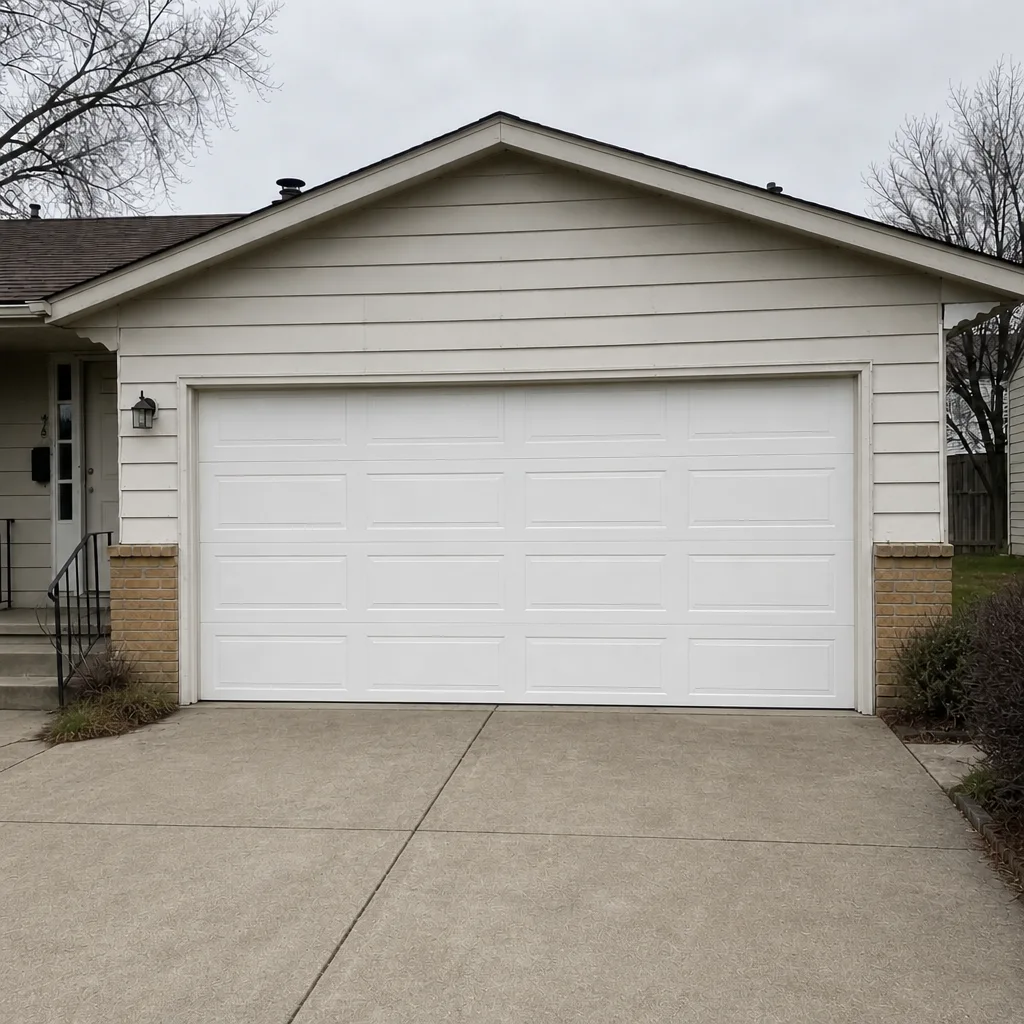 After
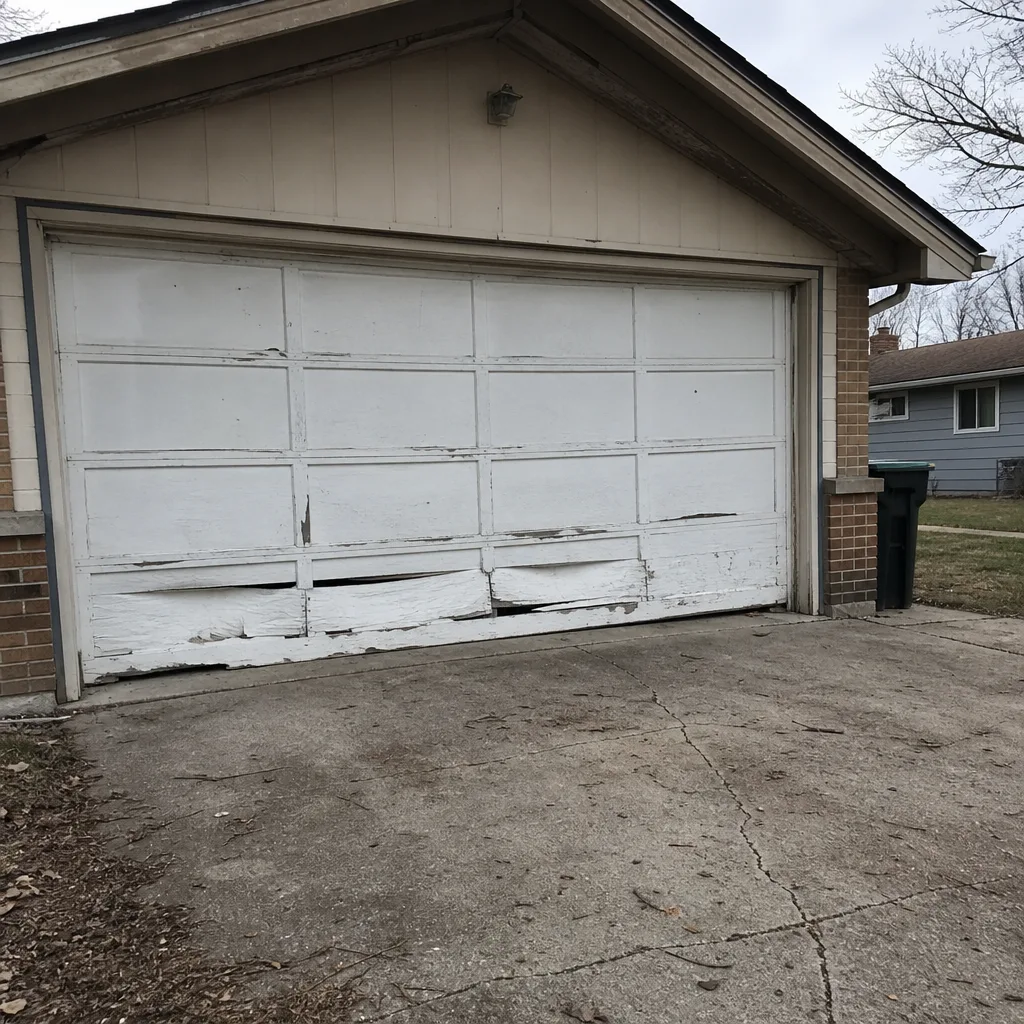 Before
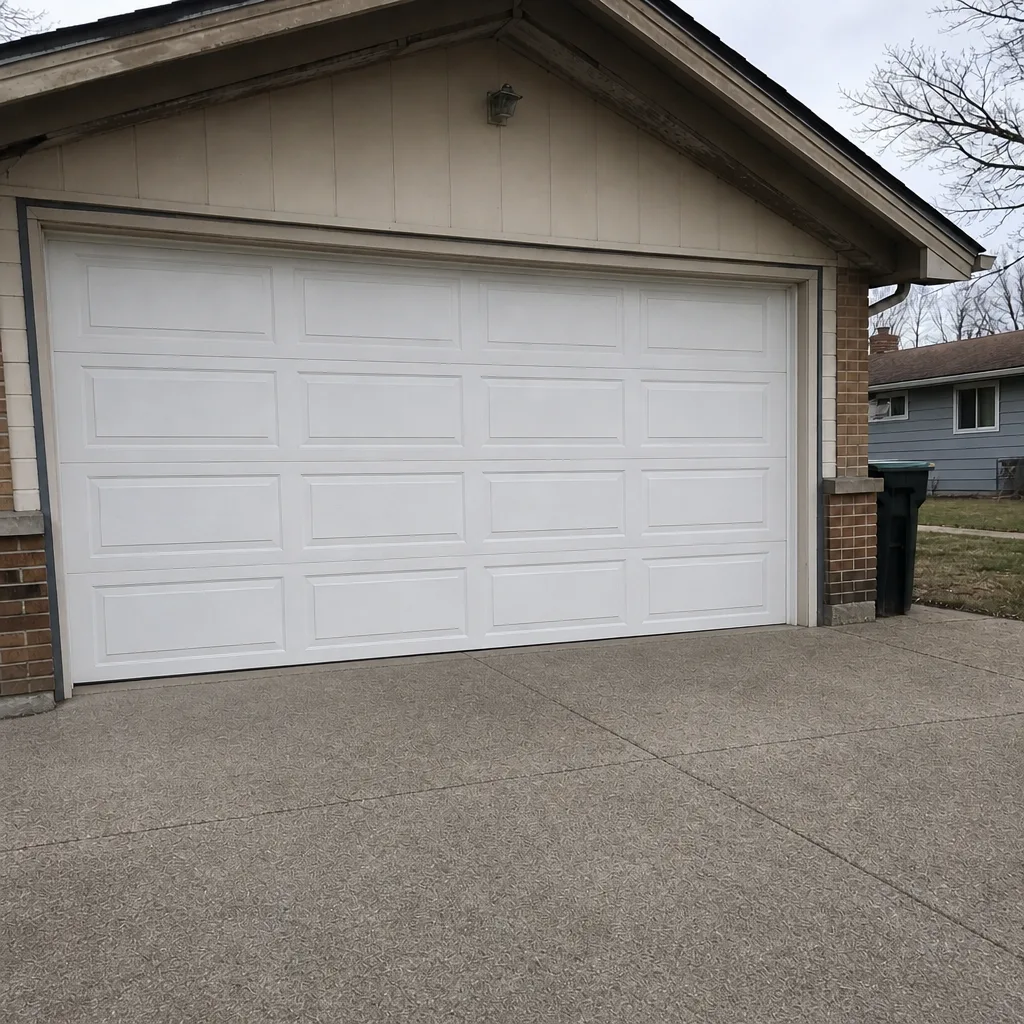 After
When to Call a Professional
Some garage door work is not DIY territory. Spring and cable work is genuinely dangerous: torsion springs and cables are under extreme tension and can cause serious injury even to experienced DIYers. If the door won’t lift, lifts unevenly, or has a spring that looks stretched or broken, stop and call a trained technician. If you hear a loud snap from the garage and the door won’t open, that’s almost always a broken spring. If the opener runs but the door doesn’t move, or the door reverses immediately, the issue may be a safety sensor or a stripped gear in the opener, and those are safer to diagnose but still worth professional attention. For a new-door decision, a trained measurement and a written quote save you from buying the wrong size.
Crossroads Garage Door Repair offers free estimates in Lansing. Call (833) 673-0891. We answer 24/7. Fast dispatch from 7am to 7pm, Sunday through Friday. Our technicians have up to 13 years of experience and work across eight major door and opener brands, so we can evaluate what’s in your garage rather than steer you toward a brand we sell.
Frequently Asked Questions
There isn’t one single best brand, because the parts that fail most often, springs and openers, are often made by different manufacturers than the door itself. For a Lansing home, the better question is which door has the right steel gauge, insulation type, cold-rated bottom seal, and standard hardware. A mid-tier door from Clopay, Amarr, Wayne Dalton, or CHI with those specs will perform well, and a mid-tier door with poor hardware won’t, regardless of brand.
Usually not for the door panel, but it can matter for hinges, rollers, and brackets. Most mainstream brands use standard hardware that any trained technician can source. A few models use proprietary fasteners or track profiles, which creates service dependency. If you’re calling about a repair, describe the door and we can tell you whether the brand affects parts sourcing. Call (833) 673-0891 for a free estimate.
Often yes, if the price gap is going into better springs and hardware grade rather than cosmetic options. The step up usually buys a higher cycle-rated spring, better rollers and hinges, and sometimes improved insulation. In Michigan, the cold-rated bottom seal and higher spring rating are the most valuable upgrades. Ask the seller to itemize what the extra money buys before deciding.
Yes. We work across eight major brands, including LiftMaster, Chamberlain, Genie, Clopay, Amarr, Wayne Dalton, Craftsman, and Raynor, covering repair, opener work, and installation. The diagnostic is brand-neutral: we identify what’s actually failing and recommend a repair when a repair will hold, not a replacement. Call (833) 673-0891 for an exact quote.
No, that’s normal. Most garage doors and openers come from different manufacturers, and pairings are routine. What matters is that the opener is correctly sized for the door’s weight and that the force settings and travel limits are set properly. If you’re replacing one without the other, mention both brands so the technician can check compatibility. Call for a free estimate.
Yes. All work is performed by trained, qualified technicians, and we carry the licensing and insurance appropriate for work in Michigan. Ask for details when you book if you’d like specifics confirmed before the visit. The exact quote is set before any work starts, so there’s no surprise on the invoice. Call (833) 673-0891 to schedule a free estimate.
The Bottom Line
Brand recognition and climate suitability are two different things. The right garage door for a Lansing home usually comes down to steel gauge, insulation type, cold-rated bottom seal, and hardware grade, plus a properly sized opener. The parts that fail most often, springs, cables, and openers, are frequently made by different manufacturers than the door itself, which means the logo on the panel matters less than the specs underneath. When you buy, ask for actual numbers rather than tier names, ask about parts availability, and insist on a written estimate before work begins. And when something breaks, get a brand-neutral diagnosis. Repair when possible, replace only when necessary.
If you’re weighing brands or unsure what’s in your garage, call Crossroads Garage Door Repair at (833) 673-0891 for a free estimate. We answer 24/7. Fast dispatch from 7am to 7pm, Sunday through Friday.
Written by the team at Crossroads Garage Door Repair.