
Last updated November 15, 2026
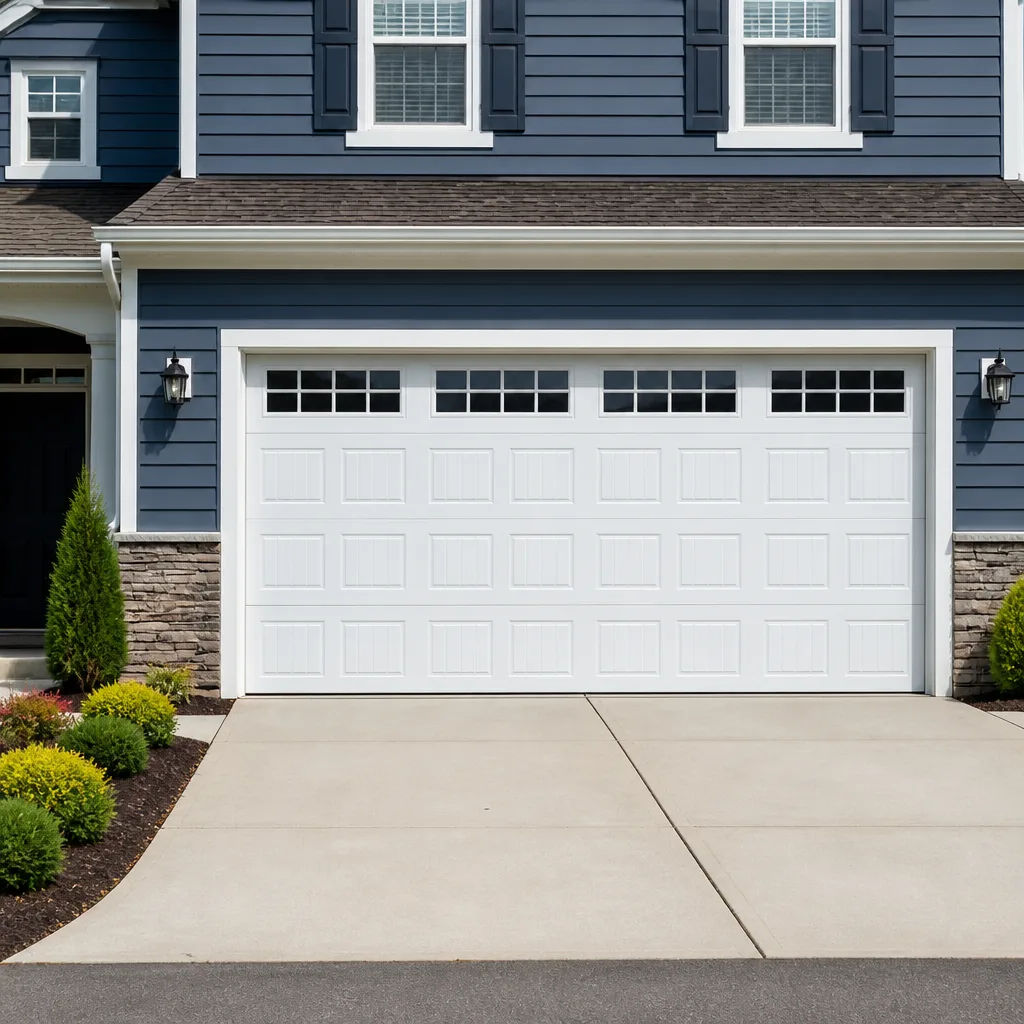 Raised-panel steel
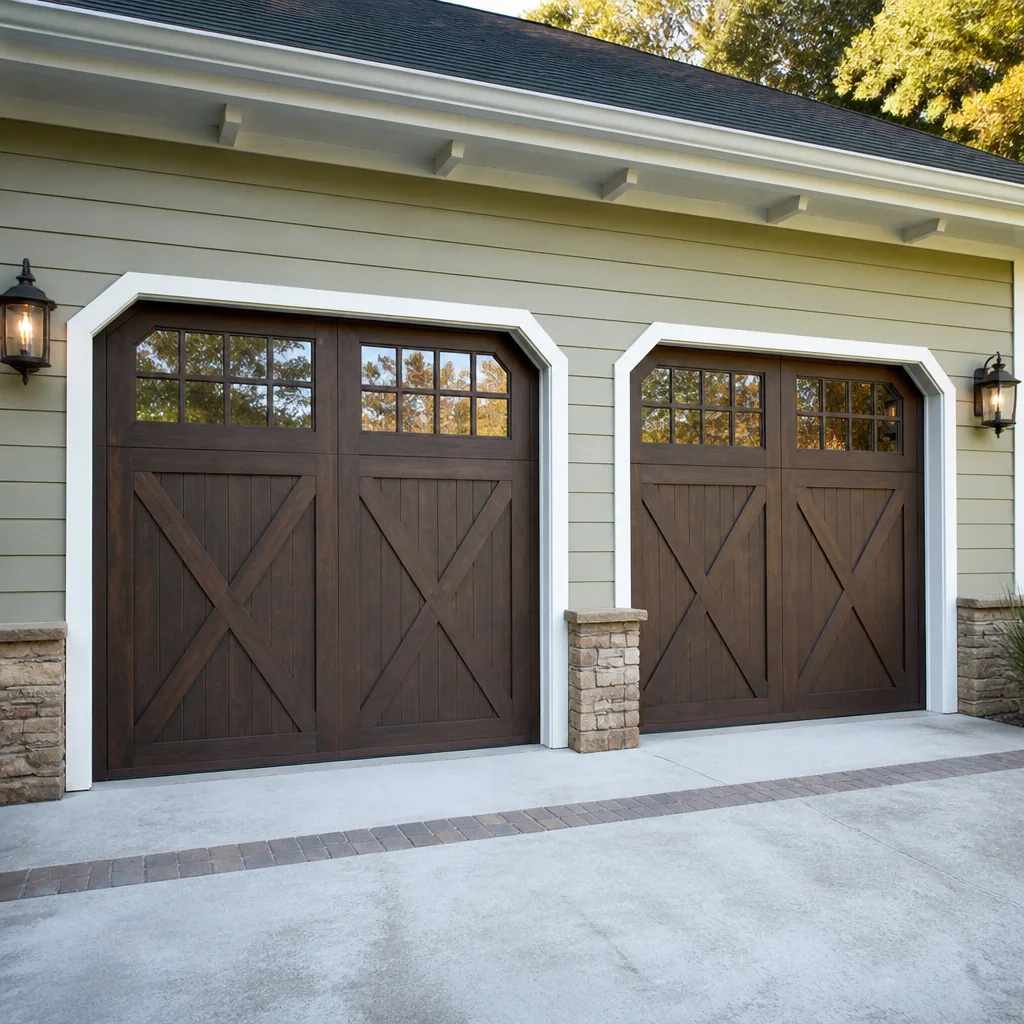 Carriage house
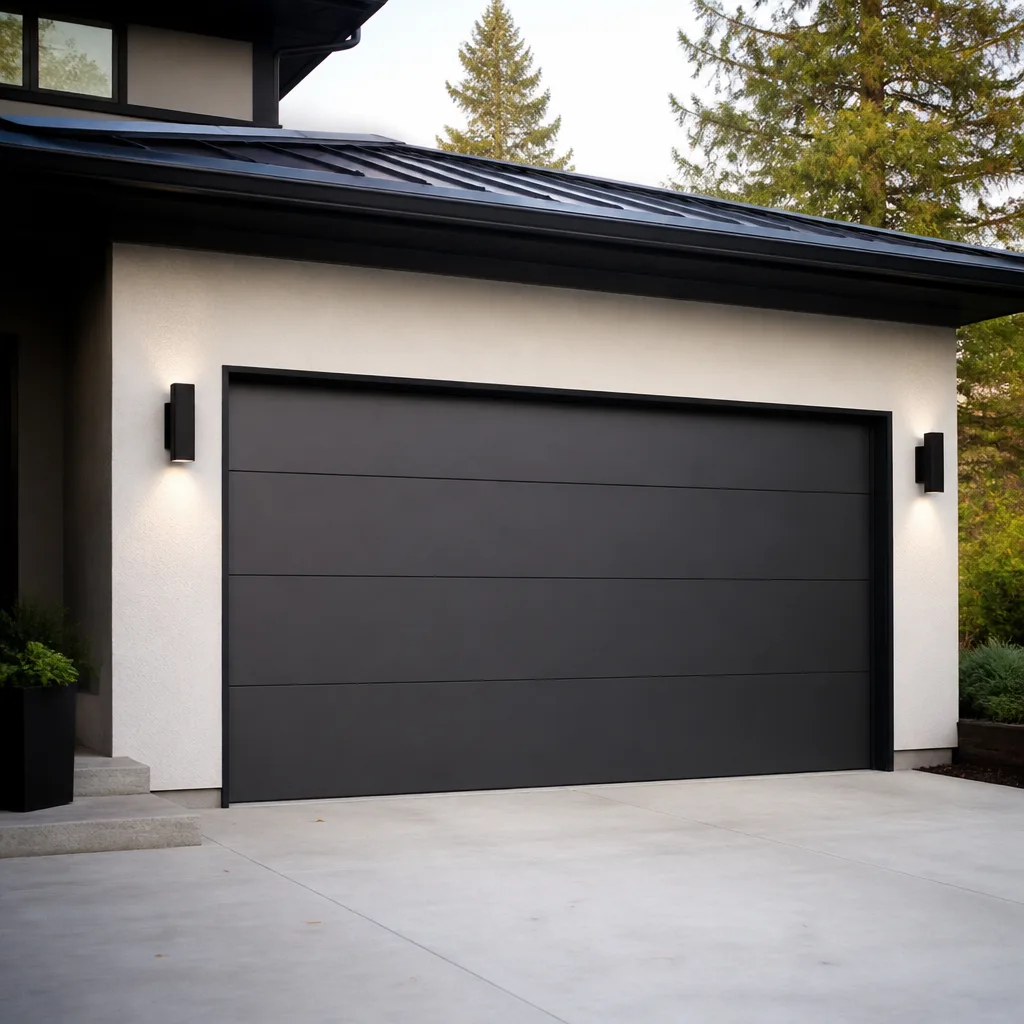 Modern flush
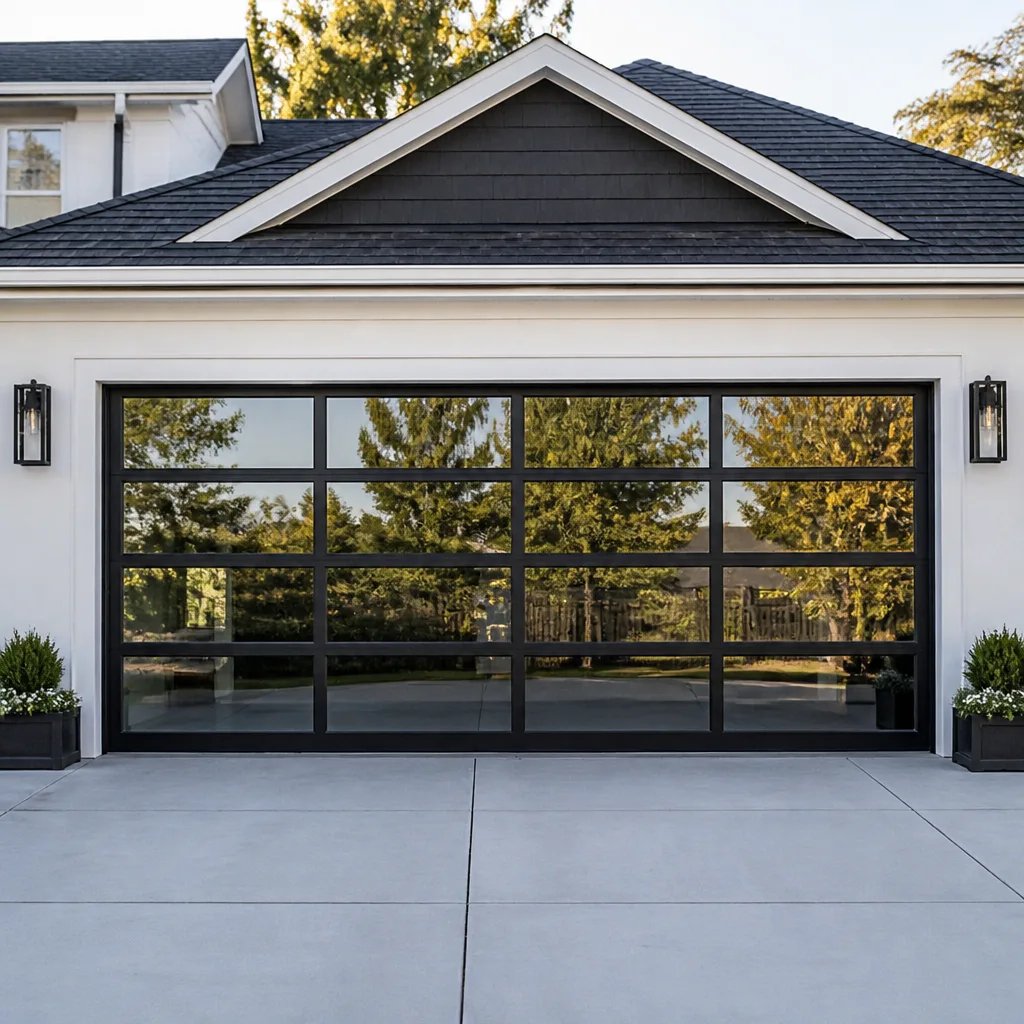 Full-view glass
 LiftMaster openers
 Chamberlain openers
Full 25-point door and opener safety check with every visit - springs, cables, rollers, tracks, and your LiftMaster or Chamberlain opener included
You get a price before we start. It does not change when the pro arrives.
Get your free estimateGarage Door Warning Signs: A Lansing Homeowner’s Reference Guide
Most garage door guides list symptoms in the order they come to mind, which is why they’re not much help when something actually goes wrong. If you hear a pop and your neighbor tells you it’s “probably the opener,” you need to know whether that’s true before you call anyone. This guide works differently. We’ve organized every warning sign by the component that’s failing – springs, cables, tracks, opener, or panels – so you can match what you’re hearing or seeing to the part that’s actually causing it. By the end, you’ll know what each noise means, what cold-weather wear looks like on a Lansing door, and when a repair will do instead of a replacement. Our technicians have up to 13 years of experience diagnosing exactly these problems.
Quick Answer
The most common garage door warning signs are a door that hesitates before moving, a loud pop or bang from above the door, visible gaps in the spring coils, a door that sits crooked when closed, and an opener that strains or runs without moving the door. Each points to a specific failing component – springs, cables, tracks, opener drive gear, or panels – and matching the symptom to the right part is what tells you whether it’s a simple fix or something that needs professional attention right away.
Styles & brands we work with
- Raised-panel steel
- Carriage house
- Modern flush
- Full-view glass
- LiftMaster openers
- Chamberlain openers
Table of Contents
- Why a Door That Hesitates Is Warning You, Not Warming Up
- Audio Diagnosis: What a Pop, Grind, Squeal, and Bang Each Tell You
- Spring Wear in a Cold-Climate Garage: Rust Patterns That Matter
- Opener Behavior Flags: Strain vs. No Movement
- The Asymmetry Test: Reading a Crooked Door Before It Fails
- Panel-Level Warning Signs: Stress Cracks vs. Cosmetic Cracks
- Track and Roller Warnings You Can See From the Floor
- What Never to Touch Yourself
Why a Door That Hesitates Is Warning You, Not Warming Up
A garage door that pauses for a second or two before it starts moving isn’t getting old. It’s telling you the opener is sensing resistance, and that resistance is almost always a spring that’s losing tension. The opener has a force sensor built in, and when the door feels heavier than it should, the motor takes a moment to build enough torque to move it. That hesitation is the warning. It will not fix itself, and in our experience, a door that hesitates will usually stop opening altogether within a few weeks.
Here’s the sequence most homeowners miss:
- Week one: The door hesitates slightly at the start, maybe half a second. Easy to ignore.
- Week two or three: The hesitation gets longer, and the door may reverse partway up before it reaches the top.
- Week four: The door doesn’t open at all, or opens a few inches and stops.
Torsion springs are what do most of the lifting on a standard residential door. They’re under heavy tension even when the door is down, and a spring that’s lost some of that tension can’t counterbalance the door’s weight. When that happens in Lansing, the door becomes a dead weight the opener wasn’t designed to lift by itself. That’s why we treat hesitation as a spring-tension flag, not an opener problem, until a diagnostic says otherwise. If you’re noticing hesitation now, it’s worth scheduling garage door repair before the door quits entirely.
Audio Diagnosis: What a Pop, Grind, Squeal, and Bang Each Tell You
Sound is the fastest diagnostic tool you have, but only if you know which component each noise belongs to. Here’s how we break it down when a homeowner calls and describes what they heard.
- A single loud pop or bang from above the door: This is the sound of a torsion spring snapping. It usually happens when the door is closed or just starting to open. The door will feel unusually heavy when you try to lift it manually, and you should stop using it immediately. This is the most urgent of the audio warnings.
- A grinding sound that comes and goes: Usually a roller that’s worn flat or a hinge that’s lost lubrication. It’s rarely an emergency, but left alone it accelerates wear on the track.
- A high-pitched squeal during travel: Typically a dry torsion spring or a dry roller. Squealing is one of the few warning signs that’s purely a maintenance issue – though if the door also hesitates, treat it as a spring or balance problem too.
- A rhythmic thumping or rattling: Often a loose panel bolt, a worn hinge pin, or a panel that’s come slightly out of its track channel. Worth checking before it becomes a panel problem.
The key distinction is between sounds that come from the overhead spring area versus sounds that come from the track or the opener motor. If you can stand in the garage and point to where the noise is coming from, that’s already useful diagnostic information. In Lansing, the cold months make springs and rollers more brittle, so squeals and pops tend to show up more in January and February than in summer. If a spring has already popped, that’s a repair call, not a wait-and-see.
Spring Wear in a Cold-Climate Garage: Rust Patterns That Matter
Not all rust on a garage door spring is a warning. Some rust is cosmetic and can sit on a spring for years without shortening its life. But there’s a visual signal that reliably predicts imminent failure, and it’s the one most homeowners overlook: a narrow band of heavy rust right where the spring coils transition from tight to slightly open. That’s the spot where the coil is under the most stress, and when rust concentrates there, the metal is thinning at the exact point that fails first.
Here’s how to tell the difference:
- Surface rust: A uniform, light-brown dusting across the whole spring. This is cosmetic and common on any spring in an unheated garage. It doesn’t predict failure on its own.
- Concentrated rust: A darker, rougher patch at one point on the coil, especially near the end where the spring is anchored. This is where the metal is giving out.
- Gaps in the coils: If you can see a visible gap between two coils that should be tight, the spring has stretched. Stretched springs are already failing, even if they haven’t snapped yet.
Lansing’s freeze-thaw cycles make this worse than a milder climate would. Moisture that condenses on a cold spring in the evening freezes overnight, then thaws the next day, and that cycle slowly works into small pits. Spring metal that’s been through 10 or 15 of those cycles will show it. If you’re seeing concentrated rust or coil gaps, that’s a professional call. Springs are under heavy tension even when the door is down, and they’re not something to adjust, remove, or replace without training – a spring under load can cause serious injury. Our technicians handle spring work on doors from makers like Clopay and Amarr, and on the many older doors still in service around Lansing.
Opener Behavior Flags: Strain vs. No Movement
An opener that strains and an opener that cycles without moving the door are two very different problems, and confusing them leads to replacing a motor that didn’t need replacing. The strain signal comes from a door that’s too heavy for the motor to lift comfortably. The motor is working hard, the door may move slowly or reverse, and the hesitation is obvious. This is almost always a spring-tension or balance problem, not an opener problem. Replacing the opener in this case fixes nothing and leaves you with the same failing springs and a new bill.
The no-movement signal is different. When you press the remote, you hear the motor run, but the door doesn’t move or the chain or belt doesn’t travel. That points to a drive gear or belt failure inside the opener itself. It’s a repair we see often on older lift mechanisms, and it’s exactly the kind of opener failure that gets misdiagnosed as “the whole unit is dead.”
Here’s how to tell them apart before you call:
- Watch the door while the opener runs. If the door moves slowly, hesitates, or reverses, suspect spring tension. If the door is completely still while the motor runs, suspect the opener drive.
- Check the emergency release. Disconnect the door from the opener using the pull cord and try lifting it by hand. If it’s very heavy, the springs are the issue. A properly balanced door lifts with one hand.
- Listen to the motor. A strained motor sounds effortful, like it’s working against something. A motor with a broken drive runs at normal speed and does nothing.
We work on both legacy and smart/Wi-Fi-enabled openers from LiftMaster, Chamberlain, Genie, and others. If the opener is the problem, garage door opener repair is a same-day call in most cases. If the springs are the problem, we’ll tell you that instead. The diagnosis comes first, always.
The Asymmetry Test: Reading a Crooked Door Before It Fails
A door that sits crooked in the closed position is one of the most useful warnings you’ll get, because it diagnoses a cable or spring imbalance before either component has fully failed. Stand back from the closed door and look at the gap between the bottom panel and the floor. It should be even across the width. If one corner sits lower than the other, the lifting force is uneven, and that means one cable is stretching or one spring is doing more work than the other.
Here’s how to run the test yourself:
- Close the door and stand about 10 feet back. Look at the bottom edge against the floor across the full width.
- Check both sides at the top of the opening. Do both sides of the door sit at the same height relative to the header?
- Watch the door open and close. A crooked door travels with a slight tilt – one side leads, the other lags.
- Listen on each side. A cable that’s stretched often makes a slightly different sound on its side than the other.
If the door is crooked and you can also see a loose or slack cable on one side, that’s a cable warning. Cables are under the same tension as springs and are just as dangerous to handle. Don’t try to tighten, re-route, or reattach a cable yourself. The asymmetry test is a way to figure out whether the problem is cable or spring before you call, and it’s genuinely useful on the older doors we see throughout Lansing – many of them have original cables that have been stretching for years. We can often tell from a phone description of a crooked door whether it’s a cable or a spring issue, and that saves time on the visit.
Panel-Level Warning Signs: Stress Cracks vs. Cosmetic Cracks
Cracks in a garage door panel are common, and most of them aren’t a problem. The ones that matter are stress cracks at hinge points – the locations where the panel is bolted to its hinge bracket. If you see a crack starting at the edge of a hinge bracket and running outward into the panel face, that panel is under structural load it can’t handle much longer. A surface crack in the middle of a panel face, with no hinge nearby, is usually cosmetic and doesn’t predict failure.
What to look for, panel by panel:
- Stress cracks at hinge points: Hairline cracks radiating from the bracket bolts. These can spread to the point where the panel tears loose.
- Cracks following a panel’s embossed line: Usually cosmetic. They can be sealed, but they don’t threaten the panel’s structure.
- Dents at the bottom panel: Common on doors that have been pushed against a slightly raised threshold. Cosmetic, but worth watching if the dent is deep.
- Separation at the panel seams: Panels are supposed to sit flush. A gap at a seam is a hinge problem or a panel shift, not just a crack.
Panel cracks are one of the places where a brand-agnostic diagnostic matters. Some panels can be replaced individually, and if you have a Wayne Dalton or Craftsman door, a single panel replacement is often a better repair than a whole new door. We carry and install full panels and complete doors from makers like Amarr and Raynor when a repair isn’t the right answer. But the first question is always whether the panel needs replacing or the crack is cosmetic – because replacing a whole door for a hairline crack is the wrong call.
Track and Roller Warnings You Can See From the Floor
The tracks and rollers are the parts you can inspect without climbing anything, and they give you some of the clearest warning signs in the whole system. Here’s a short walk-around check you can do in two minutes – no tools needed.
- Track alignment: The vertical and horizontal tracks should meet cleanly. A track that’s bent or has a visible kink is going to make the door bind, and binding is a roller and spring problem waiting to happen.
- Roller wear: Look at the rollers inside the track. A roller that’s worn flat, or has a visible flat spot on its edge, will make the door jump or grind. This is a small repair that turns into a bigger one if ignored.
- Loose hinges: The hinges between panels should be tight and flush. A hinge with visible looseness is going to put stress on the panel around it.
- Track obstruction: Dirt, oil, or debris in the track is a common and easy fix. A track that’s dry and dirty makes everything work harder.
Lansing’s winters leave a lot of grit on garage floors, and some of it works its way into the tracks as the door opens and closes. That grit accelerates roller wear. A five-minute walk-around with a flashlight once a season catches most of the track and roller issues before they become spring or panel problems. If you find a bent track or a roller that’s badly worn, that’s the point where a professional visit is quicker and cheaper than a DIY job.
What Never to Touch Yourself
Some parts of a garage door system are safe to inspect and some genuinely aren’t. This line matters, because a garage door is a large moving object under stored tension, and the wrong part can hurt you badly.
The components that require a trained professional, without exception:
- Torsion and extension springs: These hold the weight of the door and are under heavy tension even when the door is down. Adjusting, removing, or replacing them without training and the right tools is a serious injury risk.
- Cables and cable drums: Cables carry the spring tension to the door. A cable that comes loose while under load is dangerous.
- The spring anchor and bottom brackets: The brackets that hold the bottom of the cable system are under continuous tension.
The safe parts to check yourself are the visual and audio signals: the door’s movement, the sound it makes, the alignment, the rust pattern on the springs, the condition of the panels and tracks. If you find a warning sign that points to a spring, cable, or bracket issue, stop and call a professional. We can walk you through the safe checks on the phone and book a visit when needed. “Repair when possible, replace only when necessary” starts with knowing which part is actually failing – and which parts aren’t a DIY project.
Common Mistakes to Avoid
- Treating a hesitation as the opener’s fault. The hesitation is usually spring tension, not a failing motor. Replacing the opener first leaves you with the same springs and the same problem, plus a bill for a motor you didn’t need.
- Ignoring rust on a spring because the door still works. A spring with a concentrated rust band and visible coil gaps can still lift the door for a while. When it lets go, it usually lets go without warning, and often when the door is in motion. It’s the most common warning sign we see ignored in Lansing.
- Tightening or re-attaching a cable yourself. A cable under spring tension is one of the most dangerous parts of the system. If you see a slack or loose cable, that’s a professional call, full stop.
- Assuming a crack means a new door. Panel cracks at hinge points need attention, but surface cracks are usually cosmetic. Get a brand-agnostic diagnosis before deciding a replacement is the only option.
- Forgetting the season shift. The first hard freeze in Lansing makes springs and rollers brittle. A walk-around in November catches the wear that a January cold snap would turn into a no-heat, no-car situation.
- Letting a crooked closed position pass. A door that sits unevenly is diagnosing a cable or spring problem before either has failed. That’s the cheapest moment to fix it.
- Hiring a single-brand dealer for a mixed system. If your door is a Wayne Dalton and your opener is a LiftMaster, a brand-locked dealer will often point at the other part. A brand-agnostic diagnostic avoids the finger-pointing.
See the difference
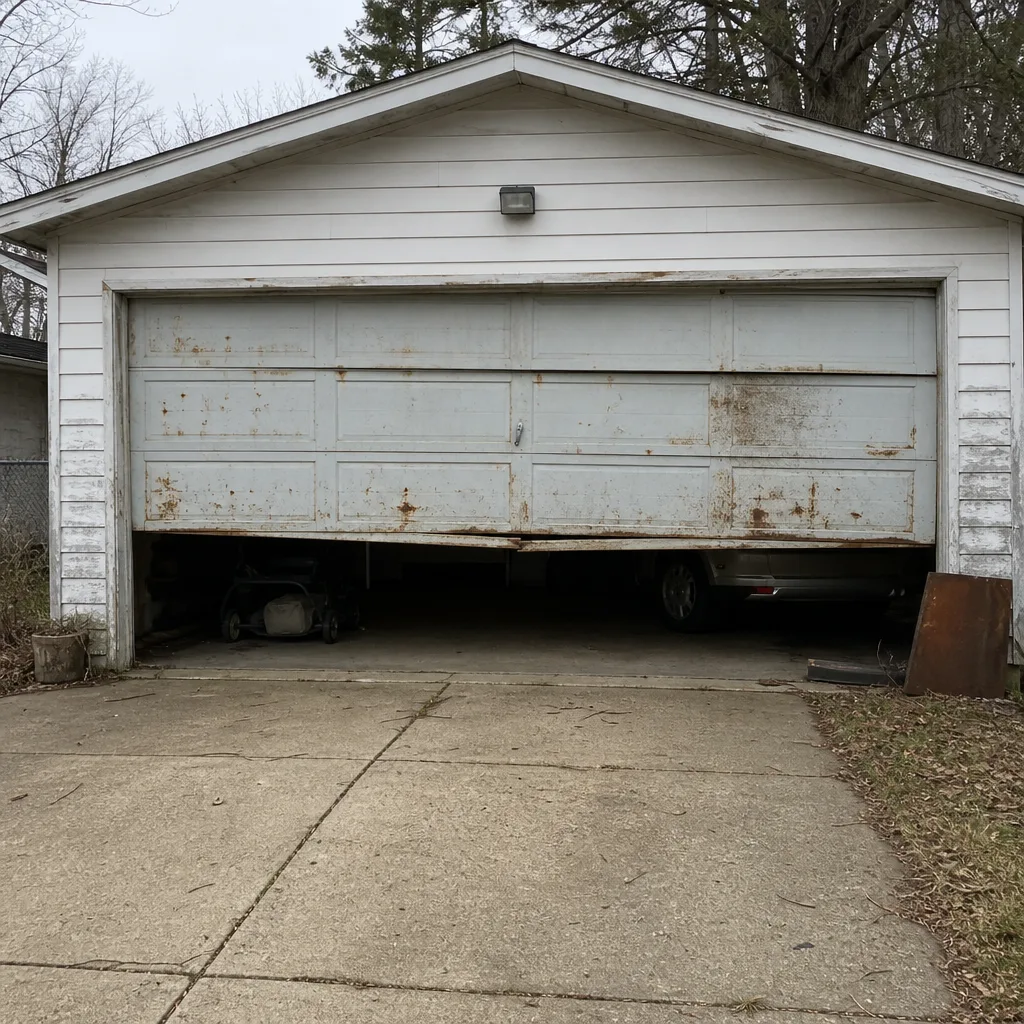 Before
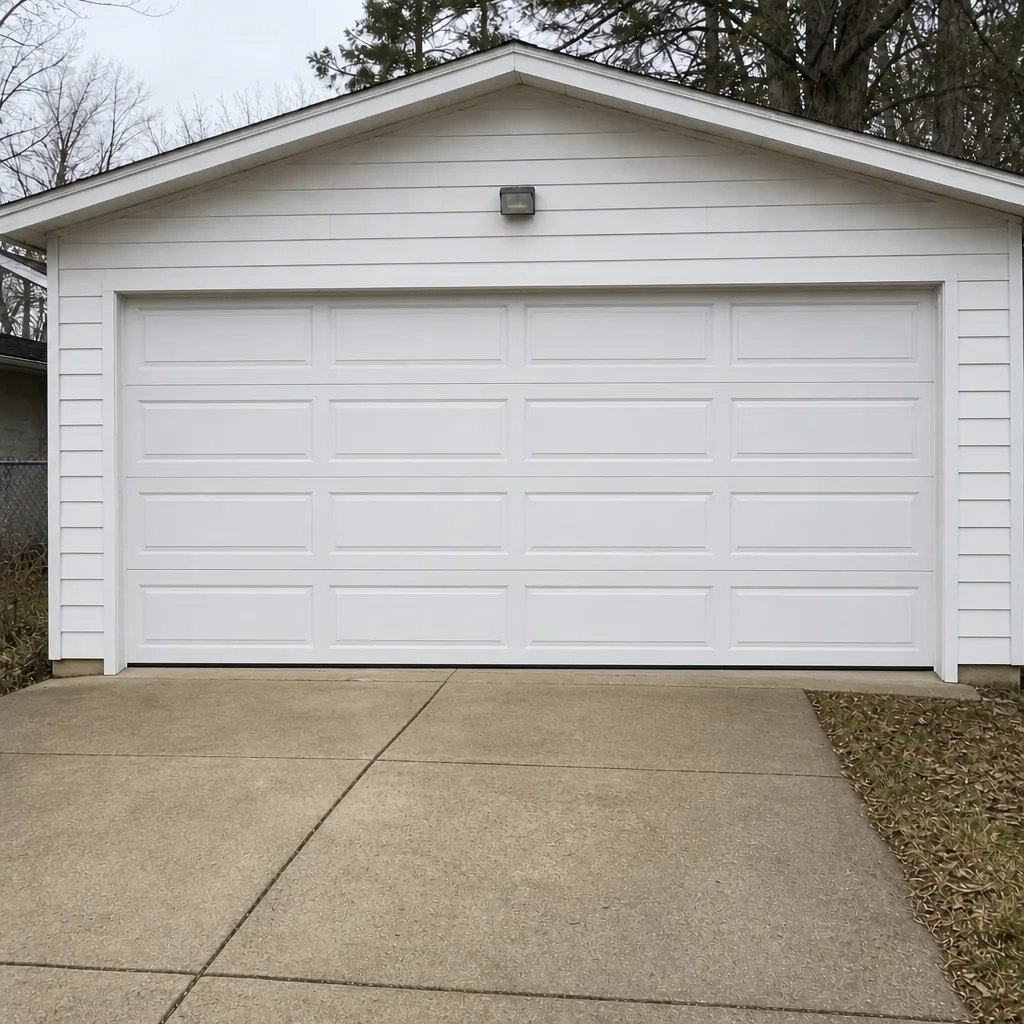 After
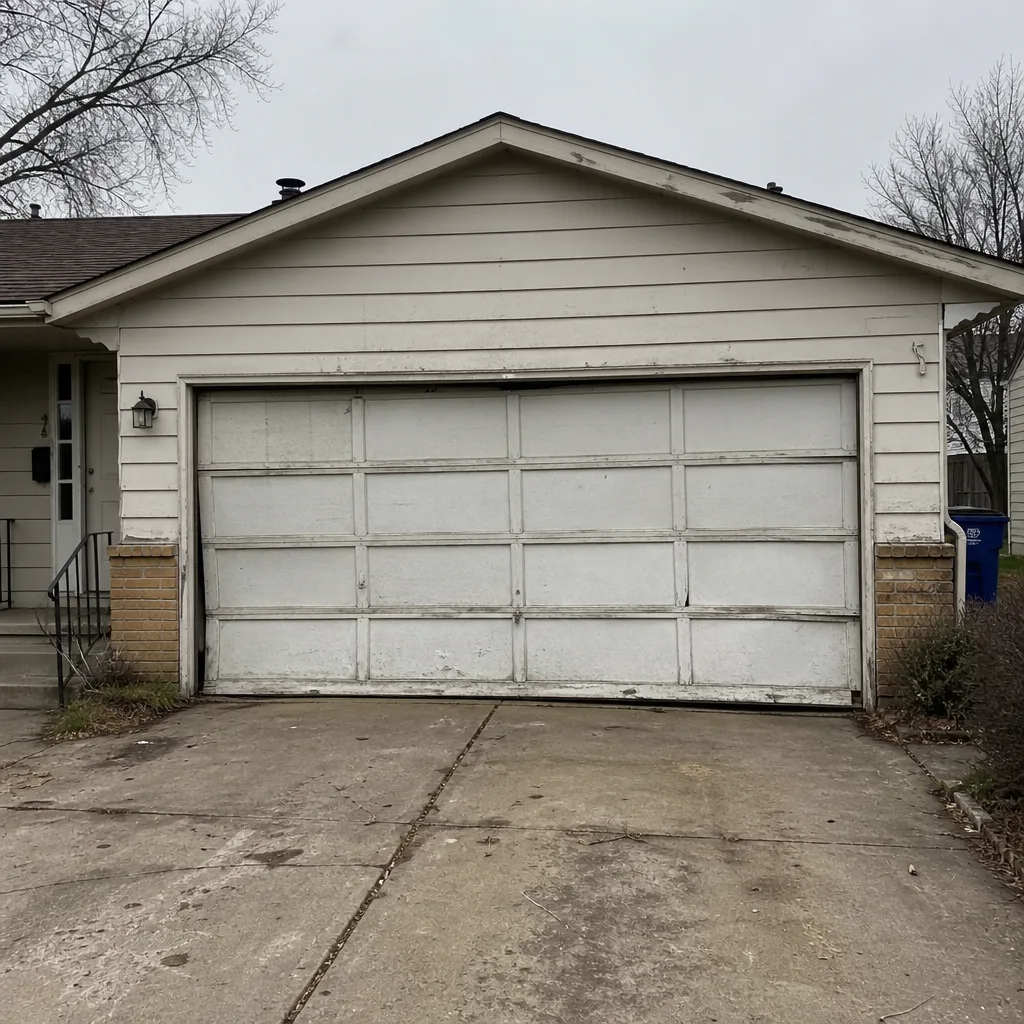 Before
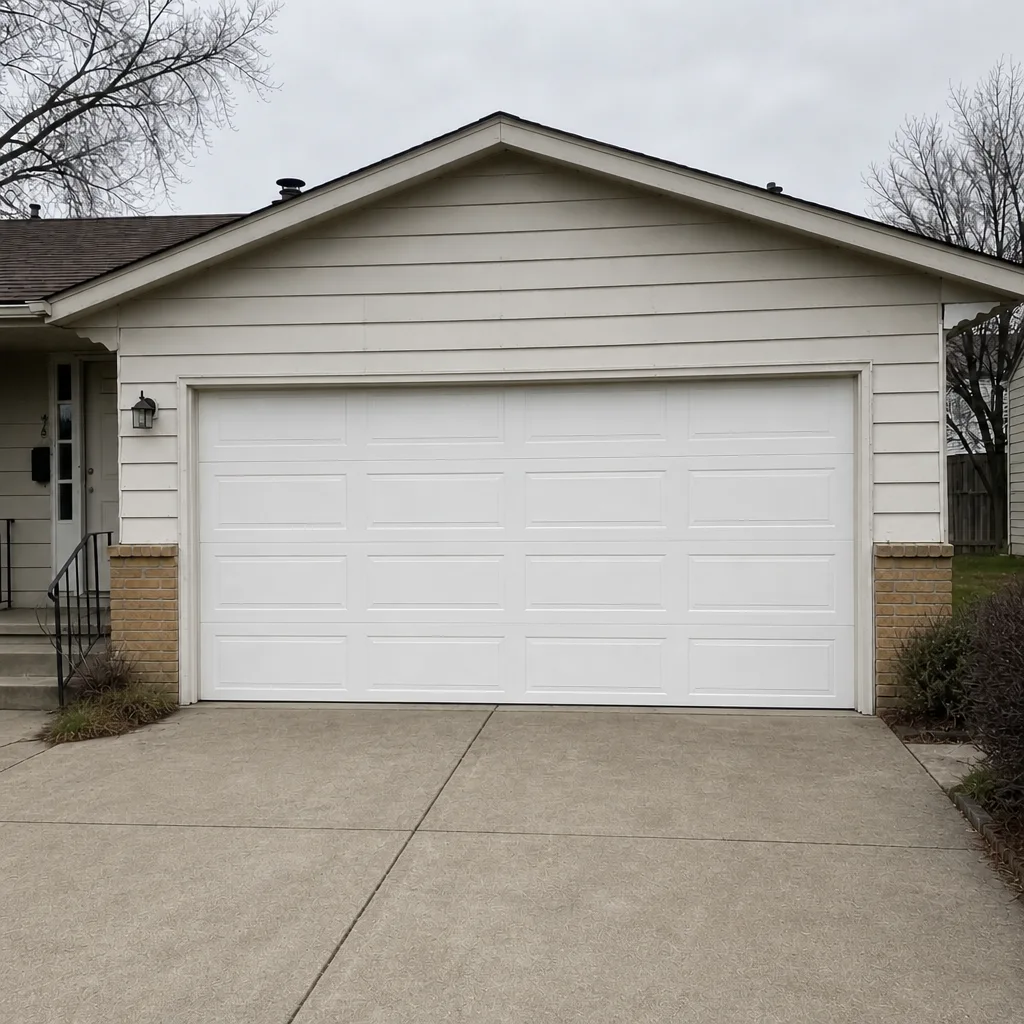 After
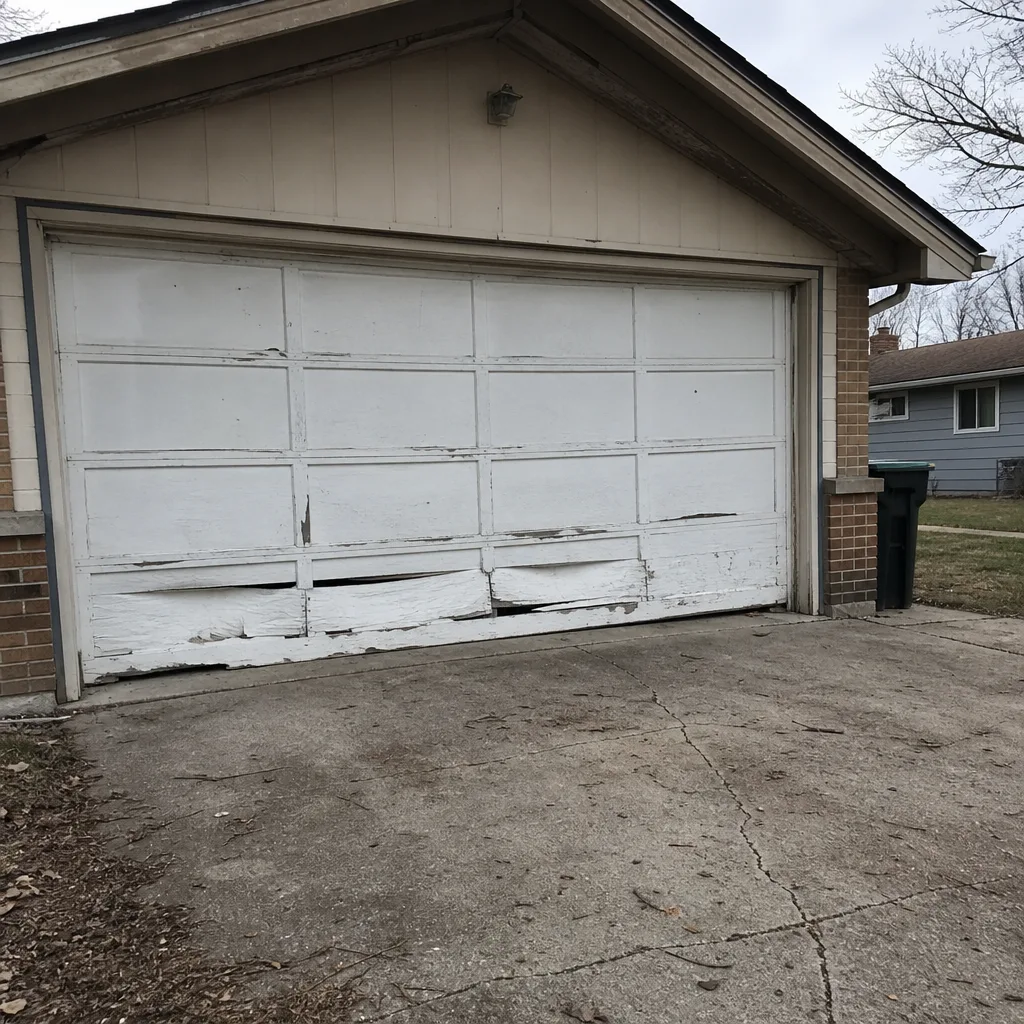 Before
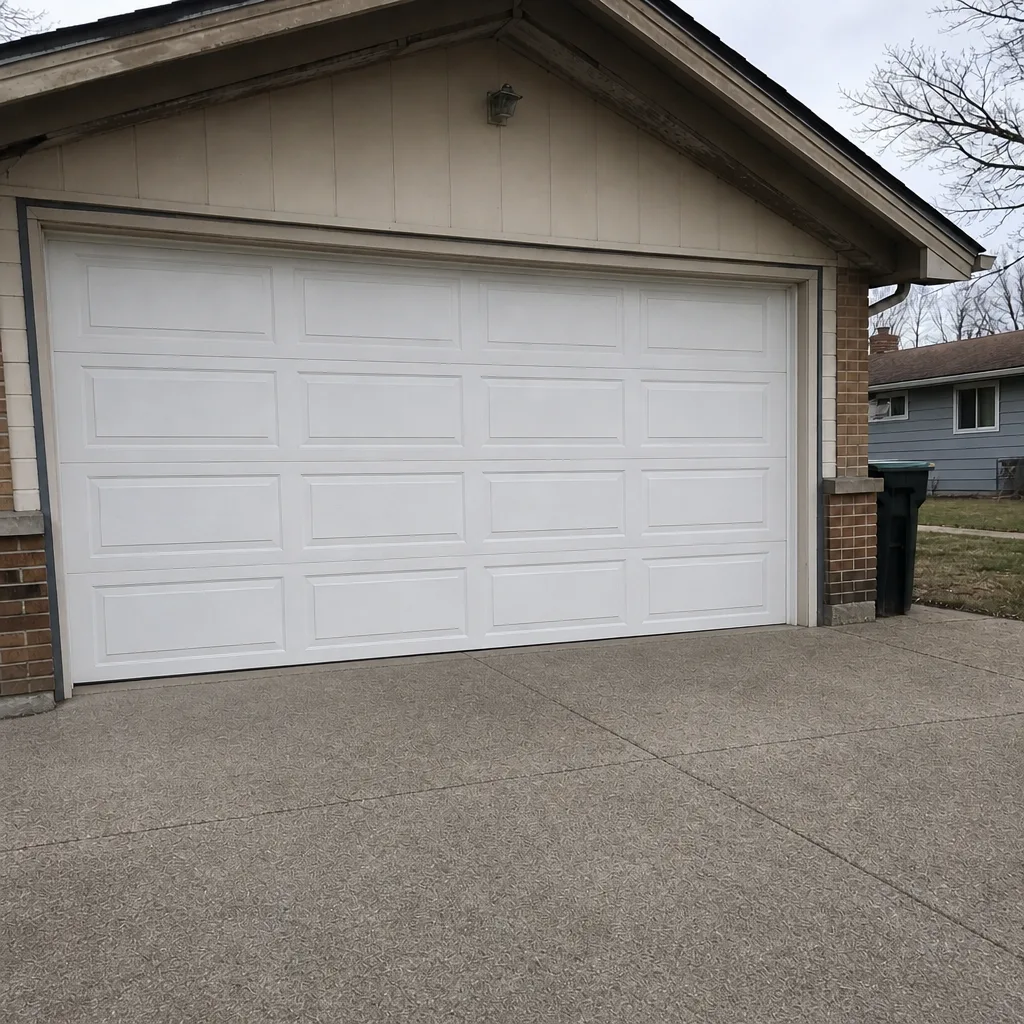 After
When to Call a Professional
Call when you hear a pop or bang from the spring area, when the door hesitates or reverses before reaching the top, when you see a slack or loose cable, when the door sits crooked in the closed position, when the opener runs without moving the door, or when you find stress cracks at hinge points. These are the signs that point to a component under load, and they’re not weekend projects. Our team works on whatever brand is on your door – Amarr, Wayne Dalton, Craftsman, Raynor, and others – so one call covers the door and the opener. Crossroads Garage Door Repair offers free estimates in Lansing – call (833) 673-0891. We answer 24/7. Fast dispatch from 7am to 7pm, Sunday through Friday.
Frequently Asked Questions
Spring repair costs vary with the job, and the written estimate sets the price before any work begins. What we can tell you is that a spring price covers one spring, and when a matched pair has both springs failing together, a pair usually costs about twice a single spring. The estimate is free, so you’ll know the number before you decide. Call (833) 673-0891 for an exact quote.
Same-day service is available for repair and opener calls, and we answer 24/7. Fast dispatch runs from 7am to 7pm, Sunday through Friday, and we’re closed Saturday. A call outside dispatch hours is booked into the next opening. Call (833) 673-0891 and we’ll tell you the soonest available appointment.
The written estimate is the price, and we confirm it with you before any work starts. A diagnostic can change which repair is needed – a hesitation we thought was a spring issue can turn out to be an opener problem – but the revised estimate is agreed with you first. Call (833) 673-0891 for a free estimate.
Yes, our technicians are licensed and insured. Our technicians have up to 13 years of experience, and we work on all the major residential brands – LiftMaster, Chamberlain, Genie, Clopay, Amarr, Wayne Dalton, Craftsman, and Raynor. Call (833) 673-0891 with any questions before booking.
Yes, and sooner is cheaper than later. A hesitation is the opener sensing resistance, usually a spring losing tension, and a door with that warning sign typically fails within weeks. Fixing the spring before it snaps avoids the bigger repair and the day your car is stuck inside. Call (833) 673-0891 to schedule a diagnostic.
Yes, we work on what you already have, including Wayne Dalton, Craftsman, Amarr, and Raynor doors and openers. Because we’re brand-agnostic, the recommendation is based on what the door needs rather than what a single-brand dealer can sell you. If you’re in Lansing or nearby, call (833) 673-0891 – one call covers the door and the opener.
The Bottom Line
Warning signs are most useful when you know which component they belong to. A hesitation points to spring tension. A pop points to a spring failure. A grind or squeal points to rollers or lubrication. An opener that runs without moving the door points to the drive gear. A crooked closed position points to a cable or spring imbalance. And a crack at a hinge point is a structural warning, while a surface crack usually isn’t. Read the sign, match it to the part, and you’ll know whether it’s a routine repair or a call that shouldn’t wait. When it’s the latter, Lansing homeowners can reach us at (833) 673-0891 for a free estimate, and Crossroads Garage Door Repair handles the door and the opener together.
Call (833) 673-0891. We answer 24/7. Fast dispatch from 7am to 7pm, Sunday through Friday. Fast, honest diagnosis and a written price you agree to before any work starts.
Written by the team at Crossroads Garage Door Repair.